

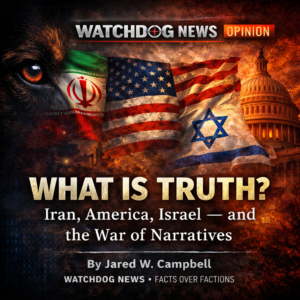
War today begins long before the first missile.
Narratives form instantly. Perception spreads faster than facts. And truth often gets buried beneath competing stories.
Are nations fighting wars — or fighting to control how wars are understood?
👁️ Facts Over Factions.
What Is Truth?
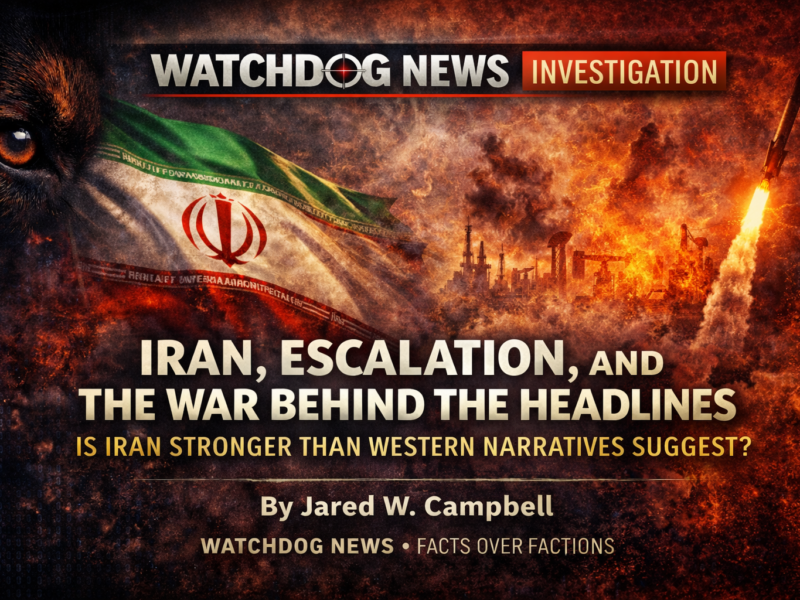
Escalation, Perception, and the War of Narratives
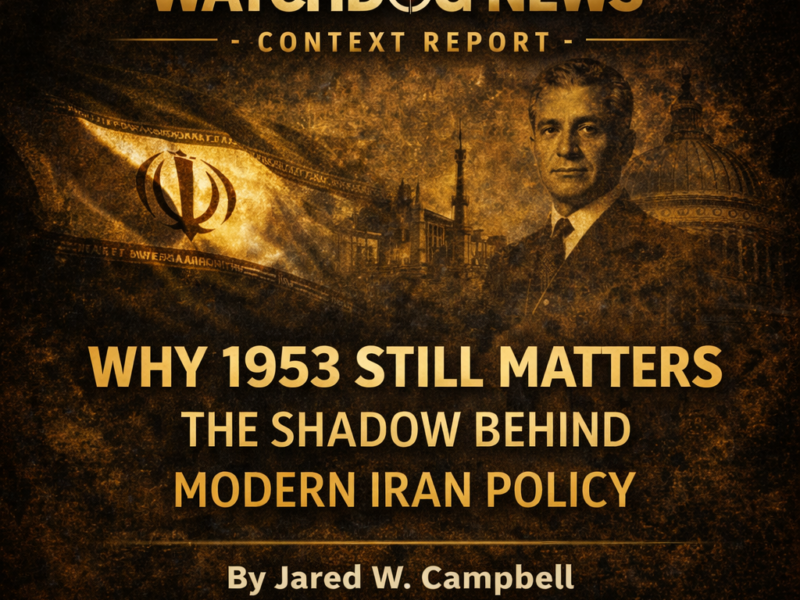
By Jared W. Campbell — Watchdog News
Facts Over Factions
WATCHDOG OPINION
The War of Narratives: A New Age of Conflict
War no longer starts with the thundering sound of missiles; it ignites with the very first narrative spun in its wake. Before the smoke settles, before the facts even have a chance to stabilize, competing narratives take center stage. Governments rush to release statements within moments, analysts flood television screens within hours, and social media platforms pick their sides long before the dust has a chance to clear.
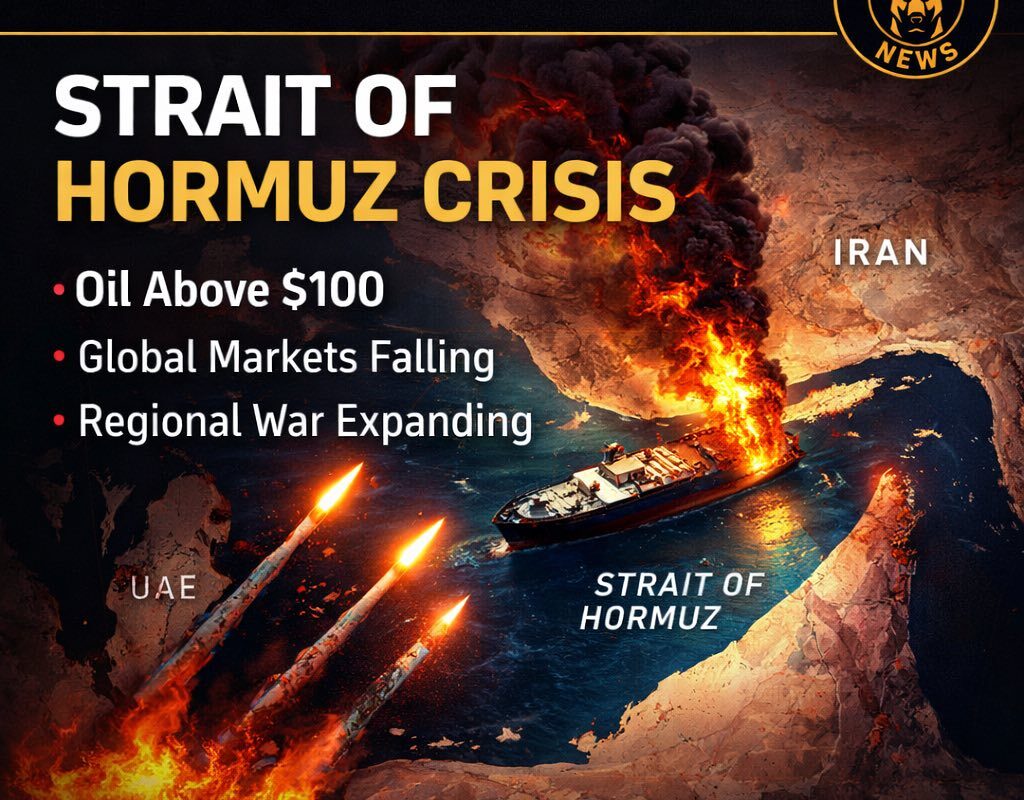
By the time the explosions cease, millions of people are already rallying behind a version of events they’ve never truly investigated. The recent tensions involving Iran, the United States, and Israel highlight a critical truth about modern conflicts: military actions and information warfare now unfold in tandem.
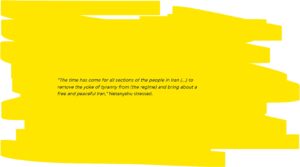
“The battlefield may be physical, but it’s the perception battle that’s truly strategic.”
Here’s the crucial question: Are nations engaged in warfare, or are they locked in a struggle to control the narrative around those wars?
One Event, Many Realities
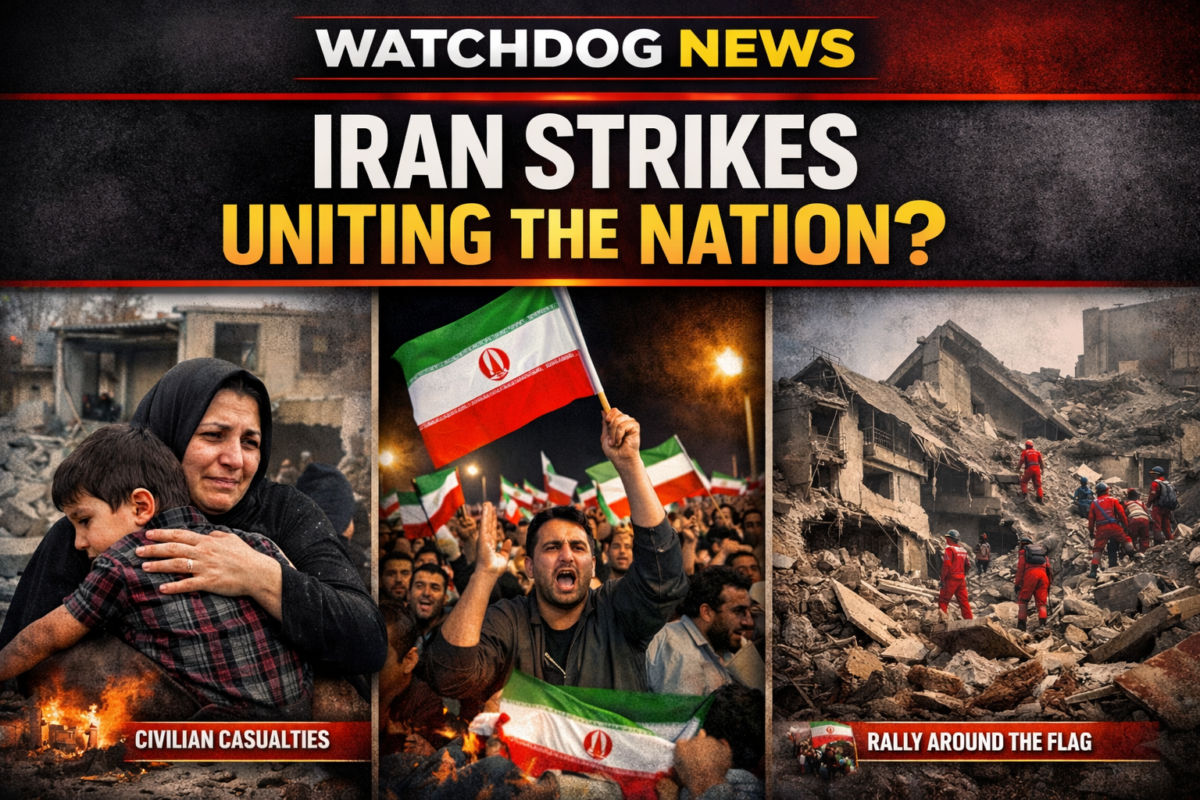
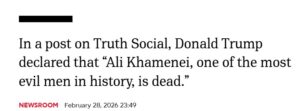
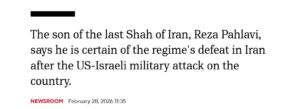
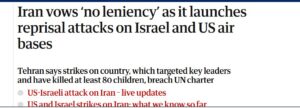
Take the events of early 2026, for example. Coordinated strikes by U.S. and Israeli forces targeted sites in Iran linked to nuclear development and regional military activities. Then came the harrowing reports from Minab.
A girls’ primary school caught in the chaos. Civilian casualties began to emerge, with numbers fluctuating from around fifty to over eighty as rescue teams dug through the debris — estimates shifting with the seconds and the sources.
Washington acknowledged the tragic reports of civilian casualties while conducting reviews, asserting that civilians were not intended targets. In stark contrast, Iran condemned the attacks as war crimes. Russia branded the strikes as acts of aggression. Meanwhile, Western allies framed it as necessary deterrence.
Same explosion. A multitude of truths — all depending on who’s telling the story.
The Logic Behind Escalation
Military escalation rarely happens without political motives at play. In this new era of warfare, every action is not just about physical dominance; it’s also about the narratives that shape perception and ultimately, public opinion.
Each actor operates within its own strategic framework:
- The United States frames its actions as deterrence — demonstrating its capability to prevent future threats.
- Israel views preemptive force as a survival doctrine, shaped by decades of regional hostility and existential security fears.
- Iran frames retaliation as resistance against foreign aggression and the defense of sovereignty.
Every explanation carries a kernel of truth. Each one resonates with domestic audiences. Modern conflicts are not solely about overcoming adversaries; they are a quest to uphold legitimacy at home. The contemporary battlefield transcends geography; it is rooted in perception. Today, wars are interpreted before they are truly understood.
Three narratives emerge almost instantly:
- Defense Narrative — force prevents greater future danger.
- Aggression Narrative — sovereignty was violated.
- Stability Narrative — Escalation preserves regional balance.
The public rarely encounters raw events.
It encounters curated meaning.
Images, headlines, and selective footage shape emotional response before analytical reflection ever begins.
In an algorithm-driven media environment, outrage spreads faster than verification.
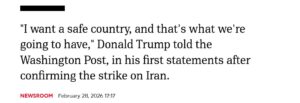
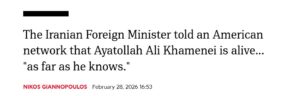
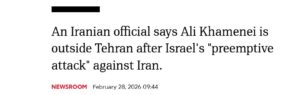
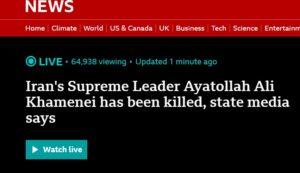
The Algorithm Joins the War:
In today’s information ecosystem, the internet can distort reality. It’s not accuracy that gets rewarded; it’s emotion. Anger zips along at lightning speed, while nuance often gets lost in the noise. Fear spreads further than the deeper context, and outrage is the hook that keeps people scrolling—ensuring platforms stay profitable.
As a result, it’s the most emotionally gripping narratives that rise to the top, overshadowing the truth. Engagement has become the new currency, trading reality for sensationalism.
Consider this: governments grasp a fundamental truth that often escapes the average citizen—public perception wields immense power over political freedom. When people believe that military action is a form of defense, leaders have greater operational latitude. Conversely, if civilians are seen primarily as victims, international pressure mounts.
In the realm of information warfare, deception isn’t always necessary. Sometimes, it’s about what’s emphasized, what’s left unsaid, and the timing of messages. This approach fragments truth, scattering it across competing narratives instead of presenting it as a cohesive reality.
“The Human Cost Everyone Interprets Differently”
Lost inside narrative competition is the simplest reality:
War always reaches civilians.
Strategic language — “targets,” “operations,” “deterrence“ — can obscure individual human loss.
Civilian deaths are interpreted differently depending on alignment:
- tragic necessity,
- criminal aggression,
- or propaganda exaggeration.
Grief knows no boundaries and affects us all, regardless of where we come from. At the heart of the matter is a profound moral question that transcends nationality: Does the security we gain through the pain of others truly lead to lasting stability, or does it merely set the stage for further cycles of retaliation?
A Veteran’s Perspective
War may appear more orderly from a distance, but on the ground, its reality is much more complex. Every side acts with conviction, believing they are defending their own. Justifications for actions are crafted to rally support from their communities. This isn’t a mere conspiracy; it is the unfolding of history itself. The true peril arises when individuals cease questioning their own narratives, mistaking inquiry for disloyalty. At that moment, propaganda no longer requires enforcement—it is self-imposed.
Beyond the political landscape, there lies a spiritual challenge. For Christians, this conflict unveils a deeper truth beyond geopolitics. Scripture does not urge believers to uphold national narratives; rather, it calls for compassion. Mourning the loss of innocent lives transcends political allegiance; it is a matter of obedience. When empathy becomes a point of division, it signals a profound fracture that extends beyond politics.
Truth in the Gray Zone
Truth today often exists beyond official statements and can be complex. The Iranian regime may pose risks, while Israel’s security concerns are acknowledged as valid. American strategic interests are present, and innocent individuals are suffering unjustly.
“This complexity reflects the nature of reality, which is often at odds with simpler narratives.”
The Illusion of Certainty:
A notable trend in modern discourse is the rapid push for immediate certainty. Following any event, audiences frequently divide into opposing camps, each believing it understands the full truth.
Yet early wartime information is historically unstable:
- casualty numbers change,
- attribution evolves,
- intelligence assessments shift.
History repeatedly shows that first narratives often require revision.
But digital culture rewards confidence — not patience.
The Watchdog Warning
The greatest opportunity today lies not in agreement, but in the courage to question. When we embrace the act of inquiry, truth rises above mere loyalty. In this realm, we become champions of understanding, ensuring that propaganda cannot triumph, no matter the source of conflict. The Watchdog serves a vital purpose: to provoke thought and unveil hidden truths.
It urges us to consider: Who truly benefits from the narrative? What crucial details might be overlooked? Are we committed to seeking truth or simply to maintaining our comfort? In the landscape of modern conflict, truth often whispers, patiently waiting for those bold enough to look beyond the surface.
👁️ Jared W. Campbell
Watchdog News — Facts Over Factions

Watchdog News Original Logo