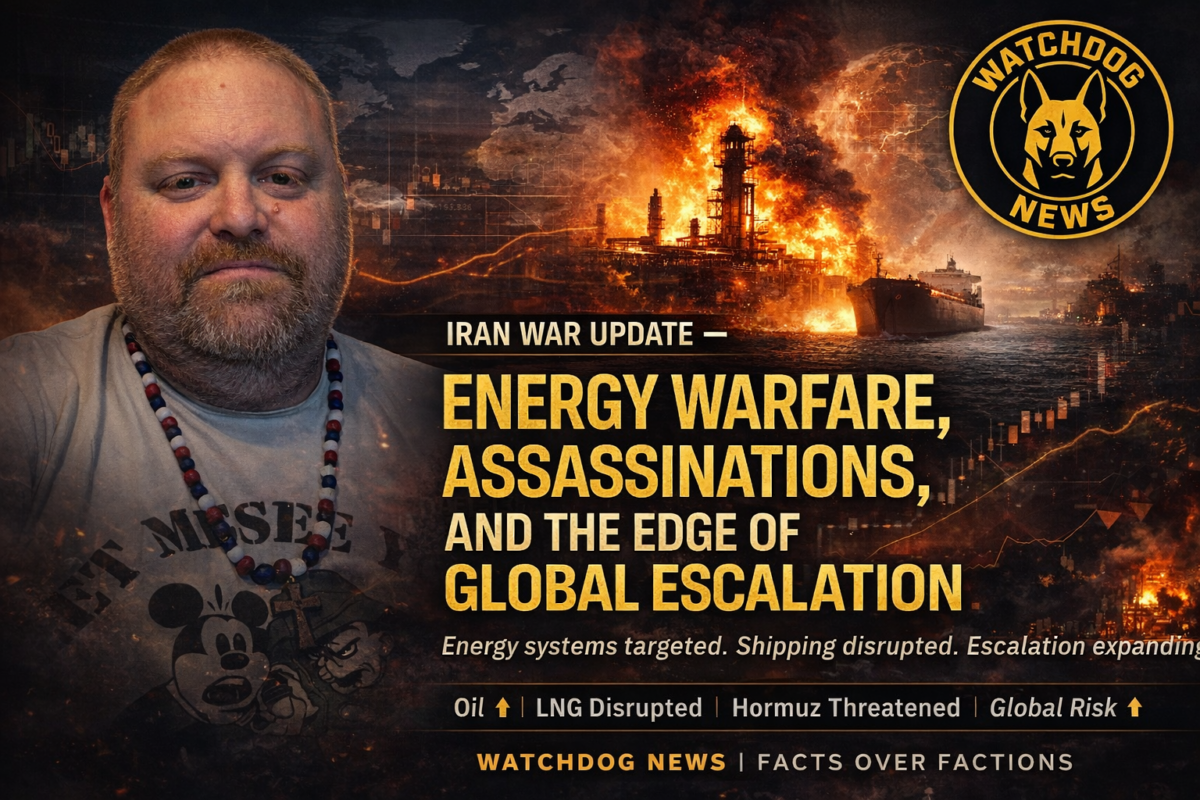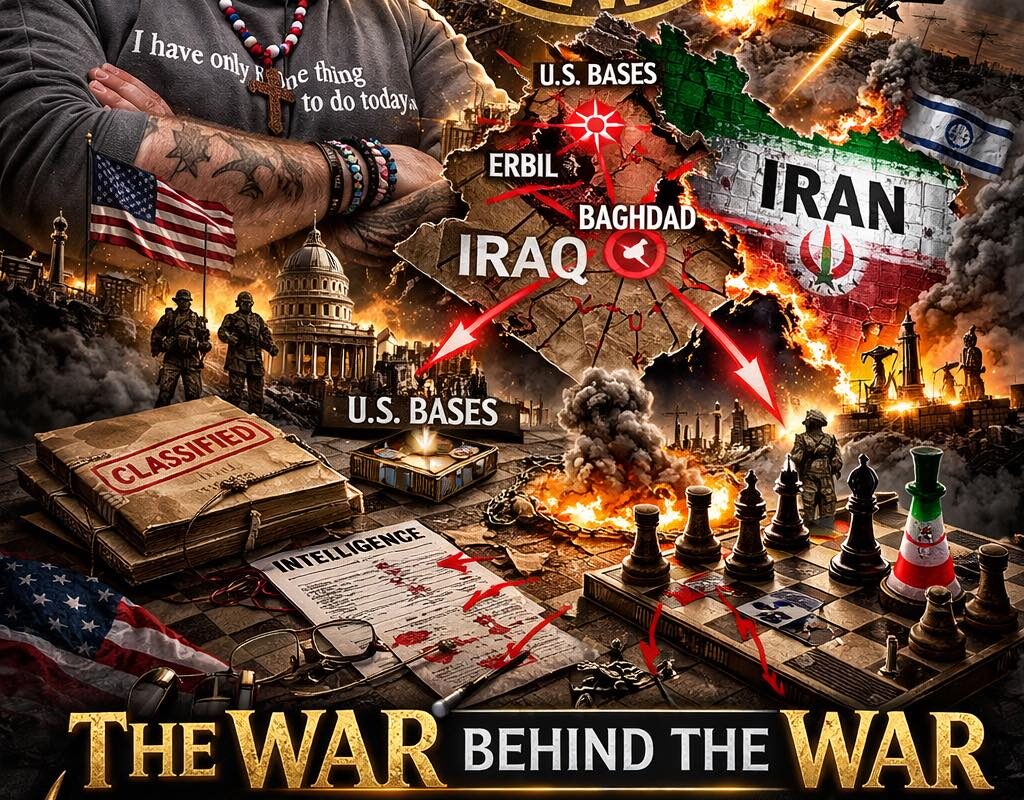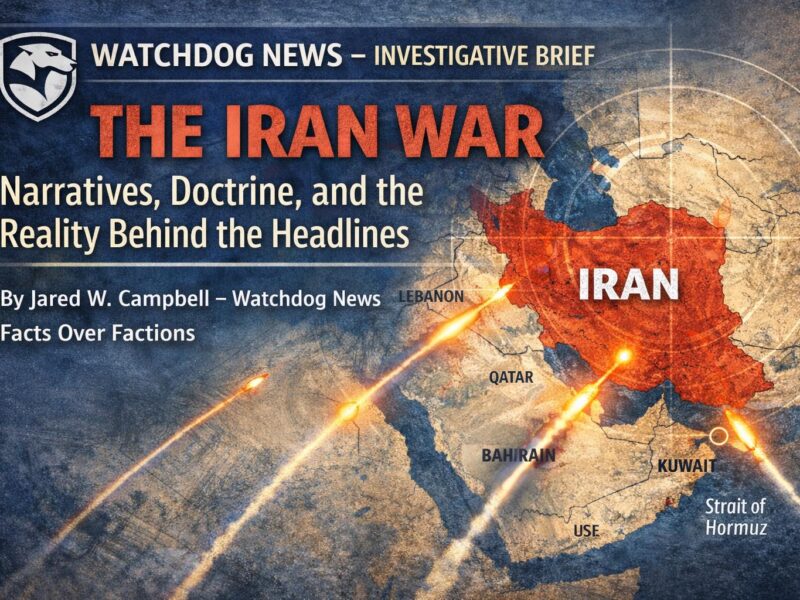


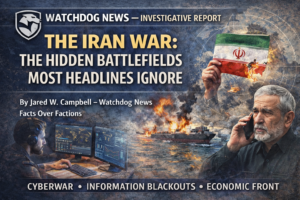
The Iran war is not fought only with missiles.
Behind the headlines are three hidden battlefields:
• cyber warfare
• information blackouts
• global energy markets
Understanding the conflict means watching all three.
Facts Over Factions.
The Iran War: The Hidden Battlefields Most Headlines Ignore
Cyberwar, Information Blackouts, and the Economic Front
By Jared W. Campbell — Watchdog News
Facts Over Factions
Introduction — The War Behind the War
Most headlines about the Iran conflict focus on the visible battlefield: missiles, airstrikes, and military statements. But modern war rarely stays confined to bombs and troop movements.
Behind the headlines, another conflict is unfolding — one fought through cyber operations, information control, and economic pressure.
These battlefields are quieter, less visible, and often poorly understood. Yet they may ultimately shape the war’s outcome just as much as any missile strike.
A Watchdog investigation into current reporting reveals three underreported fronts in the Iran war:
- The cyber battlefield
- The information blackout inside Iran
- The economic war centered on energy and infrastructure
Each tells a different story about how modern conflicts are fought.
1. The Cyber Battlefield — War in the Digital Domain
The opening phase of the conflict appears to have included a significant cyber component aimed at disrupting Iran’s communications infrastructure.
According to reporting cited by intelligence and cybersecurity sources, cyber operations targeted Iranian government networks, media infrastructure, and military communications.
One report described the operation as combining electronic warfare with cyber intrusions that disrupted aviation systems, energy infrastructure, and digital communications networks.
Western intelligence sources reportedly viewed these operations as a means of preventing Iranian military coordination during the early strikes.
In modern warfare, cyber attacks often serve as a force multiplier.
Instead of destroying physical systems directly, they can:
- disrupt communications
- turn off logistics
- interfere with navigation systems
- undermine command structures
This is not theoretical.
Cyber warfare has already appeared in conflicts involving:
- Russia and Ukraine
- Israel and Iran
- U.S. operations against ISIS
The Iran war appears to be following the same pattern.
However, cyber warfare is rarely one-sided.
Iran has spent years developing cyber capabilities of its own, including groups linked to the Islamic Revolutionary Guard Corps that have previously targeted financial institutions and infrastructure abroad.
Security analysts warn that retaliation in cyberspace could target energy networks, transportation systems, or government institutions tied to countries involved in the conflict.
In other words, part of this war may unfold far from the Middle East — inside digital networks around the world.
https://www.jpost.com/israel-news/defense-news/article-888271
2. The Information Blackout — A Country Cut Off
Another underreported development is the near-total collapse of Iran’s internet connectivity.
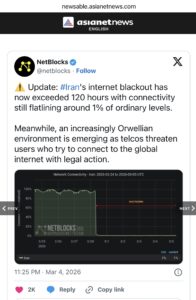
Monitoring group NetBlocks reported that internet connectivity in Iran dropped to around 1% of normal levels during the escalation of the conflict.
Connectivity monitors described the situation as a near-total communications blackout.
The shutdown has had several consequences.
First, it severely limits people inside Iran’s ability to communicate with the outside world.
A Tehran resident told reporters that communication has become extremely difficult:
“You can’t call, and voice messages don’t get delivered.”
Second, it creates a severe information vacuum.
When a country goes offline during wartime, verifying events becomes extremely difficult.
Journalists, analysts, and humanitarian groups often rely on:
- social media footage
- eyewitness reports
- satellite communications
When those channels disappear, competing narratives flourish.
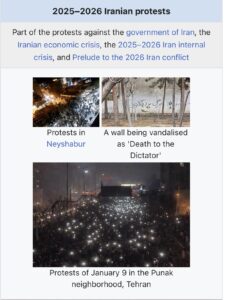
Iran has used internet shutdowns during previous crises, including protests earlier in 2026, when authorities restricted connectivity to control unrest.
Screenshot
Critics argue that blackouts help governments conceal events and control public perception.
Iranian authorities argue the opposite — that information controls are necessary to maintain national security during conflict.
Both claims appear regularly in discussions about wartime communication restrictions.
Screenshot
What remains clear is that millions of civilians are currently living through the war with very limited access to information.
https://www.iranintl.com/en/202603047987
3. The Economic Battlefield — Energy as a Strategic Weapon
War in the Middle East almost always intersects with energy markets.
The current conflict is no exception.
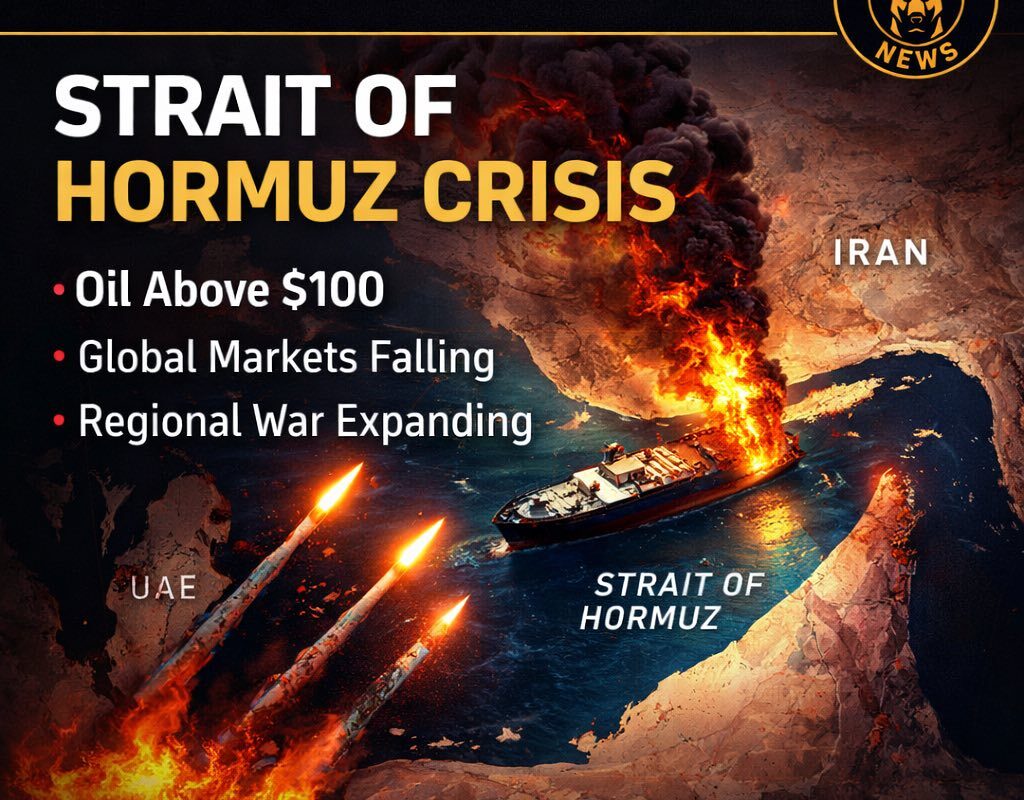
Iran sits beside one of the most strategically important waterways on earth: the Strait of Hormuz.
Roughly a fifth of global oil and gas shipments pass through this narrow maritime corridor.
That means even the threat of disruption can move global markets.
Energy analysts have already reported volatility in oil prices following the escalation of the conflict.
The economic consequences of conflict in the region can ripple outward quickly.
Higher energy prices affect:
- transportation costs
- manufacturing
- global inflation
- household budgets
This economic dimension means that wars in the Middle East rarely stay regional.
They often become global economic events.
For governments, energy infrastructure can also become a target — either physically or through cyber operations.
Military planners have long understood that disrupting an adversary’s energy systems can weaken its ability to sustain prolonged conflict.
The Watchdog Perspective — Three Wars Happening at Once
Looking across these developments reveals something important.
The Iran war is not just a military confrontation.
It is simultaneously:
A military war
Missiles, airstrikes, and regional forces.
An information war
Narratives, propaganda, and communications control.
An economic war
Energy markets, shipping lanes, and financial pressure.
Each battlefield influences the others.
Missile strikes shape political narratives.
Information blackouts shape public perception.
Energy disruptions shape global economic stability.
Understanding the war requires watching all three.
The Watchdog Conclusion
History shows that a single battle rarely decides wars.
They unfold across multiple domains — military, political, economic, and technological.
The Iran conflict is already demonstrating that reality.
While headlines track missile strikes and political statements, quieter battles are shaping the larger strategic picture.
Cyber operations are targeting infrastructure.
Information blackouts are limiting transparency.
Energy markets are reacting to regional instability.
These hidden fronts may ultimately prove just as important as anything happening on the battlefield.
Because in modern war, victory is rarely decided by bombs alone.
It is decided by who controls the networks, narratives, and resources that sustain power.
👁️ Jared W. Campbell
Watchdog News
Facts Over Factions