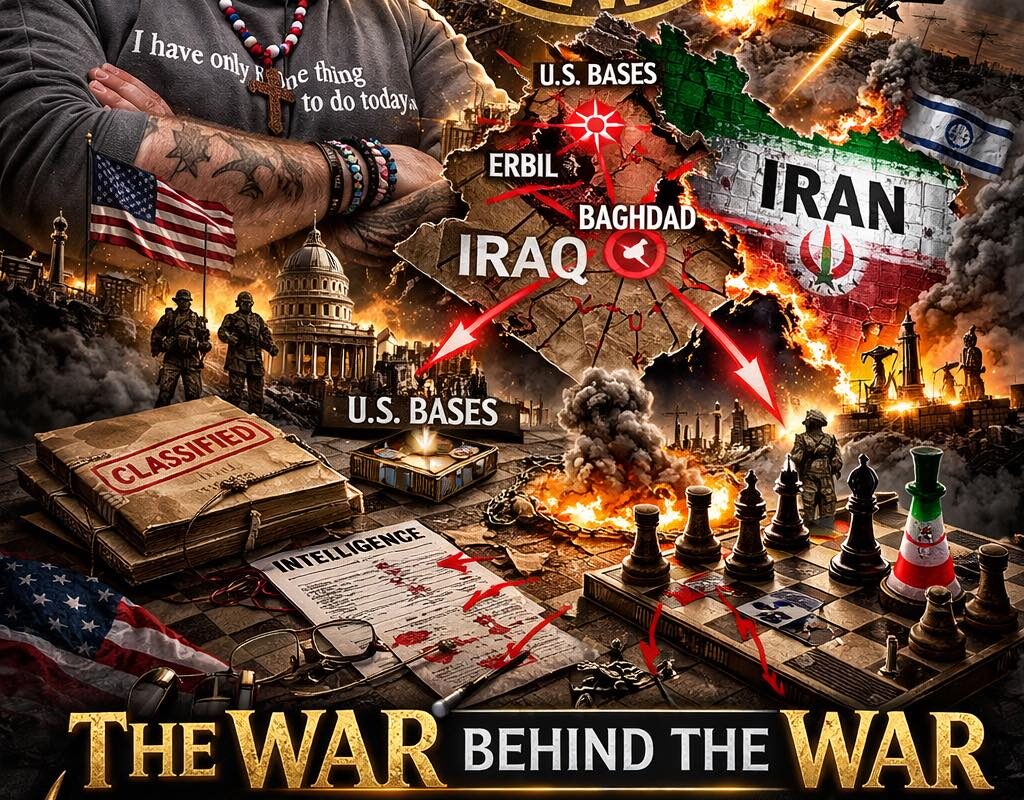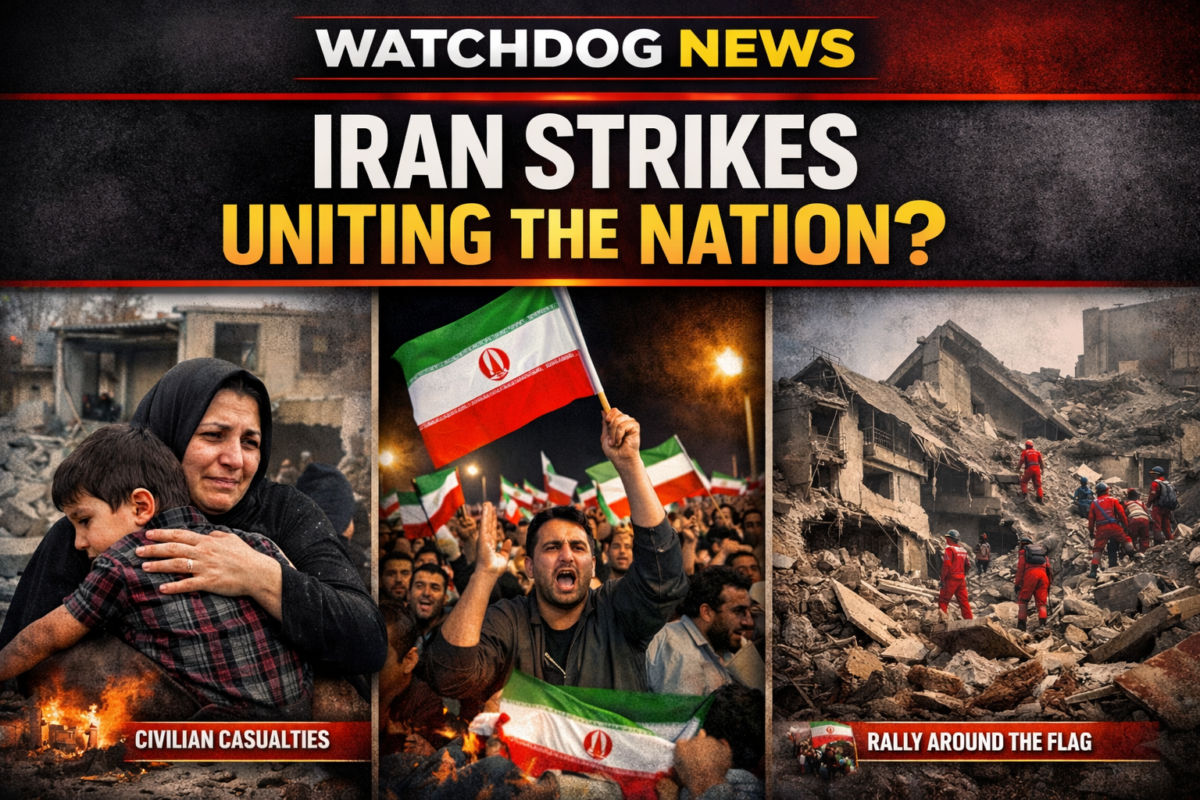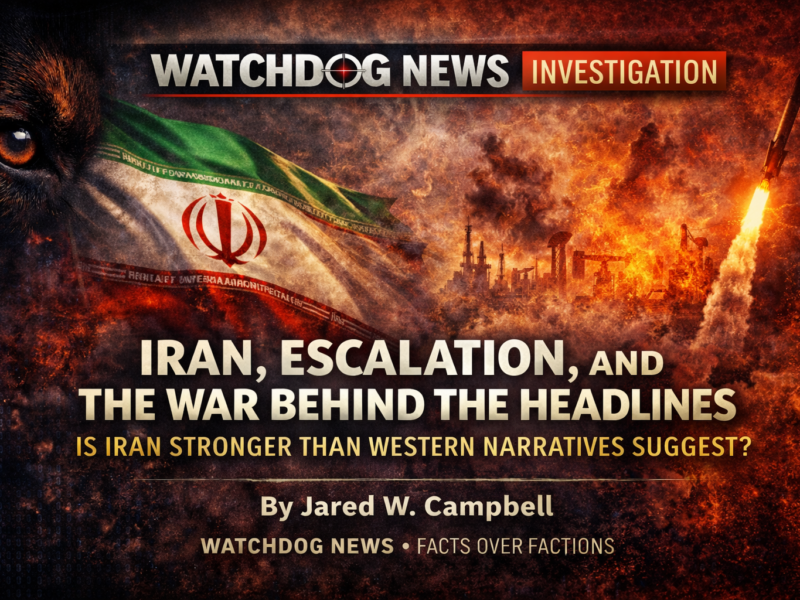


If infrastructure is destroyed… how are missiles still launching?
Because modern war isn’t decided by one strike — it’s shaped by attrition, resilience, and narrative framing.
👁️ Facts Over Factions.
Missiles, Narratives, and the Reality of Modern War
By Jared W. Campbell — Watchdog News
Facts Over Factions
The Watchdog is hearing a growing question from readers:
If U.S. and Israeli forces are destroying large portions of Iran’s military infrastructure, how is Iran still launching missiles?
The answer reveals an uncomfortable truth about modern warfare — and about how war is communicated to the public.
Military strikes can damage facilities, eliminate commanders, and degrade capabilities. But destruction of targets does not equal elimination of capacity. Iran’s military doctrine has long relied on dispersion, underground storage, mobile launch systems, and redundant production networks specifically designed to survive sustained air campaigns.
In other words, what is destroyed publicly is often only part of what exists operationally.
A single strike or headline announcement does not decide modern conflicts. They unfold through attrition — a slow contest between degradation and regeneration. Iran retains missile stockpiles, hardened launch sites, and ongoing production capability. As long as even a fraction survives, retaliation remains possible.
This is not speculation. It is a basic military reality recognized by defense analysts across multiple countries.
The public, however, often receives simplified messaging. Governments highlight tactical success because confidence stabilizes domestic audiences and reassures allies. Adversaries emphasize resilience to project strength and deter escalation. Both narratives serve strategic purposes.
“The truth usually lives between them.”
War today is fought on two battlefields simultaneously:
- the physical battlefield of missiles and airstrikes, and
- the informational battlefield of perception and narrative control.
When citizens hear that infrastructure has been “destroyed,” many understandably assume the threat has ended. But modern military systems — especially those designed after decades of sanctions and asymmetric planning — are built to survive precisely this kind of pressure.
Iran continuing to fire missiles does not necessarily mean strikes failed.
It means the conflict has entered the phase military planners expect: sustained escalation rather than decisive collapse.
The Watchdog’s role is not to amplify fear or defend any government’s messaging. It is to remind readers of a simple principle:
War is rarely as clean or as decisive as official statements suggest.
Understanding reality requires separating battlefield outcomes from narrative framing.
Because in modern conflict, perception moves faster than facts — and clarity becomes the first casualty long before peace ever arrives.
👁️ Jared W. Campbell
Watchdog News — Facts Over Factions