

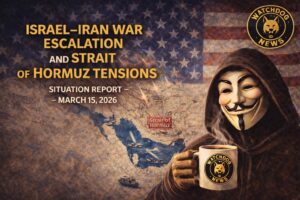
Israel–Iran War Escalation and the Strait of Hormuz Crisis
Israel–Iran War Escalation and the Strait of Hormuz Crisis
Situation Report — March 15, 2026
By Jared W. Campbell — Watchdog News
👁 Facts Over Factions

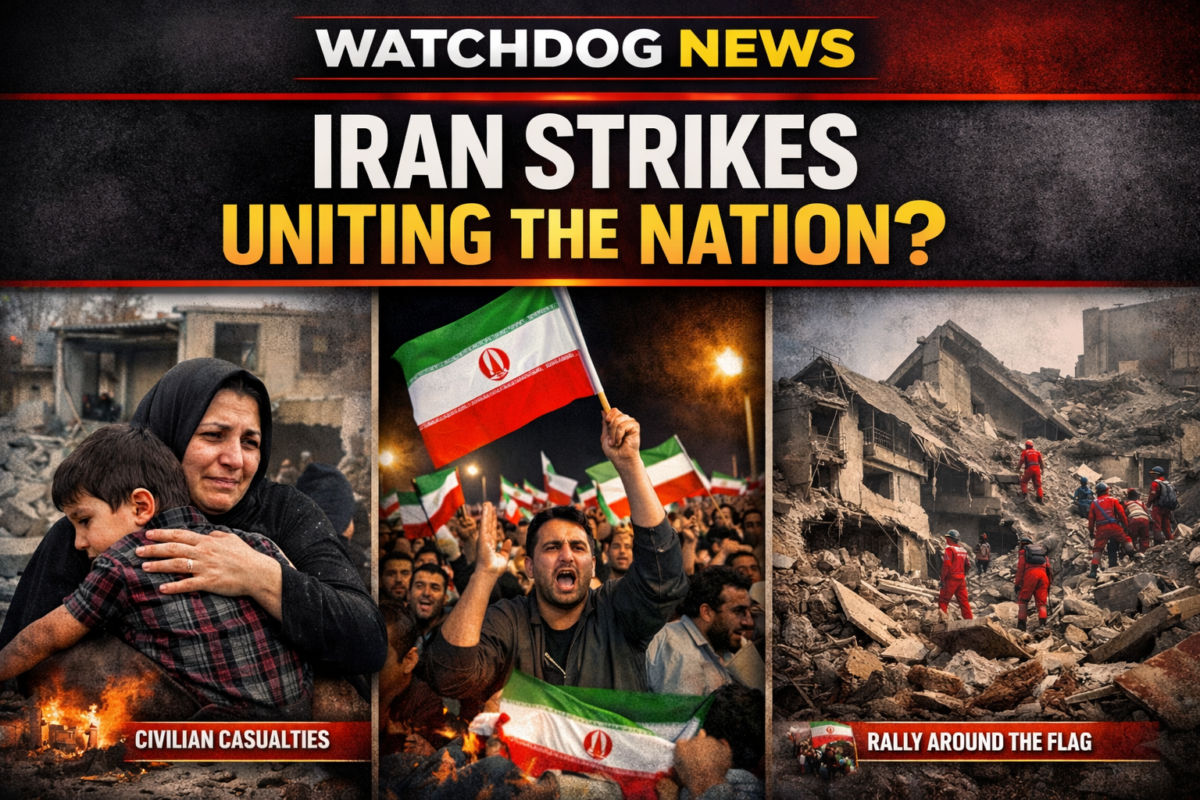
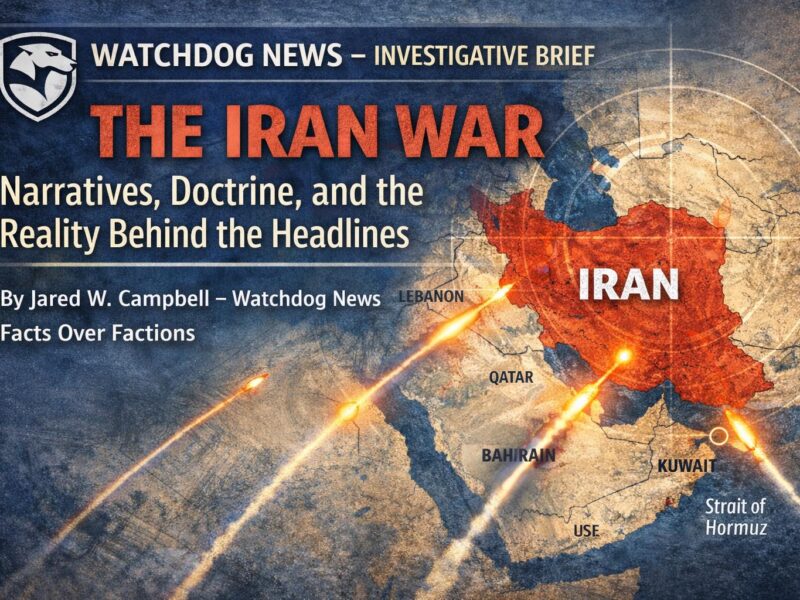
A War Entering a New Phase
The conflict between Israel, the United States, and Iran appears to be entering a new and more dangerous phase.
The ongoing military and diplomatic developments, especially around the Strait of Hormuz, should prompt the audience to be concerned about regional stability and global security.
While each side claims momentum, the reality is that none of the major actors appear close to achieving decisive objectives.
Instead, the war is beginning to resemble something analysts have warned about for years:
A prolonged regional conflict with global economic consequences.
Israeli Military Operations Continue
Israeli military leadership has made it clear that its campaign against Iran is not nearing completion.
According to Israeli officials, operations are expected to continue for at least three more weeks, with contingency planning extending beyond that timeline.
Israeli statements indicate:
• Since the war began on February 28, more than 400 waves of airstrikes have reportedly taken place
• According to Israeli officials, “thousands of targets” remain inside Iran
• Coordination with the United States continues to shape many of the operations
• The military leadership describes the campaign as goal-based rather than timetable-based
The stated objective is to degrade Iran’s military infrastructure and strategic capabilities significantly.
However, Israeli officials are also acknowledging that the conflict is expanding regionally.
Hezbollah forces in southern Lebanon are now increasingly involved, opening another potential front that could stretch Israeli military resources.
Iran Rejects Negotiations — For Now
On the diplomatic front, Iran has taken a firm position.
Iranian Foreign Minister Abbas Araghchi has publicly stated that Tehran currently sees no reason to negotiate with the United States.
Iranian officials argue that:
• The United States allegedly attacked Iran while negotiations were underway
• According to Iranian officials, Tehran has not requested a ceasefire since the conflict began
• Iranian leaders also dispute statements by President Donald Trump suggesting Iran may seek a deal
However, Iran has signaled limited flexibility in one critical area.
Officials have reportedly indicated that certain countries may be granted safe passage through the Strait of Hormuz at the request of foreign governments.
Those countries have not been publicly identified.
This suggests Iran may be attempting a selective pressure strategy rather than a full maritime blockade.
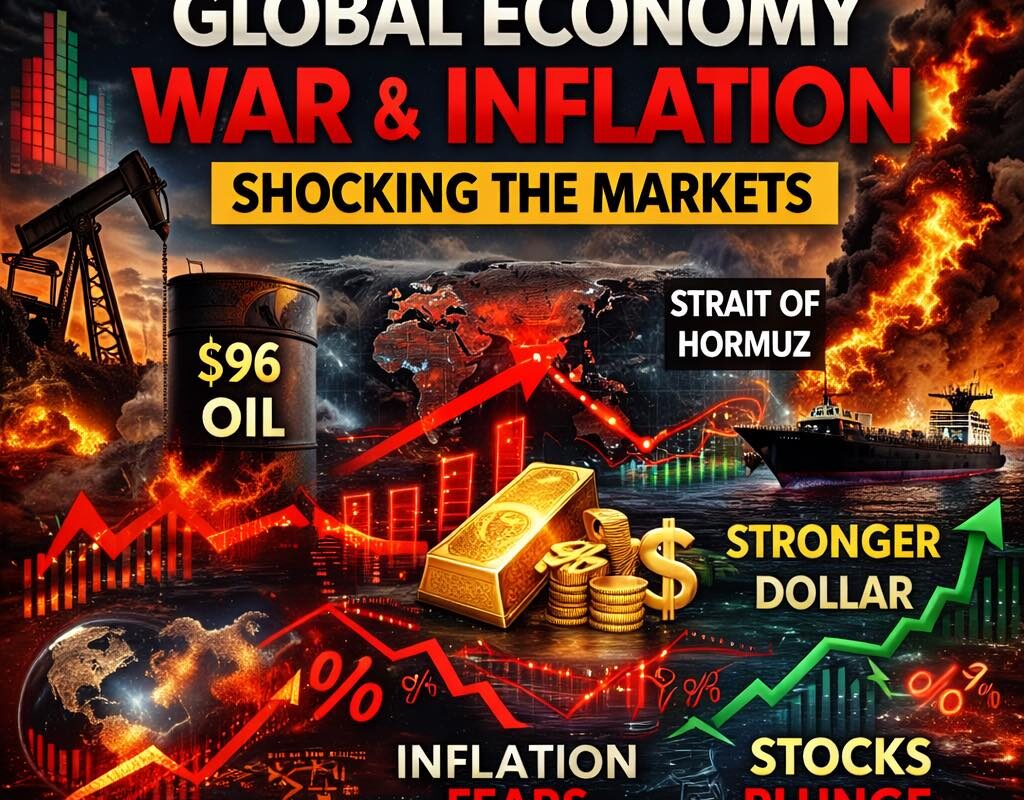
As the conflict shifts, the Strait of Hormuz’s role as a critical global energy conduit becomes increasingly central to understanding the broader implications of the escalation.
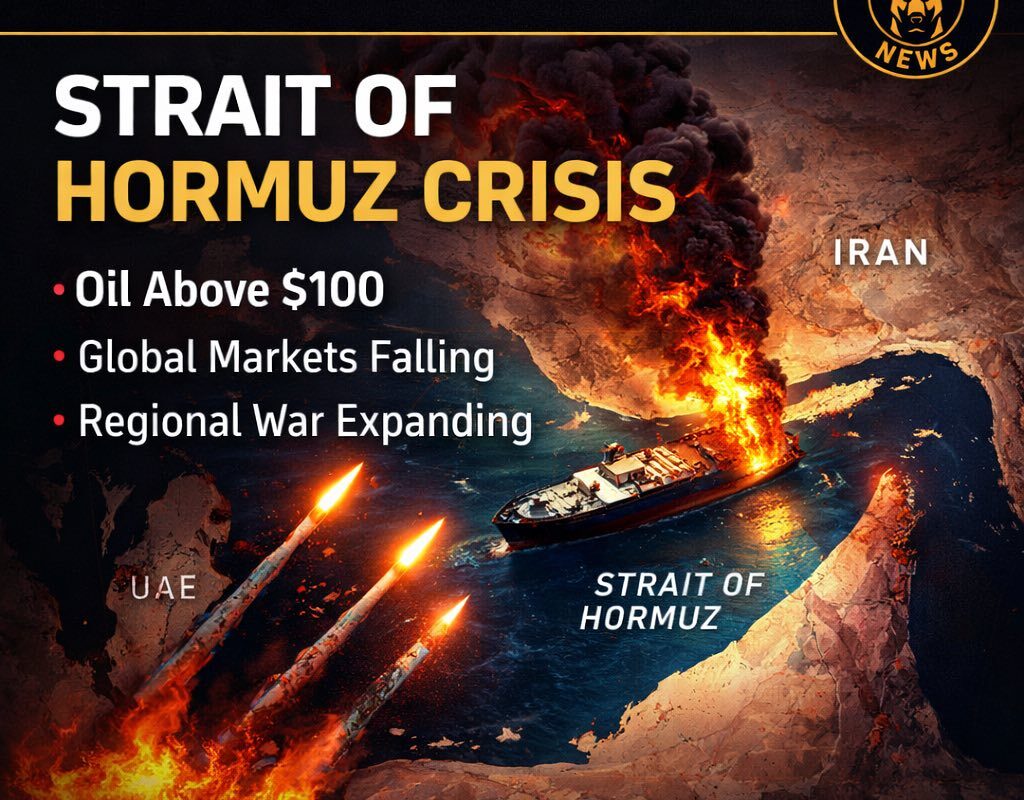
Increasingly, the center of gravity in the conflict is shifting toward the Strait of Hormuz.
The narrow waterway handles:
• Roughly 20% of the global oil trade
• A large portion of global liquefied natural gas shipments
• Critical shipping routes connecting the Persian Gulf to global markets
Recent developments indicate that:
• Iran has restricted or disrupted shipping access in the region
• Several governments are discussing ways to restore maritime navigation
Diplomatic efforts are now accelerating, with key players like the UK, Canada, and India actively engaging to mitigate regional instability and restore maritime navigation.
UK Prime Minister Keir Starmer has reportedly discussed reopening the Strait with President Donald Trump and is also consulting with Canadian Prime Minister Mark Carney.
Meanwhile, India is reportedly holding direct talks with Iran to stabilize shipping routes.
These developments demonstrate how the war is transcending regional boundaries, posing a significant threat to global economic stability and energy security.
Europe Considers Expanding Naval Operations
The European Union is also considering a larger maritime security role.
The EU’s naval mission known as Operation Shields currently operates in the Bab el-Mandeb Strait near Yemen, protecting shipping from Houthi attacks.
The mission currently includes ships from:
• France
• Greece
• Italy
European officials are now considering expanding the mission to the Strait of Hormuz.
However, doing so would require a new operational mandate, and officials believe a joint EU–UN mission may be more politically viable than individual EU states negotiating with Iran separately.
At the same time, President Trump has suggested that multiple countries could deploy naval forces to the region, potentially including:
• China
• France
• Japan
• South Korea
• The United Kingdom
As of now, no formal commitments from those countries have been confirmed.
Iraq Incident Highlights Wider Regional Instability
Events in Iraq are also illustrating how the conflict is spreading through the region.
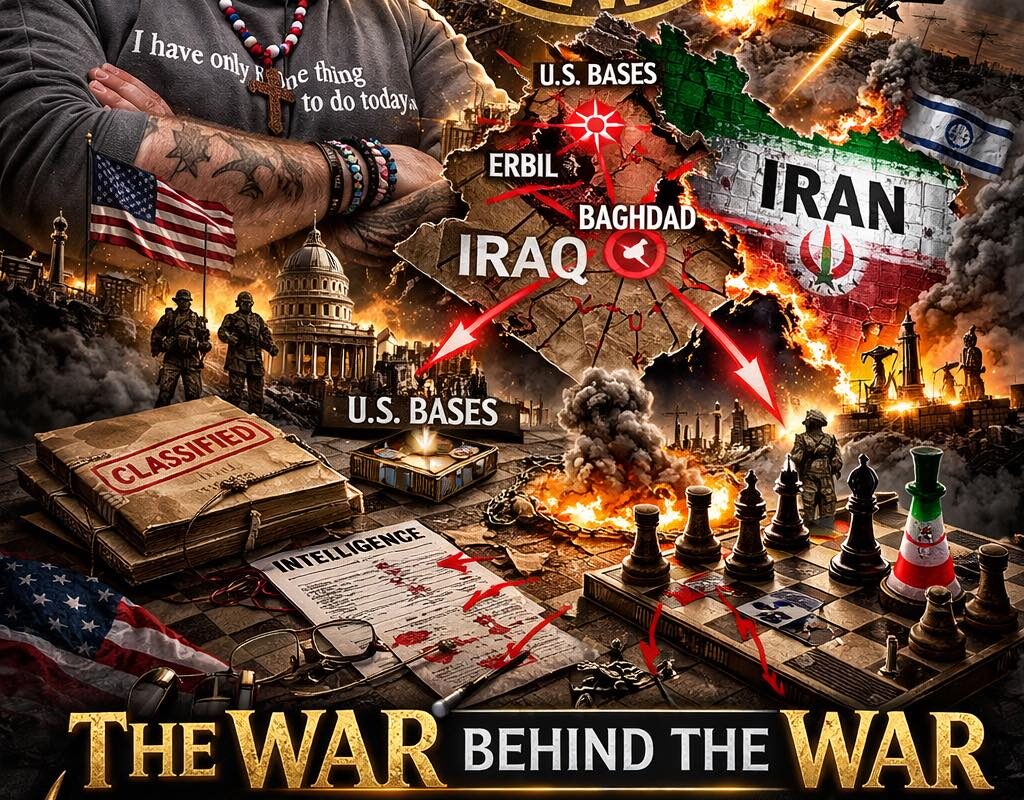
At Baghdad International Airport, a military facility near a U.S. diplomatic presence was targeted by drones and rockets.
According to early reports:
• Five people were injured
• Air defense systems intercepted several drones
While the full details remain unclear, the attack underscores the risk that regional militias and proxy forces could open additional fronts.
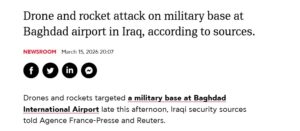
https://www.news247.gr/kosmos/irak-epithesi-se-stratiotiki-vasi-sto-aerodromio-tis-vagdatis/
Information Warfare Is Intensifying
Alongside military operations, the war is also unfolding in the information domain.
Recent rumors circulated widely on social media claiming Israeli Prime Minister Benjamin Netanyahu had been killed in an Iranian strike.
Netanyahu later released a video mocking the rumor and confirming he was alive.
Meanwhile, Iranian state-linked outlets amplified speculation surrounding his alleged death.
These events highlight a growing reality of modern conflict:
Information warfare now moves nearly as fast as missiles.
Narratives, rumors, and psychological operations are increasingly becoming part of the battlefield itself.
Netanyahu appeared in a video and pointed… his fingers
Meanwhile, after conspiracy theories spread on social media that he was killed in an Iranian strike, Israeli Prime Minister Benjamin Netanyahu today released a video mocking the rumor.
The Israeli prime minister was seen visiting a café, ironically saying, “I’m dying for… coffee,” using a common Hebrew phrase that roughly translates as “to love something to death.” “I love my nation to death,” he says, “and the way they behave.”
Then, the Israeli prime minister showed the camera his fingers to convince the camera that there were five, not six, on each hand, and that his appearance on Thursday at a press conference was real.
It is recalled that after that press conference, excerpts were released on social media, which zoomed in on his fingers as they moved.
Iranian state news agencies fueled the online rumors and speculation. The official Islamic Republic News Agency reported in a post on X that the Revolutionary Guards had vowed to kill Netanyahu “if he is still alive.” In contrast, the Tasnim News Agency reported that “pressure is being exerted on Netanyahu to deny rumors of his death or injury.”
The Strategic Picture
Stepping back, several key realities are emerging.
1. The war is unlikely to end quickly.
Israeli operations have already been planned for weeks.
2. Diplomatic negotiations remain stalled.
Neither Washington nor Tehran currently appears ready to compromise.
3. The Strait of Hormuz is becoming the global flashpoint.
Energy markets and global shipping routes now hang in the balance.
4. Regional escalation is increasing.
Hezbollah involvement, attacks in Iraq, and proxy activity all raise the risk of wider conflict.
The Watchdog View
At this stage, the most important question may not be who is winning individual strikes.
The real question is whether the conflict evolves into something larger:
• a prolonged regional war
• a maritime confrontation in the Persian Gulf
• or a broader geopolitical crisis involving multiple global powers
History shows that conflicts centered around energy chokepoints rarely remain contained for long.
And today, the Strait of Hormuz sits at the intersection of:
military power, global energy markets, and great-power politics.
What happens next may shape far more than just the Middle East.
👁 Facts Over Factions
Watchdog News