

U.S. troop deployments and Houthi missile activity signal rising risk of a wider regional conflict.
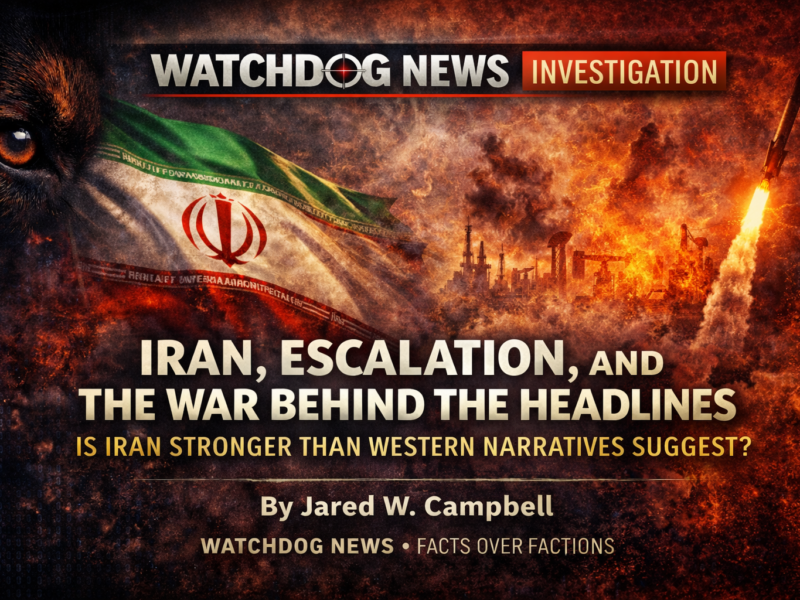
Iran War Update: Troop Buildup, Houthi Expansion, and the Risk of a Wider Regional Conflict
By: Jared W. Campbell
Facts over Factions.
March 28, 2026

In this Watchdog News Report, I’m excited to take you on an investigative journey into the escalating situation surrounding the war in Iran. Over the past week, I’ve dedicated my time to delving into the complexities of this conflict, a pursuit that has not only deepened my understanding but also offered me a fresh perspective on its far-reaching implications. This focus has been instrumental in providing me with the mental clarity to interpret what these developments might signify for the future.
Recent intelligence indicates a significant troop buildup in the Middle East, with over 5,000 U.S. soldiers and Marines now stationed there. This significant mobilization raises urgent concerns about further military escalation. Locations like Karg Island — vital to Iran’s military and energy infrastructure — could become focal points for potential conflict. In light of the region’s history and its inherent volatility, any aggressive action could lead to a devastating toll on both American forces and Iranian military personnel alike.
But let’s not get lost in just the military dimensions. As we sift through the growing array of sources and viewpoints, it’s crucial to consider the broader geopolitical landscape that a possible invasion or an expanded military campaign could shape. Gaining insight into the motivations driving this troop increase and the potential outcomes that may follow is vital as we navigate this intricate and perilous environment.
In this report, I’ll weave together perspectives from analysts, official statements, battlefield updates, and regional insights to paint a comprehensive picture of what this military buildup could mean for regional stability and the future of U.S. involvement in another drawn-out conflict. Join me as we unpack the layers of this situation and explore its implications.
The New Military Signal: Troops, Missiles, and Escalation Risk
CENTCOM has reported that 5,000 Marines and soldiers have arrived in the Middle East, with an additional 2,500 Marines also deployed amid the ongoing crisis. On the same day, Israel announced that the Houthis had launched a second missile, indicating that the conflict is expanding beyond Israel and Iran.
This development is significant, as troop buildups and missile launches by various groups suggest a potential escalation of the conflict.
The war in the Middle East has now entered its second month, with continued attacks from both sides. Israeli strikes on Iranian nuclear facilities and persistent bombings in Tehran have drawn attention to the evolving situation. Notably, the Houthis from Yemen have launched two missiles toward Israel, which could indicate the opening of a broader front in the conflict on the Arabian Peninsula.
The Houthis’ Entry Changes the Equation
The Houthis’ involvement in the conflict introduces a significant dimension to the ongoing situation. Their participation raises concerns about the potential for an expanded regional confrontation that may involve Iran, Israel, Yemen, the Red Sea, and the Gulf.
A critical issue is the threat to shipping in the Red Sea, particularly following the attacks on October 7, which demonstrated the Houthis’ capability to disrupt maritime movement. In 2025, the United States, led by Donald Trump, alongside the United Kingdom, initiated a bombing campaign aimed at deterring Houthi attacks. This campaign targeted numerous sites and resulted in the deaths of several senior Houthi officials, ultimately leading to a ceasefire agreement, but not a lasting resolution.
As the Houthis have now openly engaged in the conflict involving Iran, concerns about the implications for shipping and regional stability have intensified.
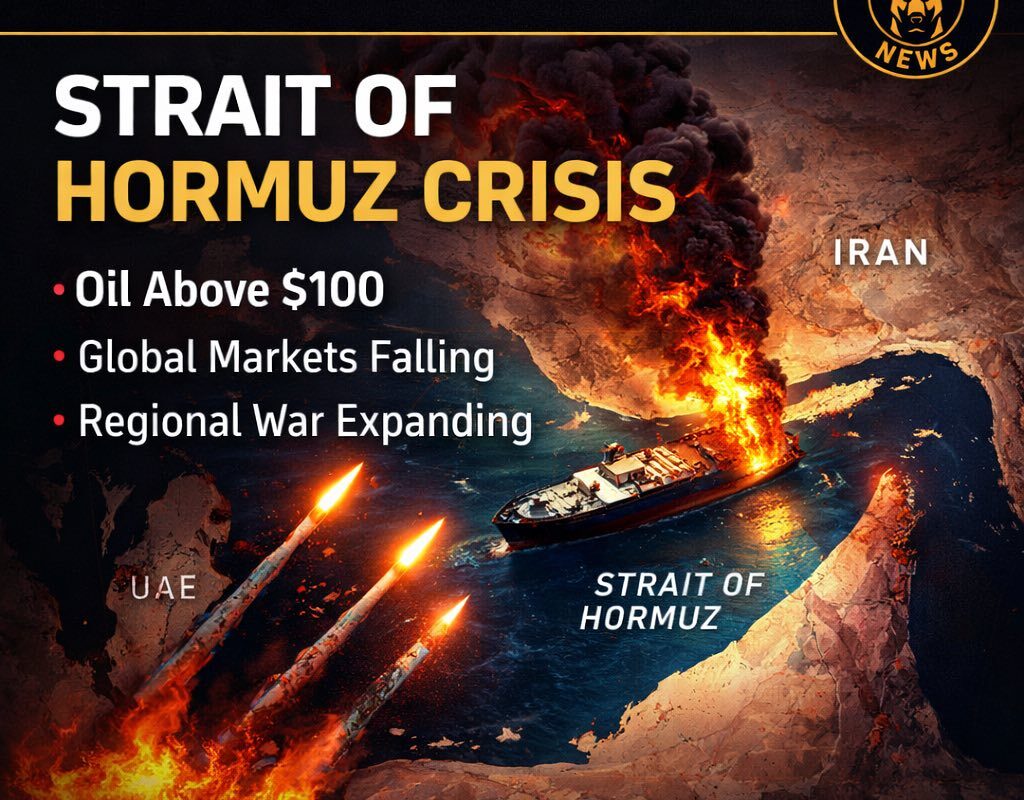
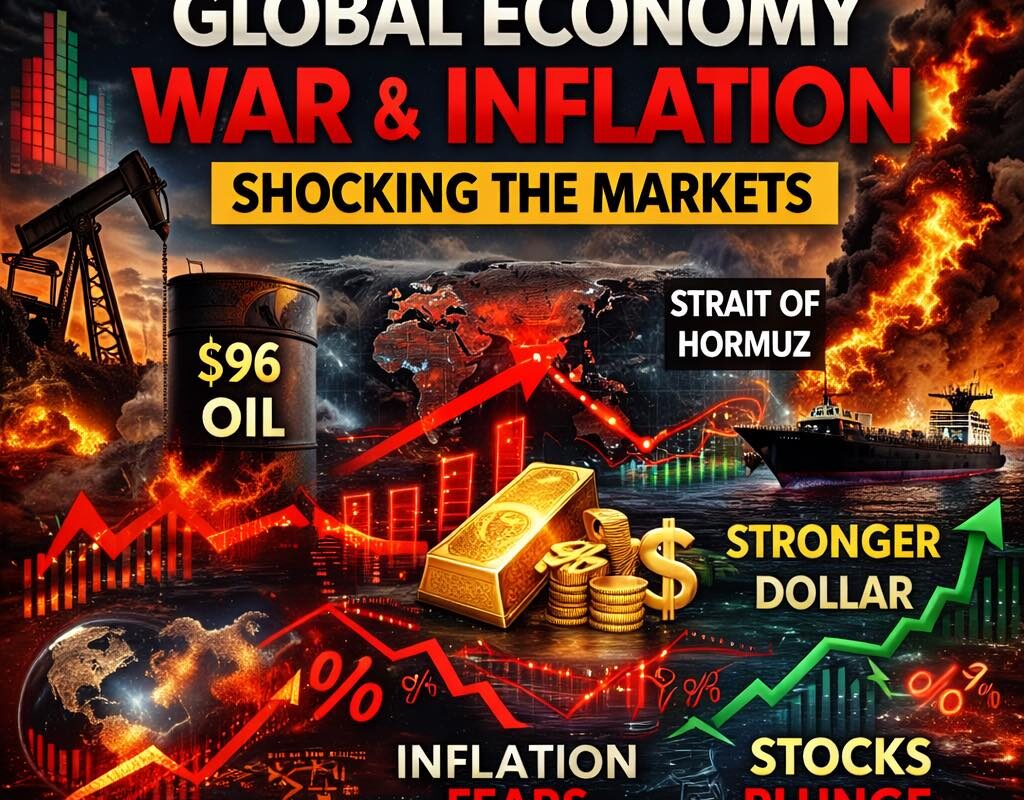
This situation is particularly pressing given the challenges currently facing the global energy system, especially following the closure of the Strait of Hormuz, a crucial chokepoint through which approximately one-fifth of the world’s oil and liquefied natural gas typically passes. The Houthis have previously demonstrated the ability to strike targets beyond Yemen and interfere with maritime routes around the Arabian Peninsula and the Red Sea, as evidenced during the Gaza conflict.
In summary, the conflict is increasingly focused on control over critical energy routes, trade channels, and regional access.
Trump’s Dilemma: Exit Strategy or Deeper War?
In the wake of these developments — with energy prices rising and political pressure mounting at home — President Donald Trump faces a narrowing set of choices.
Analysts increasingly frame the moment in stark terms: make a deal, possibly an imperfect one, and walk away — or escalate militarily and risk a protracted war that could severely damage his presidency.
Despite intense diplomatic activity, Trump is now closing out another week of the joint U.S.-Israeli campaign while struggling to contain the broader crisis. Iran continues to exert pressure over Gulf oil and gas flows, while missile and drone attacks persist across the region. The central question, according to analysts, is whether Trump is actually prepared to end the war — or whether he will choose to expand it further in pursuit of an undefined strategic victory.
This is where the situation becomes even more dangerous.
Trump has reportedly told aides that he wants to avoid a “war without end” and find a negotiated exit. He has asked advisors to emphasize the duration of hostilities, which he has publicly set at 4 to 6 weeks. That desire for an exit appears to line up, at least in part, with recent comments from Vice President J.D. Vance, who stated that the U.S. would withdraw from Iran “soon.”
Vance said:
“The president is going to continue for a while longer to make sure that once we leave, we don’t have to do this again for a long time. We have to neutralize them [the Iranian government], and that is our goal.”
But according to a senior White House official cited by Reuters, that timeline remains “unstable.”
At the same time, Trump has threatened major military escalation if talks fail. His diplomatic outreach to Iran — including a reported 15-point peace proposal sent through a channel in Pakistan — suggests an increasingly urgent attempt to find an off-ramp. But whether a realistic path to negotiation still exists is far from clear.
https://tribune.com.pk/story/2599801/vice-president-vance-says-us-to-get-out-of-iran-soon
The article link is five days old, but an interesting read:
The Peace Proposal and the Strategic Problem
Trump’s reported 15-point plan appears similar to terms Iran had already rejected before the war. It includes demands such as dismantling Iran’s nuclear program and abandoning its missile stockpiles. Iran, for its part, has called those terms “unfair and unrealistic.”
While Trump has claimed that Iran is “begging” for a deal, Iranian leaders appear to believe that simply surviving the current military campaign may itself amount to a form of victory. That means Tehran may feel little urgency to negotiate from a position it sees as stable enough to endure pressure.
Jonathan Panikoff, a former U.S. national security official focused on the Middle East, reportedly captured the core problem well:
“The biggest problem is the lack of clarity about what would constitute a satisfactory outcome.”
That may be the defining issue of this entire war.
If Washington cannot clearly define victory, then escalation becomes easier than resolution.
Trump has also reportedly backed away from earlier threats to destroy Iran’s energy grid if navigation through the Strait of Hormuz is not restored. That retreat suggests serious concern inside the administration about market shock, oil prices, and the political consequences of a deeper energy crisis.
And those political consequences are already visible.
Trump’s approval rating has reportedly fallen to 36%, the lowest level since his return to the White House. While the MAGA base has thus far supported much of his broader foreign policy posture, sustained economic pain — especially rising gas prices — could weaken that support. Public anxiety about war is growing, and concern over the coming November midterm elections is intensifying.
The War Beyond Iran: Lebanon, Journalists, and Legal Fallout
The conflict is also widening in other ways.
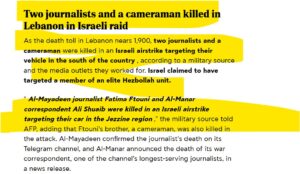
In Lebanon, where the death toll is nearing 1,900, two journalists and a cameraman were killed in an Israeli airstrike targeting their vehicle in the south of the country. According to a military source and the media outlets involved, those killed were Al-Mayadeen journalist Fatima Ftouni, Al-Manar correspondent Ali Shuaib, and Ftouni’s brother, cameraman Mohammed Ftouni, in the Jezzine region.
Israel, however, claimed that Ali Shuaib was not merely a journalist, but a member of the al-Radwan force, an elite Hezbollah unit, operating “under the cover of a journalist” and “systematically exposing the positions of Israeli soldiers operating in southern Lebanon.”
Lebanon strongly condemned the strike.
Lebanese President Joseph Aoun called it a “blatant crime” and a “violation of international law.” Lebanese Information Minister Paul Morkos said the government was preparing a complaint to the UN Security Council.
 Aoun wrote that the attack was:
“a flagrant crime that violates all the rules and conditions under which journalists enjoy international protection in times of war.”
He added that Israeli aggression had once again violated the most basic rules of international law, international humanitarian law, and the laws of war by targeting journalists, who are civilians carrying out their work.
This matters because every such incident adds another layer of legal, diplomatic, and moral pressure to an already volatile regional war.
 Bushehr: A Nuclear Flashpoint Still in Play
Iran has also reported a new attack on the Bushehr nuclear power plant in the south of the country — the third such attack in ten days, according to the International Atomic Energy Agency (IAEA).
The IAEA stated that no damage was reported to the active reactor, no radiation emissions were detected, and conditions at the station remained normal, citing Iranian officials. According to Iran’s Fars news agency, the strike occurred on Friday at 23:40 local time.
Bushehr is Iran’s only operating nuclear power plant. It was previously attacked on March 17 and March 24, again without reported damage. After the second strike, Russia announced the evacuation of its personnel working at the Russian-built facility. The plant, which began operations in the early 2010s, has a capacity of 1,000 megawatts, and before the war, Russia had been building two additional units there.
Even without confirmed reactor damage, repeated attacks on an operating nuclear site are a warning sign that should not be minimized.
Why the Houthis Matter More Than Ever
The Houthis have for weeks expressed support for Iran, their principal strategic, political, and financial backer. Many analysts had expected their intervention if the war continued long enough.
In a televised statement, Houthi military spokesman Yahya Saree declared:
“We confirm that our fingers are on the trigger for immediate military intervention.”
The next morning, Israeli authorities said they had detected a missile launch from Yemen, triggering alarms in Beersheba in southern Israel.
This development raises the prospect of a broader conflict with a new front now opened on the Arabian Peninsula.
The Houthis, who control northern and northwestern Yemen, have not yet fully deployed what may be their most disruptive weapon: the ability to threaten traffic through the Bab al-Mandab Strait, which links the Red Sea to vital global trade routes. If they choose to intensify operations there, they could put not only Israeli-linked shipping at risk, but also broader international trade and neighboring Gulf interests.
That is especially significant because Bab al-Mandab is now a major route for Saudi oil exports. At the same time, Saudi Arabia remains the chief supporter of the Houthis’ rivals in southern Yemen. In other words, a Houthi expansion could pull Saudi interests directly back into a more dangerous military confrontation.
The Houthis see themselves as a major actor in Iran’s broader “axis of resistance” against Israel and the United States. Their attacks on shipping from 2023 to 2025 prompted airstrikes by the U.S., the UK, and others. Those strikes damaged Houthi capabilities, but they also hardened the group and reinforced its resistance posture.
https://www.news247.gr/kosmos/ti-simainei-i-emploki-ton-xouthi-ston-polemo/
That is the uncomfortable reality here: military retaliation did not eliminate the threat. It transformed it.
Global Shipping, Regional Fragility, and the Yemen Factor
The Houthis’ entry into the war is not only a military issue. It is a threat to global shipping and to the fragile political balance in Yemen itself.
Their renewed participation threatens to derail an already fragile peace process in Yemen. After years of devastating war since 2015, Yemen remains one of the worst humanitarian crises in the world, with millions facing food insecurity, displacement, and limited access to healthcare. A return to wider war would deepen that suffering.
If the Houthis expand operations and begin targeting Gulf Cooperation Council (GCC) countries directly, the consequences could be even more serious. The group is arguably better positioned than Iran itself to threaten Saudi infrastructure and Western military bases in the Gulf. Recent rhetoric suggests that such options are not off the table.
Any such move could trigger a return to major conflict between Saudi Arabia and the Houthis — effectively reviving a broader version of the war that had been in a ceasefire since 2022.
That would mean a conflict more intense, more destructive, and more regionally entangled than the previous phase of the Saudi-Houthi war.
https://www.news247.gr/kosmos/ti-simainei-i-emploki-ton-xouthi-ston-polemo/
The Core Watchdog Assessment
At this moment, it’s essential to recognize that the troop buildup, the Houthi missile launches, the attacks on energy infrastructure, the pressure on shipping lanes, the diplomatic efforts, and the strikes that extend beyond Iran are interconnected signals.
Together, they illuminate a conflict that is evolving, increasingly complex, and challenging to control.
The presence of over 5,000 U.S. troops and Marines in the Middle East represents more than just a figure. It embodies a commitment to military readiness in a region where even minor actions can ignite broader conflict. The potential focus on strategic targets, such as Karg Island, should be taken seriously. In a landscape so dynamic, a single operation can escalate into ten, a retaliatory strike can launch a campaign, and a campaign can lead to a protracted conflict with no clear exit.
This presents a profound challenge for Washington. It’s not merely about the choice to engage in battle. It’s about grasping how to navigate towards peace effectively.
Watchdog Closing
At Watchdog News, our mission is to rise above panic, propaganda, and emotional reactions. We aim to pierce through the fog of war and confront the challenging questions:
What profound changes are unfolding before us?
What we are witnessing transcends mere headlines from the Middle East; it reflects the potential emergence of a broader regional conflict—one marked by troop buildups, strategic chokepoints, proxy actors, domestic political pressures, and the ever-looming specter of miscalculation.
The core concern lies here:
When leaders discuss limited war yet continually open new fronts, history often reveals a different narrative.
This is the Watchdog’s imperative.
Once the machinery of escalation is set in motion, it rarely seeks permission before drawing nations, markets, and everyday people into consequences far greater than the initial promises.
This is Jared W. Campbell for Watchdog News — where we follow the pattern, question the narrative, and keep watching the road ahead.
Facts over Factions!