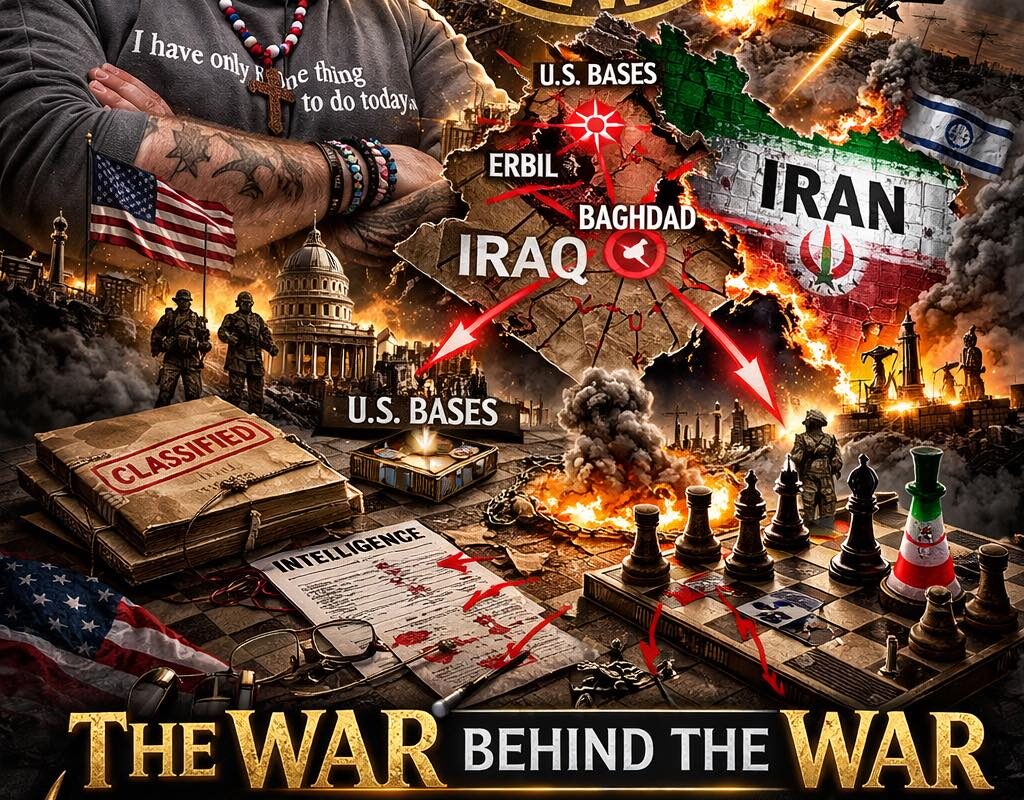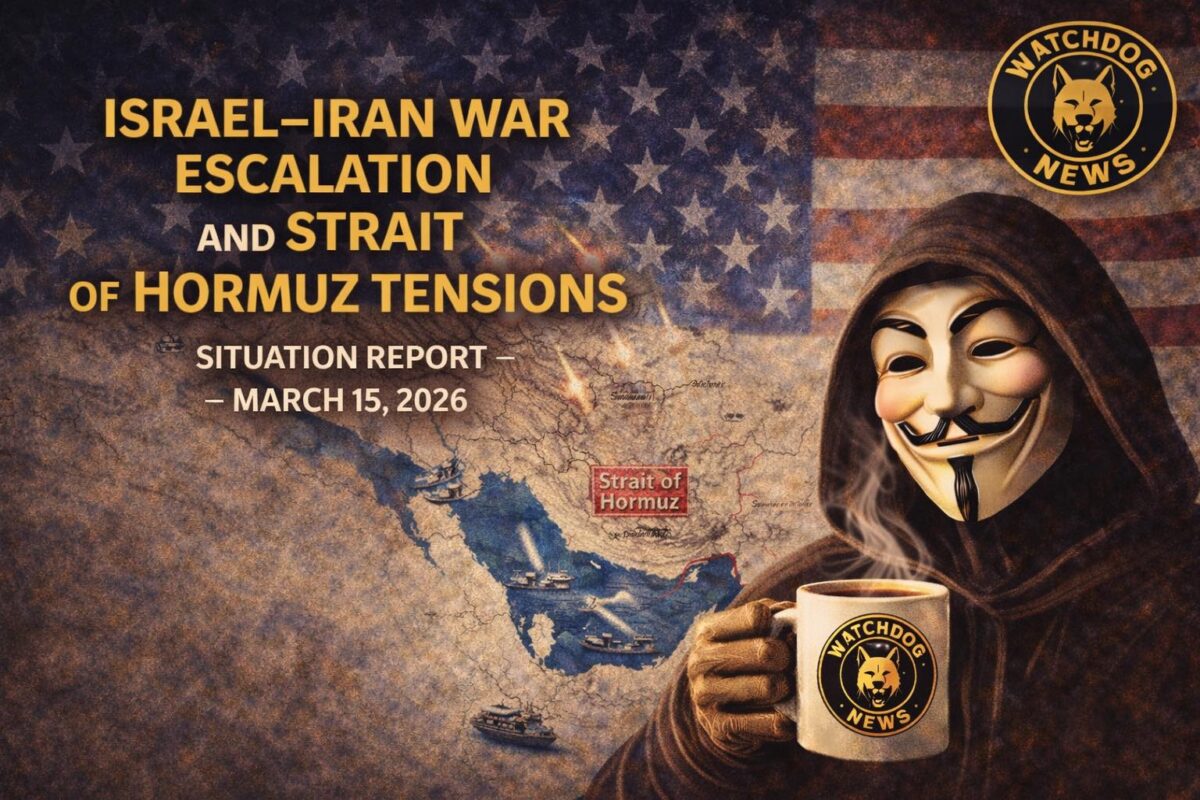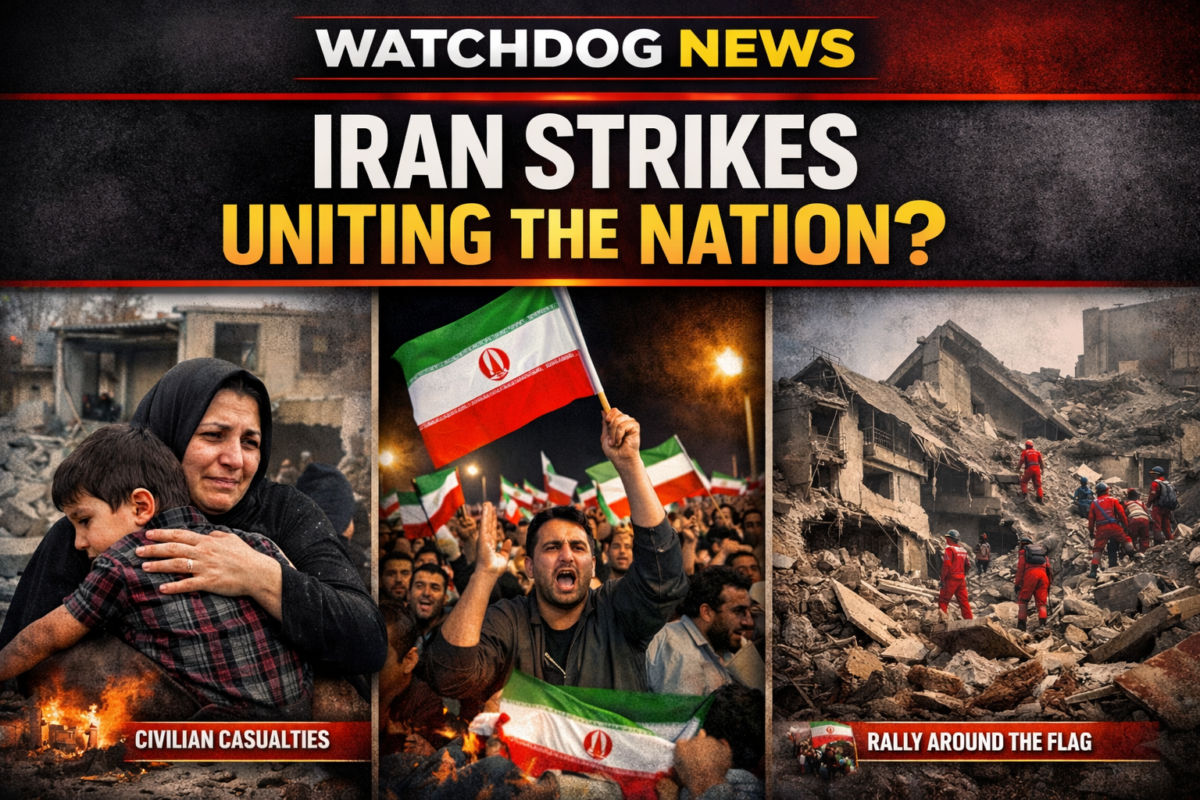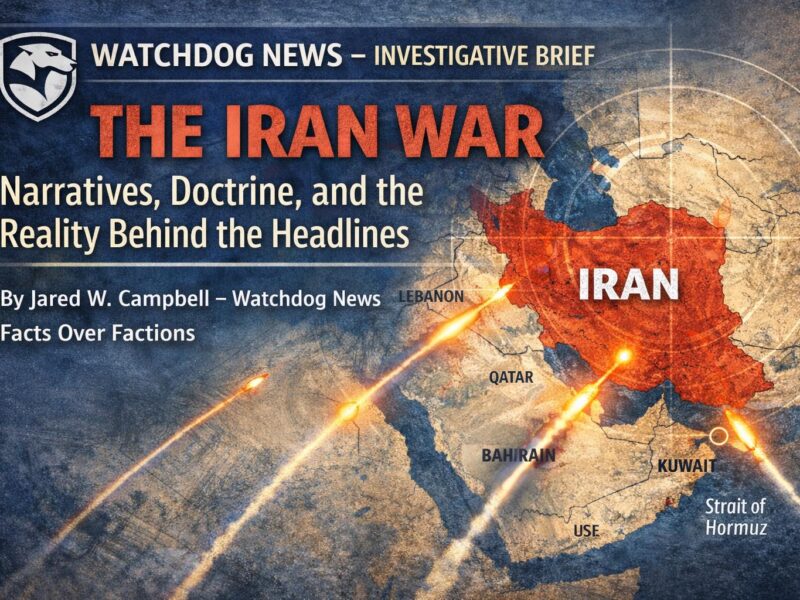


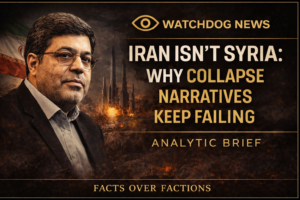
For forty years, analysts have predicted Iran’s collapse.
Yet the state remains intact.
Why?
Because Iran was built for endurance, not quick victory.
A Watchdog analytic brief on the difference between narrative and strategic reality.
👁️ Facts Over Factions
“Iran Isn’t Syria: Why Collapse Narratives Keep Failing”
By Jared W. Campbell — Watchdog News
Facts Over Factions
1) Who is Seyed Mohammad Marandi — and why his perspective matters
Seyed Mohammad Marandi is an Iranian academic and frequent media voice who presents Iran’s perspective on global affairs. He has also been connected to Iran’s nuclear negotiation circles in the past.
Let’s be clear from the start.
He is not a neutral analyst.
He speaks from inside Iran’s political and intellectual ecosystem. His job is not to referee the conflict — it is to explain Iran’s worldview.
For Watchdog reporting, that still matters.
If you want to understand how conflicts unfold, you have to listen to how each side understands the war they are fighting.
Ignoring that perspective doesn’t make it disappear. It only makes the analysis weaker.
So the proper Watchdog rule applies here:
Treat Marandi as a primary-source perspective, not a neutral authority.
2) The core claim in the interview
Marandi’s central argument is simple but important.
For decades, Western governments and media have repeated the same assumption: that Iran is fragile and on the verge of collapse.
According to him, that narrative has been recycled since the 1980s.
Every protest movement.
>Every sanctions cycle.
>Every regional crisis.
The same prediction returns:
“The Islamic Republic is about to fall.”
Yet forty-five years later, the state is still standing.
He claims that this repeated misreading leads Western policymakers to build strategies around assumptions that aren’t true.
And when strategy is built on bad assumptions, policy tends to fail.
Watchdog Rating
B- / Mixed but strategically relevant
The interview is clearly not a neutral analysis.
But it highlights a strategic question policymakers ignore at their own risk:
What if Iran is more resilient than the narratives assume?
That question is worth asking before decisions become irreversible.
3) What outside evidence strongly supports
Even analysts who strongly oppose Tehran acknowledge one reality:
Iran’s military doctrine is designed for endurance.
The system is built around:
-
dispersed missile infrastructure
-
hardened underground facilities
-
layered drone capabilities
-
proxy networks
-
Maritime pressure in the Persian Gulf
In other words, Iran is not structured like a conventional army that collapses when leadership is decapitated or a few bases are destroyed.
It is structured to absorb damage and keep fighting.
That does not make it invincible.
But it does make quick-collapse scenarios far less likely than many political narratives suggest.
4) The Strait of Hormuz is real strategic leverage
Another point raised in the interview is energy disruption.
This is not propaganda.
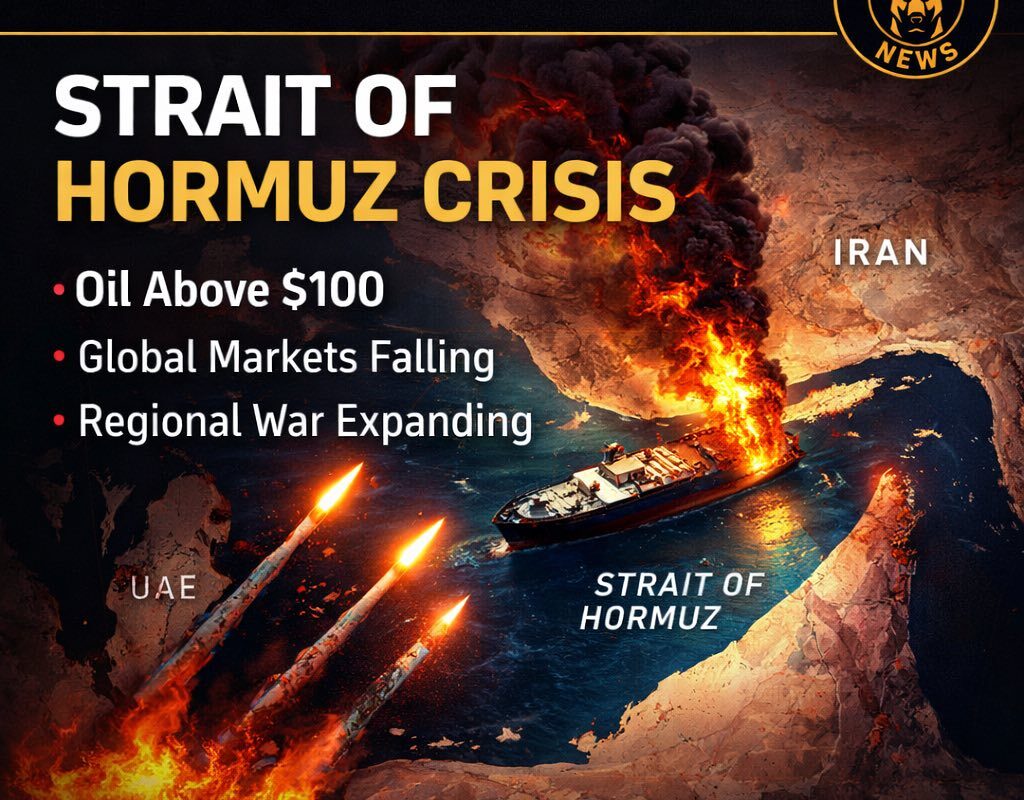
The Strait of Hormuz is one of the most critical energy chokepoints in the world.
Roughly one-fifth of global oil supply moves through that narrow waterway.
That means even limited disruption can send energy markets into shock.
Insurance rates spike.
Shipping slows.
Prices move instantly.
So whenever conflict threatens Hormuz, the consequences are not theoretical.
They are economic.
Any serious analysis of a conflict involving Iran must include this reality.
If Hormuz disappears from the conversation, the analysis is incomplete.
5) Claims that require caution
At the same time, parts of the interview move from analysis into narrative.
There are claims about:
-
specific civilian casualty numbers
-
particular strikes on civilian sites
-
Detailed battlefield damage to U.S. assets
-
the size of Iranian rallies
These types of claims appear in every modern conflict, and they are often the hardest to verify in real time.
In the early stages of war, information travels faster than confirmation.
That means responsible reporting treats these statements as claims, not facts, until multiple independent sources verify them.
That standard applies to every side in every war.
6) Why Iran is not Syria
One comparison that often appears in Western commentary is Syria.
But the comparison breaks down quickly.
Syria collapsed into a multi-faction civil war involving dozens of armed groups and heavy outside sponsorship.
Iran is a civilizational state with national cohesion, geographic depth, and centralized authority.
That difference matters.
Iran also spent decades building strategic redundancy:
-
underground infrastructure
-
missile deterrence
-
asymmetric warfare capabilities
So the idea that Iran would collapse quickly under external pressure is more narrative than analysis.
History shows that states built for endurance rarely fail overnight.
7) The bigger strategic warning
This is where something interesting appears.
Marandi argues that the West misunderstands Iran.
At the same time, American strategist Douglas MacGregor — from a completely different political camp — argues that the United States often mistakes tactical success for strategic success.
Two completely different voices.
Two completely different worldviews.
Yet both raise the same warning:
If policymakers misunderstand the society they are pressuring and lack a clear end-state strategy, early victories can become long wars.
History is full of examples.
8) The Watchdog takeaway
The point of examining interviews like this is not to endorse Iran’s narrative.
It is to understand the strategic environment.
Wars often become far more destructive when one side underestimates the resilience of the other.
For forty years, analysts have predicted Iran’s imminent collapse.
So far, that prediction has not come true.
That does not mean Iran is stable forever.
But it does mean that collapse narratives should be treated carefully, especially when they become the foundation of policy decisions.
Because when a strategy is built on assumptions instead of reality, the consequences rarely stay limited to the battlefield.
| Claim | Assessment |
|---|---|
| Iran built for asymmetric endurance | High confidence |
| Hormuz energy leverage | High confidence |
| Wartime consolidation effects | Moderate confidence |
| “Key assets not yet used.” | Plausible but unverified |
| Specific battlefield claims in the interview | Unverified without corroboration |
Jared W Campbell- WATCHDOG NEWS
Facts Over Factions