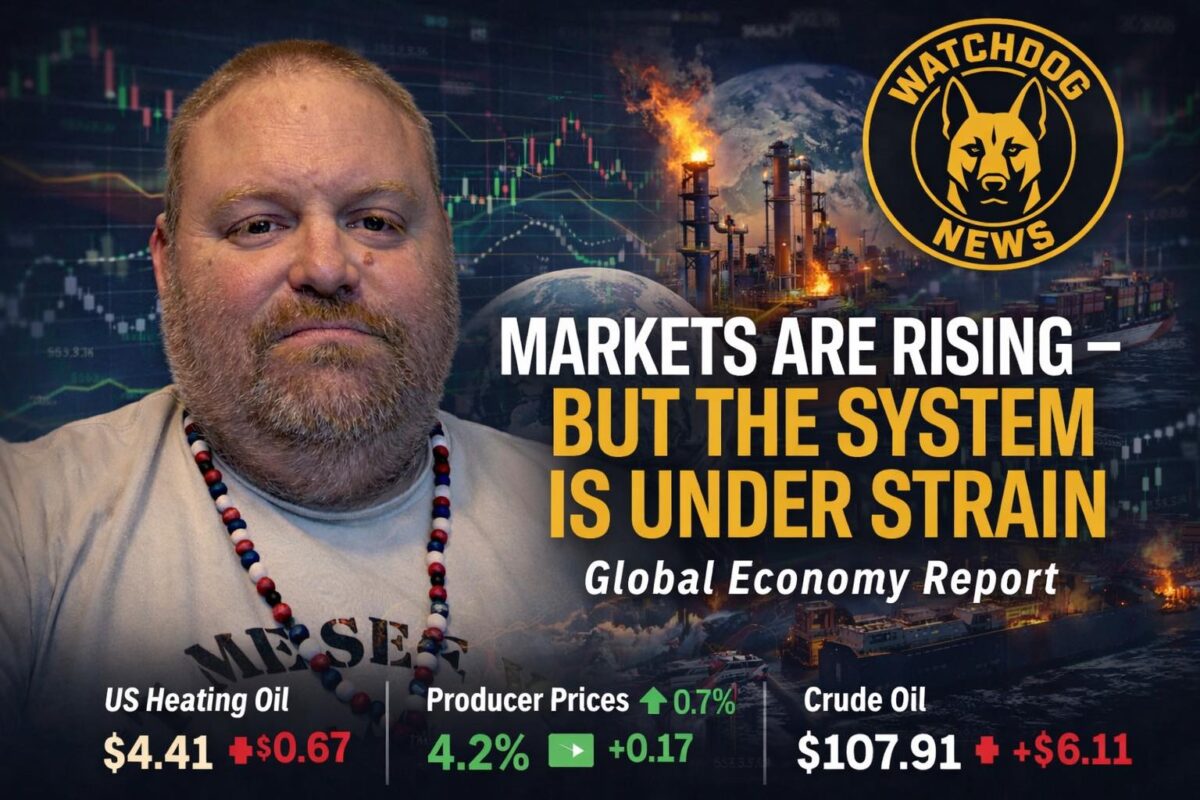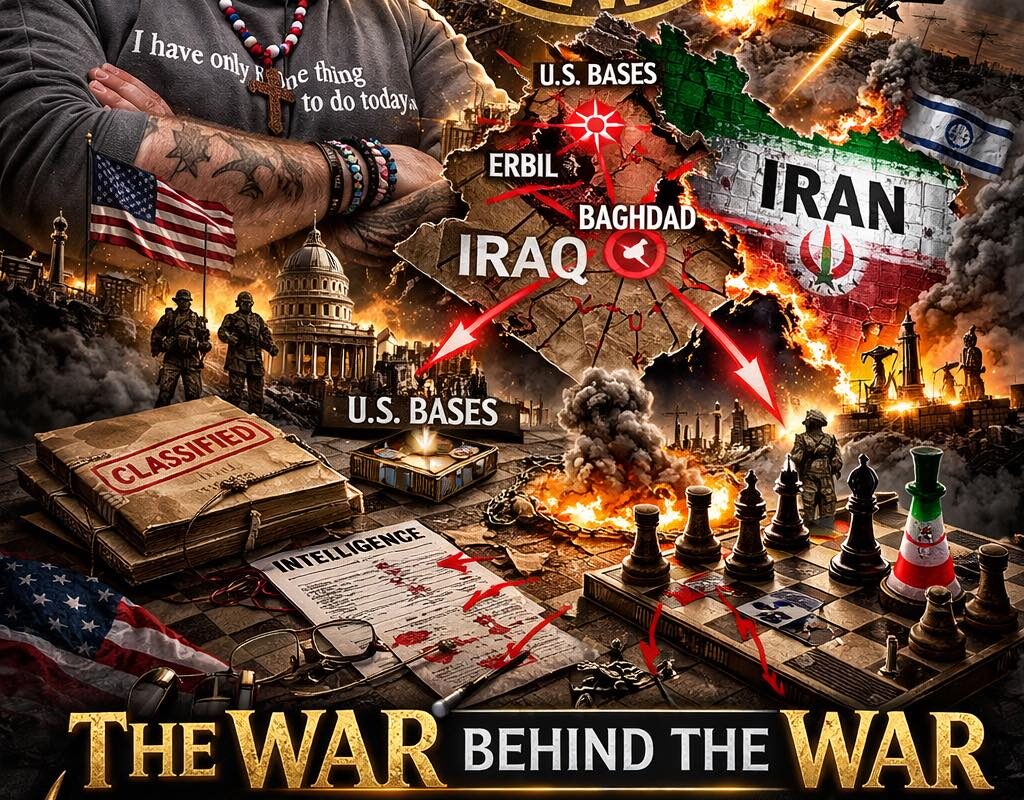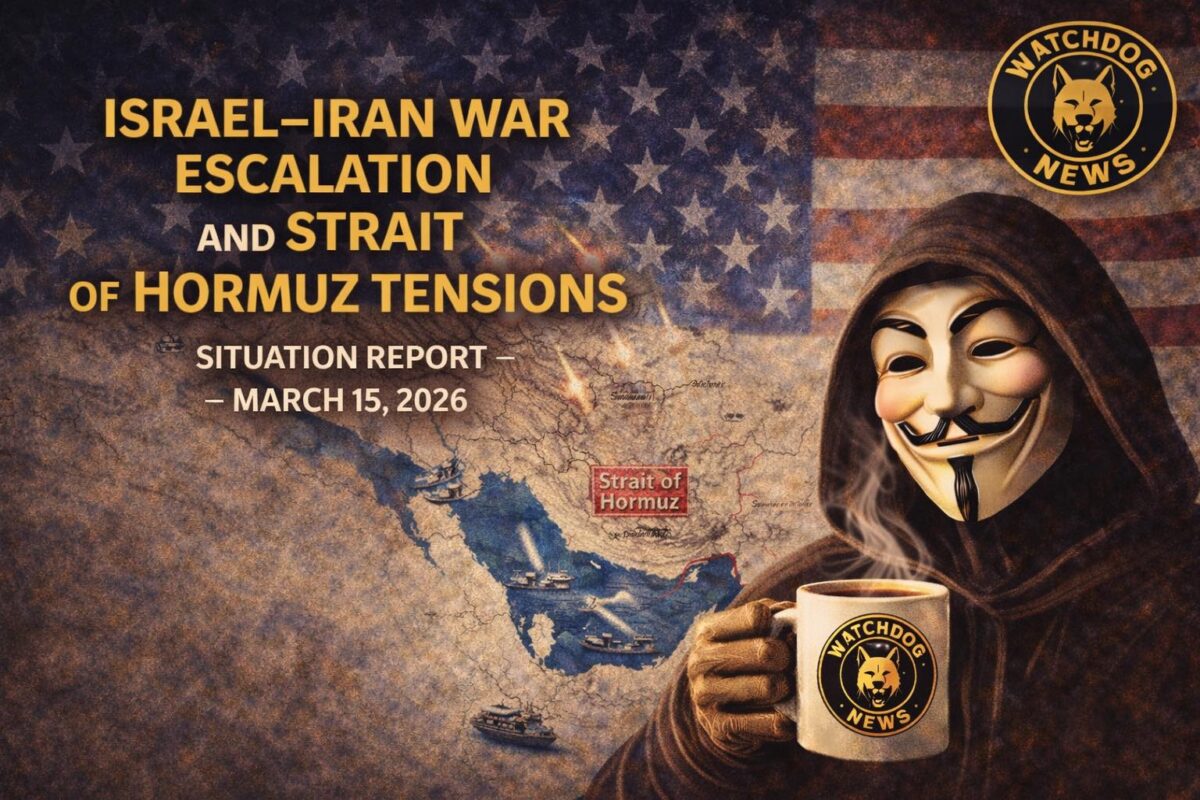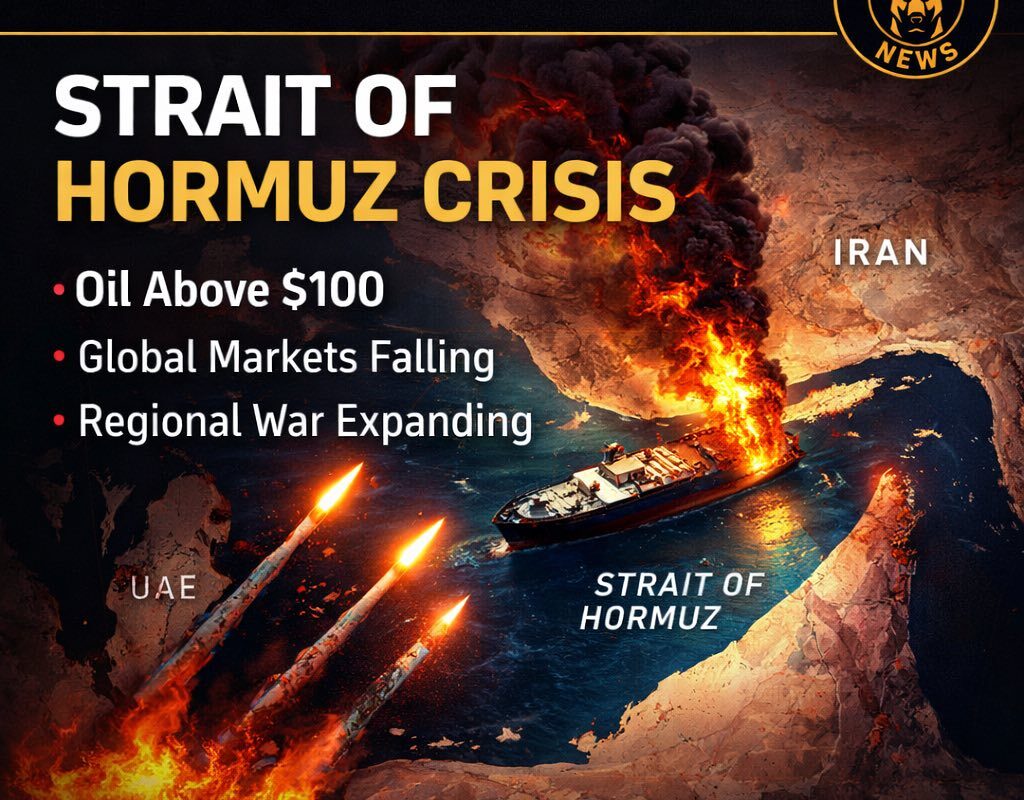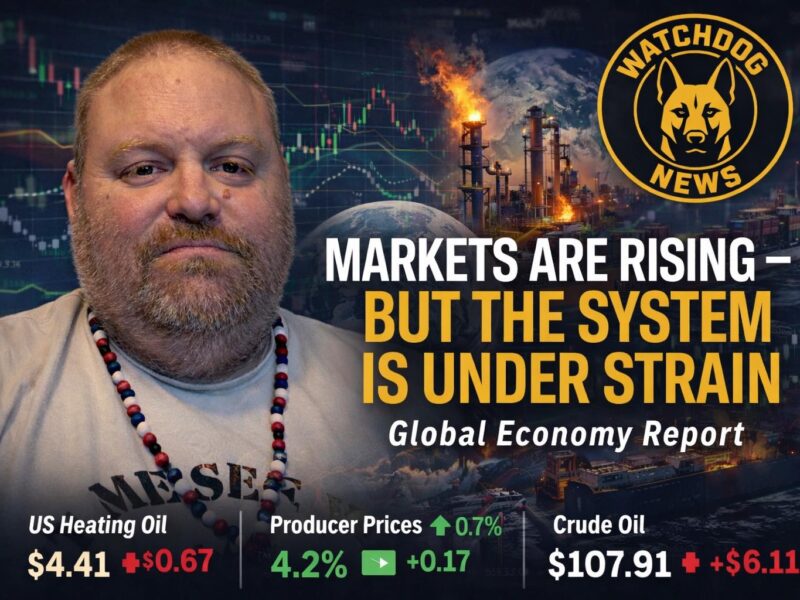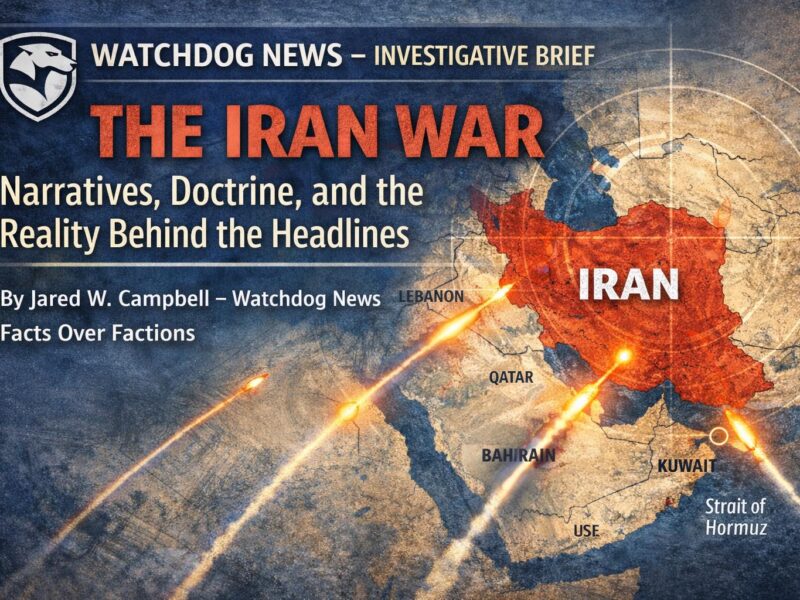


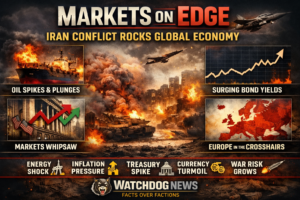
Oil surged above $100.
Markets panicked.
Then they rebounded.
But the deeper risks tied to the Iran war and global energy supply remain unresolved.
Facts Over Factions.
Global Economy on Edge as Oil Panic Gives Way to Uneasy Relief
Markets Rebound, But the Deeper Risks of the Iran War Remain Unsettled
 By Jared W. Campbell — Watchdog News
Facts Over Factions
March 9, 2026
Introduction
Meanwhile, over the last 16 hours, the global economy has delivered both a warning and a reminder.
The warning came first. Oil surged above $100 per barrel and, at one point, pushed toward $120 as the war involving Iran, the United States, and Israel drove fears of a broader supply shock through the Strait of Hormuz. Stocks sold off, bond yields climbed, currencies weakened, and inflation concerns reappeared across multiple regions.
Then, the reminder came. Markets can reverse fast, sometimes faster than the underlying reality changes.
By late in the session, crude had fallen sharply back below $90. At the same time, U.S. stocks staged a powerful recovery, and investors pivoted toward the idea that this conflict might be brief rather than prolonged.
However, that is where the fog of war matters most.
While the market may have found temporary relief, that does not mean the bigger risk is gone. In fact, the underlying lesson from the last 16 hours is not simply that markets are volatile. Instead, this war with Iran may go deeper than many think—or want to believe.
Ultimately, in the fog of war, everything from oil to interest rates to supply chains remains up for grabs.
https://tradingeconomics.com/commodity/crude-oil
Main Analysis
Oil Became the First Signal of Global Stress
The clearest sign of global economic stress was the violent movement in energy markets.
Brent surged above $100 per barrel, with some updates showing prices briefly approaching $120 before retreating.
Initially, WTI followed a similar path, spiking sharply before collapsing late in the session. Later, it fell back toward the low $80s after G7 finance ministers signaled they were ready to release oil from strategic reserves. At the same time, President Trump suggested the conflict could be brief.
However, that reversal was dramatic. Nevertheless, it should not be mistaken for stability.
Earlier, the spike told markets exactly what they feared most: a prolonged disruption in the Strait of Hormuz, production cuts by major Gulf producers, restricted tanker traffic, and the possibility that a regional war could quickly become a global energy shock.
Even so, after the retreat, the broader message remained the same. In reality, markets are still trying to price a conflict whose boundaries remain unclear.
https://tradingeconomics.com/commodity/crude-oil
Stocks Moved from Panic to Relief, But Not to Certainty
Equity markets told the same story in two phases.
Earlier in the day, markets across Europe, Asia, Canada, India, and the United States sold off sharply as surging oil prices raised the specter of stagflation: slower growth combined with renewed inflation. European indexes fell hard. India’s Sensex dropped. Canada’s TSX weakened. U.S. equities moved to year-to-date lows. Financials, airlines, industrials, miners, and rate-sensitive sectors came under pressure.
Later, however, U.S. equities staged a remarkable reversal. The S&P 500 closed up 0.9%, the Dow gained 0.5%, and the Nasdaq surged 1.3% as falling oil prices and signs of a possible reopening of the Strait of Hormuz eased immediate fears. Semiconductor shares helped lead the rebound, with Broadcom and AMD posting strong gains.
Those rebounds matter, but they do not settle the issue.
Markets did not suddenly decide the geopolitical risk had disappeared. They shifted because traders moved from pricing a worst-case scenario to pricing a shorter conflict. Those are not the same thing as clarity or resolution.
https://tradingeconomics.com/united-states/stock-market
https://tradingeconomics.com/united-states/stock-market
Bond Markets and Central Banks Are Still Facing the Inflation Problem
Government bond yields across multiple countries rose as investors reassessed inflation and interest-rate expectations.
The U.S. 10-year Treasury yield moved up toward 4.2% before easing slightly, with markets now expecting only one Federal Reserve rate cut this year rather than two. In Europe, yields climbed sharply as investors considered the possibility that higher energy prices could force central banks to keep interest rates tighter for longer. France’s 10-year yield hit levels not seen since 2011. Germany’s benchmark yield pushed toward multi-year highs. UK gilt yields surged as traders swung from expecting cuts to entertaining the possibility of hikes.
That is one of the most important macro developments in the entire dataset.
This was never just about oil. It was about what oil does to everything else. Higher energy costs feed directly into inflation expectations, which in turn reshape the entire rate outlook.
Even with crude falling back late in the day, the core problem remains unresolved. If this war deepens, markets will have to revisit the same inflation question all over again.
https://tradingeconomics.com/united-states/government-bond-yield
Currencies Reflected a Flight to Safety
The dollar remained strong throughout much of the turmoil, while several currencies weakened under pressure.
Sterling fell to a three-month low. The euro weakened. The yen remained soft. The Indonesian rupiah moved near record lows. The Philippine peso hit a record low. The Indian rupee, Mexican peso, and other regional currencies also came under pressure earlier in the session.
That pattern reflected a classic market response to geopolitical instability: capital moves toward perceived safety and liquidity, and the U.S. dollar benefits.
For oil-importing economies, that adds a second layer of pain. A stronger dollar means energy becomes even more expensive in local currency terms, putting more pressure on trade balances, inflation, and domestic monetary policy.
Europe Looked Especially Vulnerable
If one region stood out as particularly exposed in this round of market stress, it was Europe.
European equity markets fell sharply. Natural gas prices surged. Bond yields rose. Traders increased bets on a tighter ECB policy. At the same time, data out of Germany showed serious economic weakness beneath the surface, with factory orders plunging and industrial output declining again.
That combination is dangerous.
Europe is vulnerable not only because of energy sensitivity, but because it faces the possibility of imported inflation at a time when industrial momentum is already weak. Add lower gas storage, LNG supply concerns, and higher borrowing costs, and the region becomes one of the clearest examples of how a distant war can quickly become a domestic economic problem.
Europe:
Meanwhile, European stocks closed firmly lower on Monday, extending the market’s plunge this month as another session of higher energy prices worsened the inflation outlook across the continent.
Specifically, the Eurozone’s STOXX 50 fell 0.7% to 5,681, while the pan-European STOXX 600 also dropped 0.7% to 595.
In particular, banks, industrial companies, and discretionary-goods producers were among the sectors most affected by the exchange of strikes in the Persian Gulf and the spike in oil and gas prices.
For example, UniCredit and Deutsche Bank each lost about 1.5% as Eurozone yields continued to surge. As a result, investors grew increasingly concerned that the European Central Bank may still deliver a rate hike this year, which could further weaken credit activity.
At the same time, Siemens and Schneider Electric each fell about 1.7%, as rising power prices are expected to pressure their margins.
Outside the Eurozone, Roche declined roughly 3% after its breast-cancer drug combination failed to meet its primary endpoint in a late-stage trial.
https://tradingeconomics.com/euro-area/stock-market
Germany:
Meanwhile, Germany’s factory orders slumped 11.1% month-on-month in January 2026. That was far worse than market expectations for a 4.3% decline. Previously, orders had risen 6.5% in the prior month after a downward revision.
Notably, this marked the first decline since August. The drop was largely driven by a 39.4% plunge in fabricated metal products, after unusually large orders in the previous month created a high comparison base.
In addition, demand weakened for machinery and equipment (-13.5%) and for basic metals (-15.1%). However, orders grew for the automotive industry (10.4%) and for aircraft, ships, trains, and military vehicles (9.2%).
By category, capital goods tumbled 14.1%, while intermediate goods fell 7.9%. Meanwhile, consumer goods edged up 0.1%.
Looking at demand, domestic orders dropped 16.2%. At the same time, foreign orders shrank 7.1%, including a 7.3% decline from the euro area and a 7.1% drop from non-euro area markets.
Excluding large contracts, orders slipped 0.4%. Even so, factory orders between November 2025 and January 2026 still grew 7.4% compared with the previous three months, or 1.5% higher when large orders are excluded.
Source: Federal Statistical Office
https://tradingeconomics.com/germany/factory-orders
Commodities Showed How Wide the Ripple Effects Could Spread
The move in oil did not stay in oil.
Natural gas surged in Europe and the UK. Coal climbed. Aluminum pushed to four-year highs. Zinc stayed near multi-year highs. Agricultural commodities reacted as traders priced in higher fuel, fertilizer, freight, and insurance costs. Corn and soybeans rose earlier in the window, while coffee, cotton, rice, sugar, and palm oil all reflected how conflict-driven logistics stress can ripple through the real economy.
Not every commodity moved in the same direction by the end of the session. Some gave back gains. Some diverged based on their own supply fundamentals. But the broader takeaway was unmistakable: geopolitical conflict in a major energy corridor does not stay contained to oil charts. It moves through metals, food, shipping, power markets, and inflation expectations.
https://tradingeconomics.com/stream
Market Perspective
From the market’s point of view, the last 16 hours were a live test of how quickly global assets can reprice when the risk of a deeper war enters the equation.
The initial move was driven by fear of prolonged supply disruption. The latter reversal was driven by the hope that the war might remain limited. That is a critical difference. Markets are not signaling confidence. They are signaling uncertainty.
Central Bank Perspective
For central banks, this is exactly the kind of shock that complicates everything.
If energy prices remain elevated, inflation can reaccelerate even while growth slows. That creates the kind of policy dilemma central banks dislike most. They may want to support growth, but renewed cost pressures can force them to stay restrictive longer than they otherwise would.
The repricing in Treasury yields, UK gilts, Bunds, OATs, and BTPs all point in that direction.
Industry Perspective
Different industries experienced the shock differently.
Energy producers and defense companies generally benefited. Airlines, banks, industrials, and highly rate-sensitive sectors struggled. Export-dependent firms and manufacturers faced renewed concerns about input costs, shipping delays, and weaker demand. In short, sectors tied to security and commodities found support, while sectors tied to credit, transport, and consumer spending faced more stress.
Household Perspective
For ordinary people, the core issue remains simple: the cost of living.
The average household does not experience the Iran war first through derivatives markets or Treasury yields. It experiences it through gas prices, food costs, utility bills, and borrowing costs. That is why even a temporary oil shock matters. If it lasts, it does not stay abstract for long.
The Watchdog Perspective
Here is the deeper issue.
The market narrative shifted quickly from panic to relief because traders responded to signals that the conflict could be brief. That may prove true. But we should be very careful about treating market relief as a source of strategic clarity.
Wars do not always expand in straight lines. They can widen through energy infrastructure, maritime routes, cyber disruption, proxy escalation, insurance shocks, and retaliatory strikes that were not priced in the first time around. That is why this moment deserves more scrutiny than celebration.
My objective view is this: this war with Iran may go deeper than many think—or want to believe. Not because every worst-case scenario will happen, but because in the fog of war, assumptions become fragile very quickly. And once markets swing between panic and denial, it usually means the underlying picture remains unstable.
That is what stands out most in these last 16 hours.
Oil did not just spike and fall. Markets did not just drop and recover. What we saw was a global system trying to price a conflict before the actual scope of that conflict was fully known.
That is a dangerous place to be.
Key Outcomes and Implications
Several outcomes stand out from the last 16 hours.
First, the global economy remains extremely sensitive to any disruption involving the Strait of Hormuz and Gulf energy flows.
Second, even a short-lived spike in oil was enough to push markets toward stagflation fears, lift bond yields, and alter interest-rate expectations.
Third, the subsequent reversal in oil and stocks shows that markets are still trading on headlines, not on certainty.
Fourth, Europe appears particularly exposed due to its energy vulnerability, a weak industrial backdrop, and tightening financial conditions.
Fifth, the war’s ripple effects are already visible across commodities, currencies, equities, and sovereign debt.
Conclusion
The last 16 hours did not produce a settled global economic picture. They produced a warning.
Yes, oil fell back below $90. Yes, U.S. stocks recovered sharply. Yes, markets took some comfort from the idea that this conflict may end quickly.
But the deeper takeaway is not reassurance. It is fragility.
The global economy just showed how fast it can swing when war threatens energy supply, trade routes, and inflation expectations all at once. That matters because if this conflict broadens—or lasts longer than markets hope—the same fears that hit overnight can return just as quickly, and perhaps with greater force.
For now, the headlines say relief. The underlying reality says caution.
Watchdog News — Facts Over Factions

— Watchdog News
👁️ Facts Over Factions