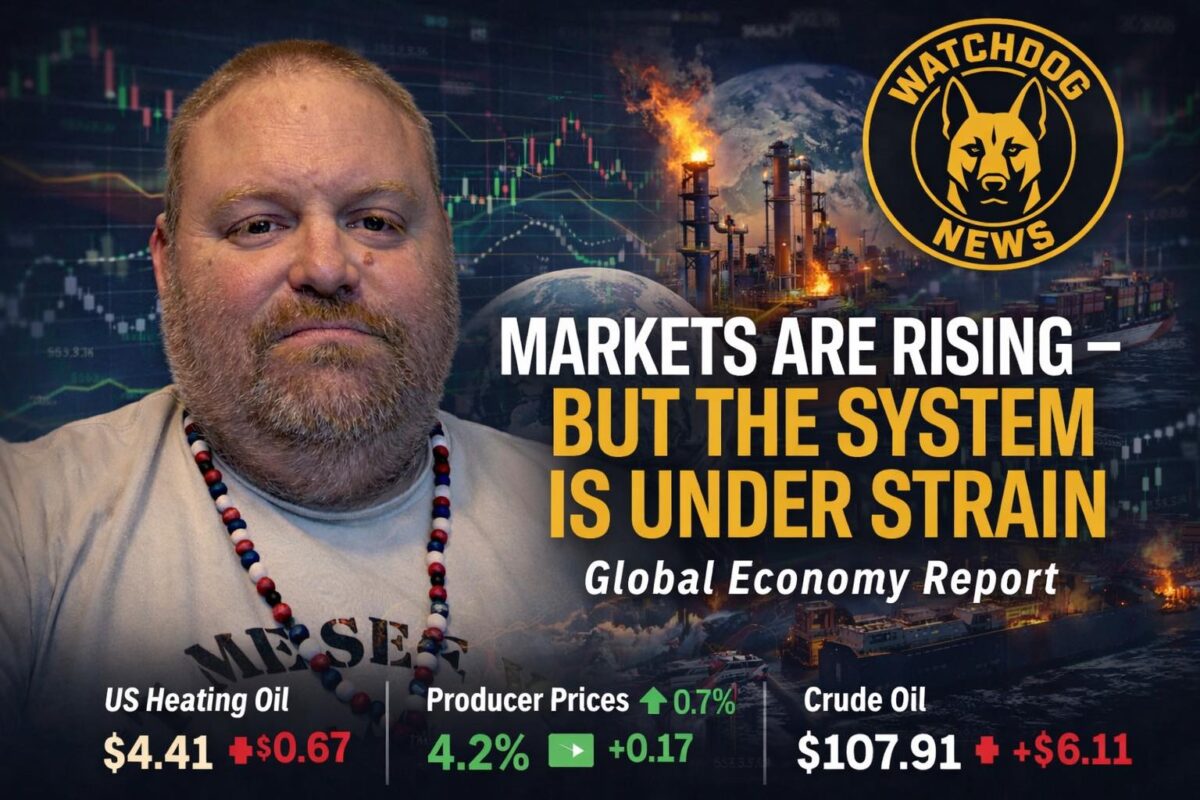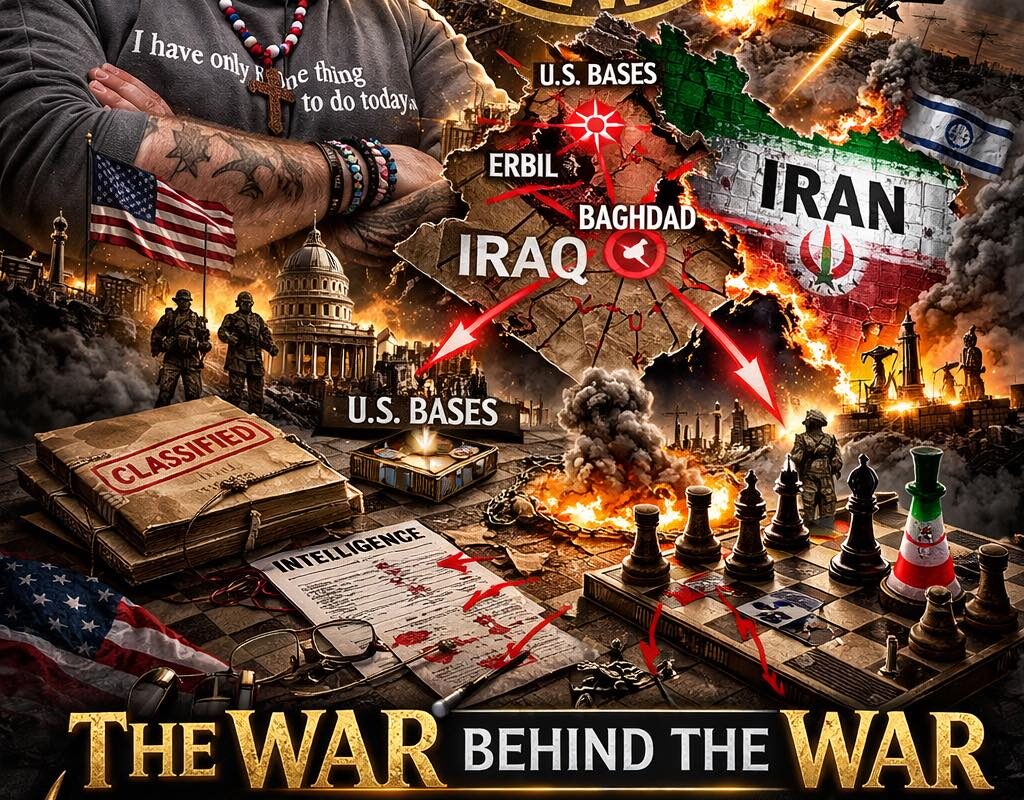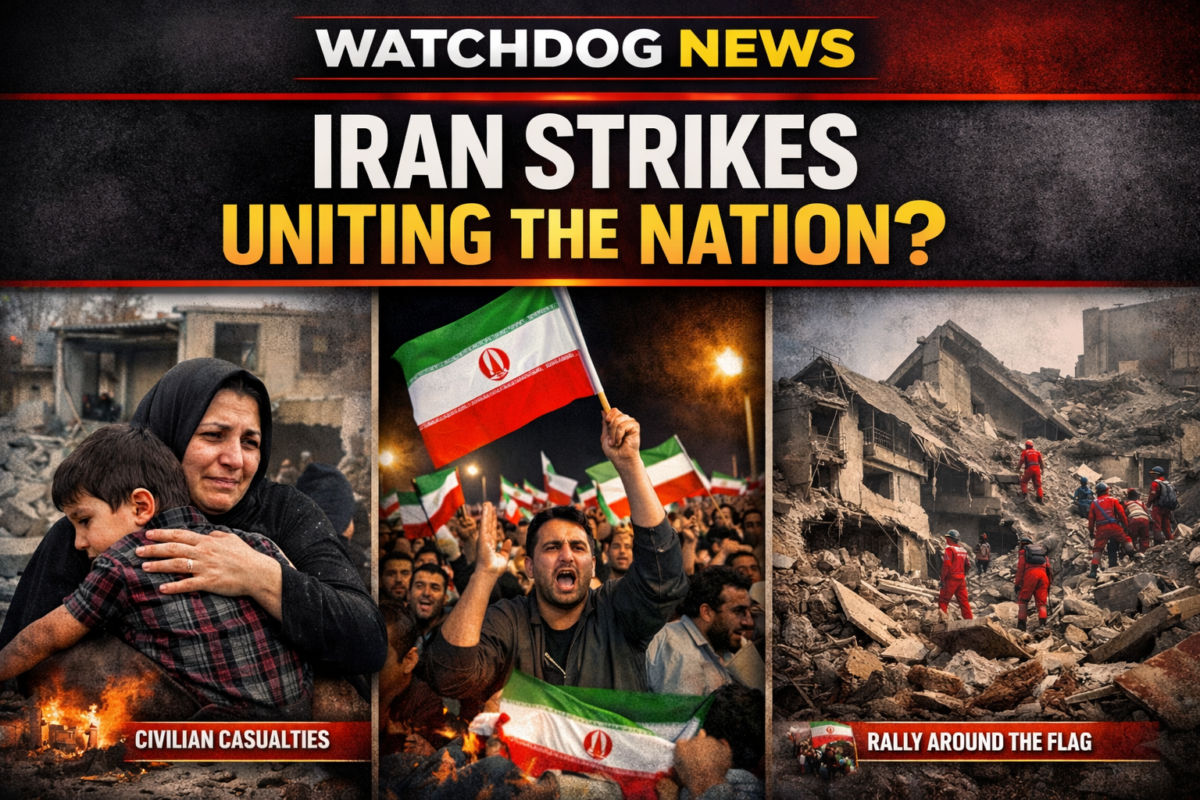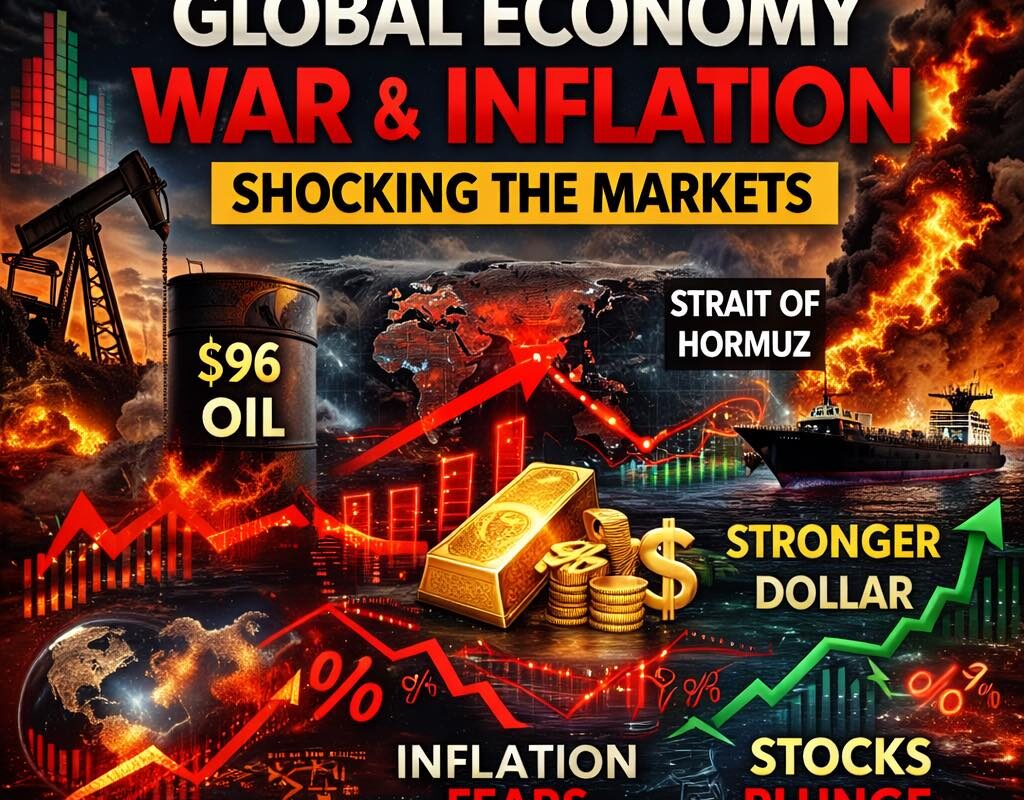


Kharg Island could change everything.
This isn’t just about strikes anymore—
It’s about territory, oil, and escalation risk.
When messaging says “de-escalation.”
but troops say “expansion”…
Pay attention.
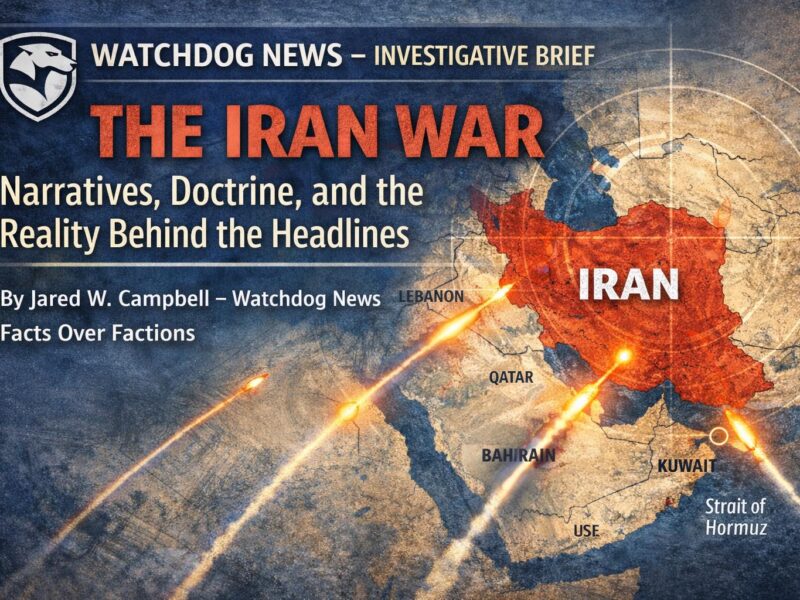
IRAN WAR UPDATE — KHARG ISLAND, INFORMATION WARFARE, AND THE EDGE OF ESCALATION
Occupation, Optics, and the Expanding Risk Envelope
By Jared W. Campbell – Watchdog News
March 20, 2026
Facts Over Factions

WHEN THE SIGNALS COLLIDE, THE DANGER GROWS
What makes this moment particularly perilous isn’t just the fight itself; it’s the mixed signals that are being sent out. On one hand, reports reveal that the administration is weighing a riskier strategy around Kharg Island, all while thousands more Marines are being rushed into the fray. Conversely, President Trump is publicly claiming that the U.S. is nearing its objectives and contemplating a reduction in major operations. At the same time, he’s urging other nations to take on more responsibility in the Strait of Hormuz. Meanwhile, Britain has given the green light to the U.S. to use its bases for defensive operations against threats to shipping and to regional allies, even as it pushes for de-escalation.
These conflicting messages create a troubling dynamic. They suggest that while the battleground is expanding, the political narrative is attempting to carve out space for a retreat. These two realities can coexist for a time, but not indefinitely.
It’s in moments like these that the waters of war become murky and miscalculations become more likely. Publicly, there’s talk of success, shared burdens, and limiting involvement. But operationally, the reality is starkly different—more troops, more options, more targets, and increased exposure. This disparity leads to a widening chasm between what is being articulated and what is being constructed.
And it’s within that chasm that the seeds of escalation often take root.
KHARG ISLAND — THE MILITARY-POLITICAL HINGE
The Kharg Island angle is the most important military-political hinge in this story.
Kharg is widely described as the backbone of Iran’s crude export system, and recent reporting says the administration has at least considered occupying or blockading it to pressure Tehran over Hormuz. Even without a full seizure, any move that places U.S. forces directly on or around Kharg would shift the war from standoff degradation to a more explicit contest over territory and energy leverage.
That is a different category of escalation.
Why? Because it would place American personnel inside a target envelope, Iran would almost certainly consider it existential. Reporting also notes that Kharg has processed most of Iran’s oil exports and sits close enough to the mainland to be exposed to rapid retaliation.
That means Kharg is not just a strategic node. It is a fuse point.
If Washington moves from pressure to physical presence, the conflict changes character. It is no longer simply about airpower, naval disruption, or punitive strikes. It becomes a contest over a vital Iranian asset that carries symbolic, economic, and wartime significance all at once.
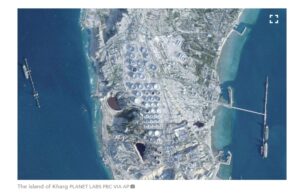
The island of Kharg Planet Labs PBC via AP
TWO TRACKS AT ONCE — ESCALATION AND EXIT
This is why Trump’s rhetoric may appear inconsistent, yet it reflects two competing tracks.
Track One: Coercive Escalation
This track aims to:
- degrade Iranian military capabilities,
- threaten or pressure Kharg,
- restore movement through Hormuz,
- and negotiate from a position of advantage.
Track Two: Political De-escalation
This track aims to:
- declare core objectives largely met,
- shift maritime security burdens onto allies and major importers,
- and avoid owning a prolonged U.S. ground commitment.
That contradiction is the center of the story.
One track prepares leverage.
The other prepares an exit.
One truck expands military options.
The other narrows political ownership.
For a while, both can operate at once. But eventually, events force a choice.
That is why some sources sound like de-escalation, while others point to something much bigger. Public messaging is trying to preserve flexibility. The White House can threaten, posture, deploy, and still claim it wants to limit the war. But posture changes facts on the ground. Once that kind of force is in place, commanders have more options—but adversaries have more targets as well.
And that is not theory. That is how wars expand.
THE MARINE BUILDUP — POSTURE MATTERS
The troop buildup is not background noise. It is part of the signal.
Thousands more Marines moving into the region on an accelerated timeline means the United States is not simply talking—it is building capacity. That does not automatically mean invasion. It does not automatically mean occupation. But it does mean one thing clearly:
The menu of military options is widening.
That matters because once a force package is in place, the conversation changes. Strategic ambiguity becomes harder to sustain as force structure continues to grow. Even if the official line remains limited objectives, the operational line begins to say something else: preparation, contingency, pressure, escalation readiness.
This is exactly why the contradiction matters so much. The administration may want to preserve maximum leverage while minimizing political ownership, but the military footprint carries its own message. It tells Tehran, allies, markets, and observers that the United States is still preparing for outcomes that go beyond a simple rhetorical off-ramp.
Up to 5,00 Marines being deployed- https://www.usatoday.com/live-story/news/world/2026/03/20/iran-war-us-israel-trump-live-updates/89231555007/
THE INFORMATION WAR — SELLING A CONFLICT AS CONTENT
The information-war angle matters more than many people think.
The reporting you cited about meme-style wartime messaging is not just about taste. It is about strategic signaling.
When a government packages war as spectacle—fast clips, entertainment-style visuals, viral edits, online bravado—it may energize parts of its base. It may drive engagement. It may even dominate digital conversation. But it also risks creating a credibility gap with allies, military professionals, and undecided voters.
War is not a campaign montage.
War is not a meme.
War is not a video game.
That is not just moral language. It is strategic language.
A wartime communication style that appears playful, cinematic, or performative can undermine confidence in the seriousness of leadership. It can make allies question judgment. It can make veterans and military families question whether the costs are being fully respected. And it can make the public wonder whether the administration is trying to manage emotions rather than explain reality.
The deeper issue is this:
If the communication strategy looks cleaner and more confident than the battlefield itself, then the narrative may be serving as insulation rather than explanation.
And that should concern anyone paying attention.
PUBLIC SUPPORT, POLITICAL OWNERSHIP, AND THE LIMITS OF NARRATIVE
This matters politically because the public mood appears far less stable than the messaging.
The administration may be trying to project dominance while avoiding domestic ownership of a long war. That would explain why the rhetoric oscillates between victory language, burden-shifting, and limited-objective framing. But if the public increasingly expects troop deployment while opposing a wider ground war, then the room for political maneuvering shrinks fast.
That is the other risk of contradictory messaging.
You can tell the public the war is nearly done.
You can tell allies that others should handle Hormuz.
You can tell market stability is coming.
But if the troop count rises, the target list expands, and Kharg remains in the conversation, then people begin to see the disconnect.
And once they see it, trust becomes harder to recover.
There are a few signs, beyond the engagement numbers, that the administration’s communications strategy is in control. According to a YouGov poll this week, 56% of Americans — and 63% of independent voters — disapprove of Trump’s handling of Iran.
Efforts to get Trump supporters excited about the war, especially young men, whose support helped Trump retake the White House, have not prevented division within the MAGA movement over Trump’s decision to go to war with Iran instead of focusing on domestic issues.
Joe Rogan, a well-known podcaster who helped Trump reach young men during his campaign, has criticized the war in Iran as “absurd” and said many of his listeners feel “betrayed” by Trump’s turn to military adventures.
A Reuters/Ipsos poll in February showed that 33% of men aged 18-29 approve of Trump’s performance in the White House — down from the 43% the same group had last year.
Trump’s grassroots communications strategy may be reinforcing negative perceptions of the war. “ It’s directly appealing to the grassroots, especially these young, very online, MAGA people who, like Trump, see war as a video game,” said Max Burns, a Democratic strategist and founder of Third Degree Strategies. “But you don’t see military personnel sharing this content.” – https://www.news247.gr/kosmos/o-lefkos-oikos-poulaei-ton-polemo-sto-iran-sto-tiktok/
KHARG AS BARGAINING CHIP — OR KHARG AS TRIGGER
From a military perspective, the core question is whether Kharg becomes a bargaining chip or a trigger.
If it becomes a bargaining chip, Washington may be betting that threatening Iran’s export artery will force Tehran to reopen shipping lanes, split internally, or accept some negotiated arrangement under pressure.
If it becomes a trigger, the logic changes completely.
Iran could decide it cannot afford to let such a symbol of strategic leverage fall under direct U.S. pressure. If Tehran concludes that Kharg is becoming a mechanism of strangulation, then the regime may see denial as preferable to submission.
That is where the danger becomes immediate.
Because once Kharg moves from being a target of discussion to a point of physical U.S. leverage, it also becomes a potential tripwire for retaliation.
THE VETERAN’S QUESTION — WHAT IF IRAN IS WILLING TO DESTROY THE ISLAND ANYWAY?
This is where your instinct is exactly right.
What if Iran is willing to strike Kharg even with American soldiers on it?
Strategically, that would be one of the clearest signs that Tehran had moved from calibrated retaliation to a doctrine of denial at all costs. If Iran concluded that losing Kharg meant strategic strangulation anyway, it could decide that destroying or rendering the island unusable was preferable to allowing a U.S.-backed foothold there.
That would not be a sign of strength. It would be a sign that deterrence had failed and regime-survival logic had taken over.
And it does not even have to look cinematic to be real. Iran would not necessarily have to “bomb its own island” in the most obvious sense.
It could seek to make Kharg unusable through:
- missile strikes,
- sabotage,
- drone swarms,
- mining,
- attacks on loading facilities,
- attacks on nearby shipping infrastructure,
- or broader strikes designed to deny operational control.
The point is the same.
If Tehran believes Kharg is becoming the lever by which it will be broken, then preserving the island intact may matter less than denying the enemy its usefulness.
That is the sort of logic regimes adopt when they feel survival pressure.
WHAT HAPPENS IF THAT LINE IS CROSSED
If that line is crossed, the consequences would be immediate.
First, any remaining ambiguity about U.S. war aims would collapse.
Second, American casualties in a Kharg-related scenario would create enormous pressure in Washington for retaliation far beyond maritime policing.
Third, a limited energy-war campaign could quickly become a broader ground-air-sea confrontation.
Fourth, global energy markets would likely reprice violently again, because Kharg and Hormuz sit inside the same risk chain.
At that point, the information war becomes secondary. The public relations strategy, the online messaging, and the political spin are overtaken by casualties, retaliation, and the momentum of escalation.
That is why this question matters so much.
Because the real danger is not simply what leaders say they want.
It is what the battlefield permits once a symbolic and strategic threshold has been crossed.
THE ALLIED PICTURE — SUPPORT WITHOUT APPETITE FOR WIDER WAR
The European and Allied picture is also revealing.
There is broad concern about freedom of navigation, shipping security, energy stability, and the dangers of a blocked Strait of Hormuz. But there is no broad enthusiasm for being drawn into a wider war. That distinction matters.
There is a difference between:
- supporting maritime protection,
- granting base access,
- backing defensive operations,
- and embracing a widening conflict.
That is why so much allied language sounds cautious, conditional, and defensive. Support exists, but ownership does not. Concern exists, but appetite does not. Agreement exists on the danger, but not on how far to go.
That is not a stable coalition.
That is a coalition under strain.
And strained coalitions become even more fragile when the lead power itself appears to be speaking in two voices at once.
THE THREE MOST LIKELY PATHS FROM HERE
-
Coercive De-escalation
The administration uses force posture, sanctions flexibility, and allied pressure to claim success without a deeper ground fight. Hormuz partially reopens. Other countries assume more of the burden. Washington frames the outcome as enough of a win to step back.
-
Prolonged Managed Conflict
No formal ground invasion. No stable ceasefire. No final settlement. Just recurring strikes, maritime disruption, energy volatility, proxy flare-ups, and constant swings between “breakthrough” and “escalation.” This may be the most plausible middle path.
-
Escalation Through Contact
Kharg, Hormuz, or another strategically loaded node becomes the place where ambiguity dies. If U.S. personnel are put in a position where Iran feels compelled to strike directly—or if casualties mount tied to territorial control—the war could change character very fast.
That last path is the one serious observer should fear most.
Because once contact forces a decision, speeches no longer control the pace. Events do.
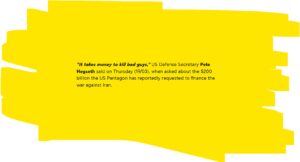
https://www.news247.gr/kosmos/xegkseth-xreiazontai-xrimata-gia-na-skotoneis-kakous/
WATCHDOG CONCLUSION — A BARGAINING CHIP CAN BECOME A FUSE
The Trump administration may seek both maximum leverage and minimum ownership. This dynamic creates a complex landscape in which some reports suggest de-escalation, while others hint at preparation for something greater. The mixed rhetoric reflects the uncertainty of the moment.
However, history shows that leaders often find it challenging to maintain both advantages in times of conflict. If Kharg remains a threat, it can still serve as leverage. But if Kharg transforms into a position, it risks becoming a target. Should Kharg become a target with Americans present, it would shift from merely a bargaining chip to a critical point of tension.
This is the essential warning. The pressing question transcends whether Trump intends to de-escalate; it is whether the battlefield will permit it. If Tehran decides that denying Kharg is more vital than safeguarding it, American forces will not be a strategic asset but rather a pivotal tripwire.
Facts Over Factions.
Watchdog News