


Global Economy 2026: Markets Rising But Inflation and War Signal Trouble
Global Economy Watchdog Report-MARKETS ARE RISING — BUT THE SYSTEM IS UNDER STRAIN
By: Jared W. Campbell- Watchdog News
March 18, 2026
Facts over Factions!

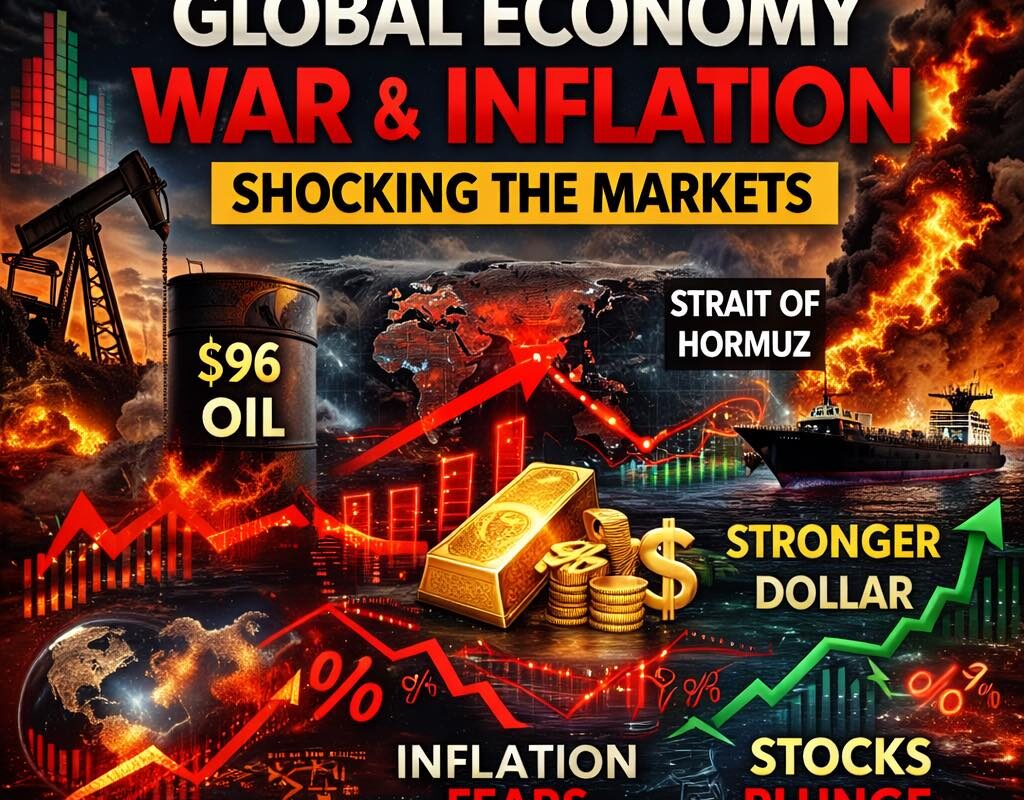
The global economy is navigating a storm like never before, as turmoil in the Middle East converges with rising inflation. In this eye-opening Watchdog News investigation, we uncover just how jittery the markets have become: commodity prices are skyrocketing, bond yields are rising, and investors are scrambling for safe havens amid escalating tensions in Iran.
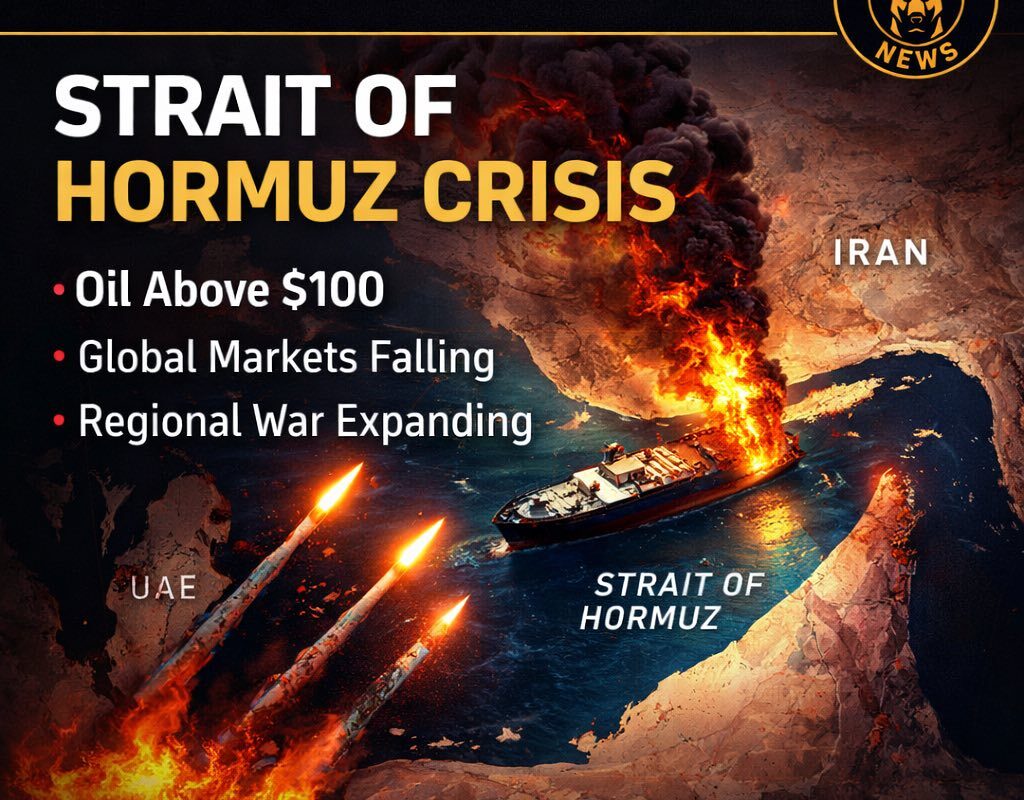
The disruption of oil and gas flows through the critically important Strait of Hormuz has triggered an energy supply crisis, adding to the mounting pressure. Compounding the situation, unexpected data on US producer inflation is sending shockwaves through market confidence.
Central banks find themselves in a precarious position, balancing the urgent need to combat inflation with the risk of a recession. Our in-depth report delves into these unfolding events, drawing on the latest data and insights from industry experts. Join us as we break down this complex landscape and uncover what it means for the future of the global economy.[1][2].
Commodity Markets
-
Sugar & Ethanol:
US sugar futures have rallied to near multi-month highs as soaring oil prices make sugarcane ethanol more profitable. Industry sources report that Brazil’s ethanol output may jump by about 4 billion liters in 2026/27, a record, as mills divert cane from sugar to fuel production. Experts warn this “should cut sugar’s availability in the market and boost global prices”[3], especially given ample supplies from India and Brazil shifting to fuel crops. This dynamic has turned sugar into a weathercock for energy markets – higher oil prices push sugar up.
-
Petroleum Products:
US heating oil futures surged past $4.26 per gallon (a level not seen since mid-2022) amid unprecedented strikes on Iran’s energy infrastructure. Global distillate (diesel/heating oil) inventories have plunged, stoking supply anxieties even as crude stocks rose last week. Brent crude has held above $100/bbl as the disruption in the Gulf persists, and refined fuels (diesel, jet fuel) have climbed even faster[1]. Meanwhile, US gasoline futures hit a record high since 2022 ($3.20/gal) amid tightening global supply and seasonally rising demand. The upshot: fossil fuel prices are surging again, adding to inflation risks worldwide.
-
Natural Gas:
European gas prices briefly spiked (around €55/MWh at TTF) after reports that US/Israeli airstrikes hit Iran’s massive South Pars gas field – the first such attack on that facility. South Pars accounts for a large share of Iran’s gas output, so its disruption generated near-term shortages. In parallel, a deal to resume some Iraqi oil (and LNG) flows via Turkey’s Ceyhan pipeline (bypassing the Strait of Hormuz) has slightly eased panic. The net effect is volatile: gas prices eased modestly once the Iraq deal became known, but the market remains on edge given that 20% of global LNG normally transits the Strait of Hormuz.
-
Metals & Minerals:
Basic materials have seen mixed moves. Lithium carbonate in China eased back to around CNY155,000/ton after a recent rally, amid softer demand. February electric vehicle sales at BYD (China’s largest EV maker) plunged 40% year-on-year, raising concerns that China’s EV boom may be cooling under higher input costs. (Investors note China has also cut back lithium mine permits and Zimbabwe has suspended lithium concentrate exports to squeeze refining capacity[4].) Aluminum prices, which had jumped on early war fears (the Middle East is 9% of global supply), have pulled back below $3,360/ton as Chinese demand flagged. By contrast, bulk shipping costs (the Baltic Dry Index) have climbed ~2% to about 2,064 points – the highest in a week – as capesize freight rallied 3.4% and panamax 2.1%[5], reflecting still-robust iron ore and coal shipments into Asia despite geopolitical worries.
-
Agricultural Commodities:
Soft commodities broadly eased as seasonal factors and ample supply took hold. Cocoa futures hovered near $3,300/tonne (7-month lows) as better-than-expected West African growing conditions and weak demand have piled up stocks. Farmers in the Ivory Coast and Ghana have even cut guaranteed prices to encourage sales amid falling global prices. ICE cocoa warehouses now hold a 7¼-month supply of over 2.27 million bags[6]. Other agricultural moves: US orange juice futures dipped ~4% on expectations of ample inventories and weak buying, and butter fell. On the flip side, US sugar and canola futures edged higher amid a tighter outlook tied to the ethanol shift mentioned above.
-
Precious Metals:
Gold and silver struggled despite safe-haven flows from the Middle East. Silver slid to about $76.80/oz, a one-month low, as a surprisingly hot US Producer Price Index (+0.7% in Feb) and a surging dollar drove yields higher, raising the opportunity cost of holding non-yielding metals[2]. Gold fell toward $4,980/oz (also near a one-month trough) for similar reasons[2]. In short, persistent US inflation data and Fed hawkish bets have capped precious metal gains, even as tensions with Iran remain very high.
Bonds & Currencies
-
Government Yields:
Bond markets have recovered rapidly. Brazil’s 10-year yield jumped ~20 basis points on Wednesday as rising global inflation worries and domestic rate decisions loomed. Canada’s 10-year yield recovered toward 3.40% as US inflation surprises and Middle East risks pushed global yields higher. The Bank of Canada noted that strikes on Iranian facilities and a near-shutdown of the Strait of Hormuz “tilt risks toward structurally higher costs,” keeping yields elevated [7]. In Europe, Germany’s 10-year Bund reached ~2.93% (a two-year high) as oil’s resurgence fueled inflation fears, and the UK 10-year gilt hit ~4.7%, near a six-month peak, pricing in a possible BoE rate hike later this year. By contrast, Japan’s 10-year JGB yield fell back slightly (around 2.23%) as markets await any BOJ change.
-
FX Markets:
Overall, the US dollar has strengthened broadly. The DXY dollar index climbed toward 99.9 on Wednesday, up about 0.2%, as the Fed outlook grew more hawkish amid the oil shock[2].
-
In Asia, currencies weakened against the dollar. The South Korean won declined (about –0.9%) due to stronger dollar demand. Meanwhile, the Japanese yen also weakened (~0.3%) as rising oil import costs fueled inflation concerns.
At the same time, other currencies also came under pressure. The Swedish krona and Indian rupee both fell (around 0.7%). In Europe, the pound sterling slid about 0.5% to near $1.33 after renewed Middle East tensions and stronger US PPI data reduced risk appetite[8].
https://www.reuters.com/world/uk/sterling-drops-vs-euro-dollar-after-weak-economic-data-2026-03-13/
Similarly, the euro eased (~0.2%) as investors moved toward the dollar’s relative safety ahead of key central bank meetings. However, some currencies showed resilience. The Norwegian krone strengthened about 0.9% as higher oil exports supported its economy. The Brazilian real has also remained relatively stable due to energy exports, even amid regional uncertainty.
Ultimately, safe-haven flows into dollars and bonds have dominated currency markets this week.
Equity Markets
-
North America:
Overall, US stocks traded mixed. On Tuesday, equities rallied slightly, with the Nasdaq up about 0.3% on hopes that the Fed would pause tightening.
In particular, technology stocks were a bright spot. AI-related names, including Nvidia (+1% premarket on Wednesday), gained as investors remained optimistic that energy supply fixes could ease broader pressures[9].
http://argaamplus.s3.amazonaws.com/3350c480-3c3b-4b17-9237-52c1836552b9.pdf
However, by Wednesday afternoon, markets gave back most of those gains. The S&P 500 and Nasdaq each slipped about 0.1–0.3% after a 0.7% PPI surprise weakened expectations for near-term rate cuts.
Meanwhile, defensive sectors such as consumer staples and utilities underperformed during the session. In Canada, the TSX also fell roughly 1% following the Bank of Canada meeting.
At the same time, commodity-sensitive shares led the losses. Gold miners, including Agnico Eagle and Barrick (–5% each), declined alongside falling bullion prices. Even energy companies gave back some earlier gains despite ongoing oil disruptions.
Elsewhere, financials were mixed, while technology stocks such as Shopify posted modest gains, reflecting continued global tech momentum.
Looking ahead, futures suggest a cautious open on Thursday as investors wait for further guidance on Federal Reserve rate policy.
-
Europe:
European stocks have also gyrated. On Wednesday, major bourses initially held gains but gave them back by afternoon. The STOXX Europe 600 ended roughly flat to –0.5% as oil prices rebounded, and traders grew cautious ahead of the Fed and ECB decisions. Utilities, consumer staples, and pharma were among the worst hit (as flight-to-safety faded), while energy and industrials outperformed. Germany’s DAX finished ~0.5% lower (around 23,600)[10] after oil’s swing. In London, the FTSE 100 rose ~0.2% for a third straight session (to ~7,800) – led by travel and financial stocks – though it lagged continental peers since energy majors Shell and BP trimmed earlier gains as Brent pulled back. Earlier in the week, European markets had jumped on easing oil fears (e.g., after Iraq’s export deal) and AI optimism, but late-week caution remained.
-
Asia-Pacific:
Overall, sentiment was mixed across Asian markets. Tokyo’s Nikkei surged about 2.9% (to ~55,240) on Wednesday, reaching its highest level in a week and led by technology and industrial stocks.
In Japan, investors favored sectors seen as less sensitive to oil shocks. At the same time, the weaker yen (around ¥159) supported exporters. The Bank of Japan meeting later this week is now being viewed as potentially less dovish due to rising imported inflation.
Meanwhile, Hong Kong’s Hang Seng rose about 0.6% (to ~26,025) on Wednesday, rebounding after two consecutive declines. Strong US futures and positive momentum from Nvidia-related developments supported the move.
In mainland China, the Shanghai Composite reversed a five-day slide, gaining about 0.3% on Wednesday. This followed signals from Beijing that additional support measures would be deployed, including tapping reserves to offset oil disruptions and stabilize markets.
Elsewhere in emerging Asia, markets also posted gains. India’s Sensex climbed about 0.8% to a one-week high (76,700), supported by relatively attractive valuations and continued demand in the technology sector. At the same time, the rupee stabilized as oil price pressures eased slightly.
In contrast, South Korea’s KOSPI, which had surged 5% on Tuesday, paused midweek. The move reflected mixed signals from strong domestic jobs data alongside still-elevated oil prices.
-
Latin America:
Latin markets were cautiously optimistic. Brazil’s Bovespa hovered around 180,500 as traders await tomorrow’s Selic decision. Oil-related stocks were strong (Petrobras +2%) on high energy prices and a new gas find, while banks and lenders were steady. The real was near two-month lows versus the dollar, reflecting global risk-off, but held up relative to many peers thanks to Brazil’s energy exports. In Chile, the peso depreciated modestly after US rates climbed, even as the economy recorded a $1.3B Q4 current account surplus (versus a small deficit a year ago). Mexico’s markets were largely flat; the peso firmed slightly on global dollar weakness, and equities saw modest gains. Overall, Latin American investors are balancing higher commodity prices against capital outflows tied to US inflation fears.
Economic Data & Central Banks
-
Inflation:
US producer prices surged far beyond forecasts. February’s core PPI (ex food/energy) rose +0.5% (vs +0.3% expected), and headline PPI jumped +0.7%[2]. On an annual basis, core PPI reached +3.9% (fastest in three years) and headline PPI +3.4%[11]. These readings – well above the market consensus – have reinforced expectations that the Fed will pause rate cuts and maintain a higher-for-longer stance. Across the Atlantic, Eurozone inflation was confirmed at 1.9% in Feb (up from 1.7%), with services inflation picking up to 3.4%. Countries from France to Italy saw upticks in consumer prices. The ECB and BoE now face the reality that energy-driven inflation is proving stickier than hoped for [2].
-
Retail, Trade & Activity:
Mixed signals emerged globally. US factory orders were flat in January (+0.1%), roughly matching forecasts (with nondurables orders up)[6]. Retail sales in South Africa unexpectedly jumped +4.2% YoY in January, the largest gain in six months, driven by textiles and general goods. Chile’s external accounts improved: the current account swung to a $1.3B surplus in Q4 (first surplus in 6 quarters) due to a wider goods trade surplus. Japan’s exports grew 4.2% in Feb (barely above estimates), but imports surged 10.2%, leaving only a tiny trade surplus, reflecting Beijing’s slowdown in export demand and Tokyo’s stimulus-driven import rise. These data suggest a modest global slowdown – inflation is cooling in some places, but not yet fast enough.
-
Central Banks:
Overall, policymakers remain on hold but are on high alert. The Federal Reserve is widely expected to keep its federal funds rate in the 3.50–3.75% range in March, as Chair Powell’s “do no harm” stance continues to guide policy.
At the same time, investors will closely examine the Fed’s updated dot plot and Powell’s press conference for any indication of how the war in Iran may affect growth and inflation forecasts.
Similarly, the European Central Bank and the Bank of England are also expected to hold rates steady this week. In particular, attention will focus on forward guidance, as Lagarde and Bailey are likely to emphasize vigilance on inflation, especially with oil acting as a potential wildcard, while maintaining patience on rate cuts.
In emerging markets, policy responses have been mixed but cautious. Bank Indonesia held its key rate at 4.75%, citing the need to limit speculative currency flows. Meanwhile, Uzbekistan maintained its rate at 14% due to persistent inflation expectations.
However, some central banks have moved in a more hawkish direction. The Reserve Bank of Australia delivered a second consecutive rate hike, bringing the cash rate to 3.35%, aiming to counter rising food and oil costs. The decision split the board 5–4 and signaled that further tightening remains possible.
In addition, Iceland’s central bank raised rates by 25 basis points to 7.50%, warning that a prolonged conflict could feed broader inflation through wage pressures.
In short, most central banks have paused for now but remain highly alert. Ultimately, many have signaled a willingness to either ease or tighten policy depending on how the conflict’s economic impact evolves. [7][1]
-
Credit & Liquidity:
Higher yields have fed into borrowing costs. In the US, the MBA mortgage index shows 30-year conforming rates jumped to 6.30% (the highest since Dec), sending mortgage applications plunging 10.9% last week [12]. Refinancing collapsed (-18.5%), while purchase demand barely budged (+0.9%). In Canada, 5-year mortgage offers are near multi-year highs, reflecting similar moves in the bond market. On global flows, foreign investors poured a record C$51.3 billion into Canadian bonds in January (mostly corporate issues), while shunning money-market paper[13]. Safe-haven demand also kept Swiss yields near recent lows (10Y CHF ≈0.3%) as the franc strengthened on the chaos. The flip side: tighter funding conditions may start to bite in some emerging markets (e.g., India’s 10Y G-sec briefly eased after oil stabilized, but local liquidity tightening keeps short-term rates under pressure).
-
Other Notes:
A few timely data points: South Africa’s CPI eased further to 3.0% in Feb (meeting the SARB’s new 3–6% target range)[14], easing pressure on the rand. Thailand’s inflation surprisingly topped forecasts. Consumer confidence in New Zealand fell this quarter (to 94.7) as households fretted over rising fuel costs and global uncertainty. Industrial metals inventories in China climbed, but iron ore futures stayed elevated (just under CNY810/ton) on supply crunches abroad. Finally, in a concerning trend, Ukraine’s economy contracted ~10% last year – a stark reminder of how conflicts can devastate growth.
Watchdog Closing Statement:
The markets now stand at a pivotal moment of resilience. Our watchdog analysis highlights that the intersection of war and inflation presents a significant challenge: enduring high prices and disrupted trade flows call upon us to adapt and strengthen global growth. Policymakers and businesses are urged to remain alert and proactive. Watchdog News is committed to closely observing these developments. We are dedicated to bringing you the truths behind the headlines – empowering markets and decision-makers to navigate these turbulent times with purpose and accountability.
Jared W. Campbell- Facts over Factions!
— Watchdog News, always vigilant.
SOURCES:
[1] The US is quickly exhausting tools to absorb the Iran war oil shock | Reuters
https://www.reuters.com/markets/commodities/us-is-quickly-exhausting-tools-absorb-iran-war-oil-shock-2026-03-16/
[2] [11] US producer prices surge in February on services | MarketScreener
https://www.marketscreener.com/news/us-producer-prices-surge-in-february-on-services-ce7e5ed9d88ef125
[3] Energy price surge to drive Brazil mills toward ethanol, cut sugar output | Reuters
https://www.reuters.com/business/energy/energy-price-surge-drive-brazil-mills-toward-ethanol-cut-sugar-output-2026-03-09/
[4] Cocoa stocks pile up in the Ivory Coast amid a global price slump
https://www.reuters.com/video/watch/idRW592216022026RP1/
[5] Baltic Dry Index climbs to 2028 up 56 points | Hellenic Shipping News Worldwide
https://www.hellenicshippingnews.com/baltic-dry-index-climbs-to-2028-up-56-points/
[6] China lithium prices tumble as weak EV sales, Middle East … – Reuters
https://www.reuters.com/world/asia-pacific/china-lithium-prices-tumble-weak-ev-sales-middle-east-war-cloud-demand-outlook-2026-03-03/
[7] Bank of Canada assessing high oil price, would hike rates if needed, says Macklem | Reuters
https://www.reuters.com/world/americas/bank-canada-holds-rates-says-it-would-hike-them-prevent-persistent-inflation-2026-03-18/
[8] Sterling drops vs euro and dollar after weak economic data | Reuters
https://www.reuters.com/world/uk/sterling-drops-vs-euro-dollar-after-weak-economic-data-2026-03-13/
[9] [PDF] PROSPECTUS – AWS
http://argaamplus.s3.amazonaws.com/3350c480-3c3b-4b17-9237-52c1836552b9.pdf
[10] European shares gain ahead of key central bank decisions | Reuters
https://www.reuters.com/business/european-shares-open-steady-middle-east-conflict-drags-2026-03-17/
[12] Brazil 2025 public debt seen rising in the double digits, rate-linked …
https://www.reuters.com/world/americas/brazil-2025-public-debt-seen-rising-by-double-digits-rate-linked-bonds-soar-2025-02-04/
[13] Heating Oil Hovers at Highest Since 2022 – Trading Economics
https://tradingeconomics.com/commodity/heating-oil/news/533078
[14] March Fed Decision: FOMC Likely to Hold Rates With US-Iran War
https://www.businessinsider.com/march-fed-decision-fomc-powell-hold-rates-us-iran-war-2026-3