


Markets rebounded, but underlying signals from energy, shipping, and inflation show the global economy remains under stress from the Iran conflict.
Global Economy Report: Markets Rebound, But the System Is Flashing Stress
Tuesday, March 17, 2026
By Jared W. Campbell — Watchdog News
👁 Facts Over Factions

The global economy did not deliver a clean message today. It delivered a warning wrapped in resilience.
On the surface, equities in multiple regions pushed higher. Traders bought dips, major indexes steadied, and risk appetite proved stronger than many expected. But underneath that surface, the deeper signal was not one of peace. It was one of strain. Shipping remains disrupted, energy markets remain unstable, inflation expectations are being pulled higher again, and central banks are increasingly boxed into a narrow corridor: hold steady and risk falling behind inflation, or tighten into a world already showing signs of fatigue. That is the real story of March 17. Markets are still functioning, but under pressure.
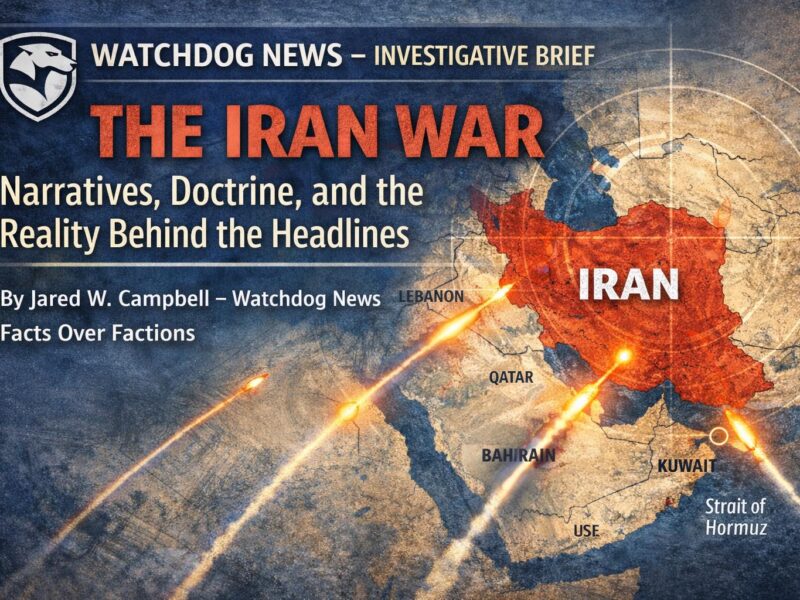
From a Watchdog perspective, today’s market action was not a declaration that the crisis is over. It was a global repricing exercise. Investors are trying to answer one brutal question in real time: is this another temporary geopolitical spike, or the start of a broader inflation-and-growth squeeze that spreads from the Persian Gulf into freight, credit, consumer prices, and monetary policy? Reuters reported that oil prices resumed their climb after renewed attacks on the UAE’s energy infrastructure. At the same time, the Strait of Hormuz remained only partially functional, and major allies continued to resist U.S. requests for tanker escorts. That matters because Hormuz is not just a regional issue. It is a global pricing mechanism.
Shipping and trade: the first pressure point
My notes begin where they should begin: trade flow. The Baltic Dry Index snapped a four-day winning streak, slipping 0.7% to 2,024. Capesize rates fell 1.3% to 2,888, supramax rates dropped 1% to 1,256, and panamax rates rose 0.9% to 1,853. That split matters. It suggests that broad shipping conditions are not collapsing uniformly, but are uneven, selective, and vulnerable. Bulk freight is one of the clearest real-economy indicators because it sits upstream of factories, construction, energy inputs, and agricultural movement. When it loses momentum amid war-driven shipping disruptions, that is not background noise. That is a systems signal.
The broader shipping picture reinforces it. Even where some tankers have managed to transit the Strait of Hormuz, the route remains operating below normal and amid heavy uncertainty. Oil-loading interruptions at Fujairah and ongoing strikes on Gulf energy infrastructure show that the world is not dealing with a solved logistics problem. It involves a fragile corridor that markets are repricing day by day.
Energy remains the master variable.
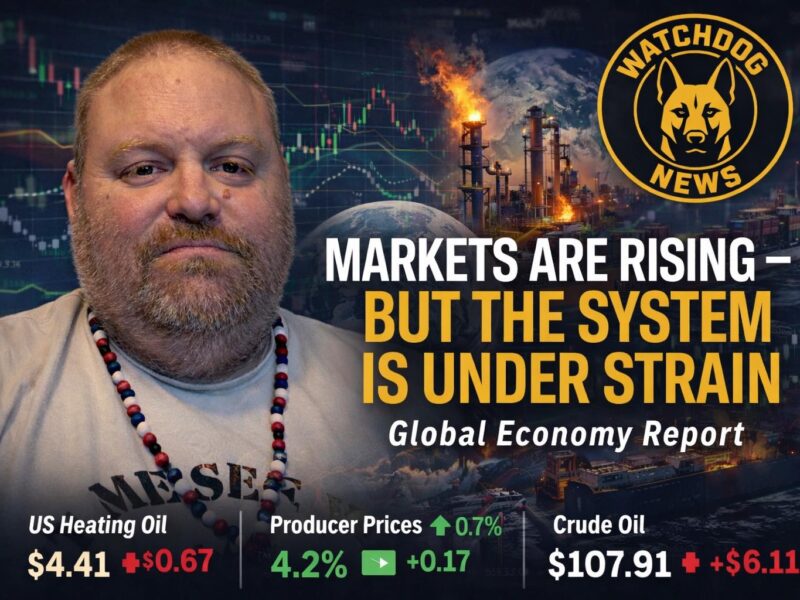
If one theme dominated nearly every region in your notes, it was energy. WTI rebounded above $96 per barrel and, in some market snapshots, closer to the upper-$90s, while Brent pushed back above $104 in several readings after Monday’s retreat. Heating oil surged above $4 per gallon, gasoline futures climbed to their highest levels since 2022, and U.S. diesel prices crossed $5 a gallon. This is the kind of move that does not stay contained inside commodity screens. It bleeds into freight, farming, construction, aviation, household budgets, and politics.
My notes and research captured the whiplash well. On the one hand, markets briefly relaxed when several tankers made it safely through the Strait of Hormuz and emergency reserve releases were discussed. On the other hand, those hopes were quickly dashed by renewed attacks, halted loading, and the realization that even partial disruptions at such a critical chokepoint can keep fuel markets elevated for longer than equity bulls want to admit. The International Energy Agency has already been discussing additional reserve releases, but reserve releases can cushion price spikes; they do not reopen a war-threatened shipping lane.
https://www.theguardian.com/us
This is why energy-sensitive commodities in your notes moved the way they did. Heating oil spiked. Gasoline resumed rallying. Coal traded near a 16-month high as major economies considered using substitute fuels. Palm oil, canola, wheat, corn, platinum, iron ore, and gold all reflected either supply-chain stress, inflation hedging, or regional demand shifts. Even copper’s slip mattered because it showed that not every commodity is trading the same story. Weaker fundamentals and slower Chinese consumption are weighing on copper, while oil products are trading amid geopolitical tensions and physical disruptions. That divergence is important. It says the world is not in one simple commodity boom. It is in a conflict-distorted repricing.
Equities: impressive resilience, but not clean optimism
U.S. stocks extended their rebound, with the S&P 500 and Nasdaq rising roughly 0.6% and the Dow up by around 300 points in your notes. Reuters and AP both showed the same broader pattern: investors kept buying even as oil moved higher again. Asset managers and credit-sensitive names rebounded sharply, Nvidia stayed bid on its AI revenue outlook, and Qualcomm gained on shareholder-return announcements. In plain English, traders were still willing to believe that earnings could outlast the shock.
Canada told a similar story, but with its own twist. The TSX climbed above 33,000, supported by miners, banks, and tech. Gold-related names gained as yields eased ahead of expected central bank holds; major banks moved higher; Shopify surged; and the energy complex stayed mixed. Reuters noted that tech, materials, and energy helped Canadian equities, and that Canada’s status as a net oil exporter may cushion it somewhat relative to pure importers. That does not make Canada immune. It does mean the inflation-growth tradeoff looks slightly different north of the border.
Europe and Asia were more mixed intraday, and your notes preserved that complexity. Frankfurt’s DAX was shown lower, then positive; the STOXX complex wavered and then advanced modestly; the FTSE 100 attempted a second gain with help from oil majors; and defence names underperformed even as war headlines intensified. That combination is revealing. It suggests investors were not simply “buying war.” They were rotating into utilities, energy, and defensives while reassessing which sectors actually benefit from prolonged instability. Reuters also reported a sharp collapse in German investor morale, showing that equity resilience and business confidence are not telling the same story right now.
Asia reflected the same split-screen reality. India’s Sensex advanced, helped by metals, autos, and banks. Hong Kong and some China sessions rose on stronger January-February activity data, while other China snapshots showed renewed weakness as oil rebounded and summit delays with Washington clouded sentiment. Japan, likewise, appeared both stronger and weaker across different time windows in your notes, which is consistent with a market swinging intraday between relief over tanker passage and fear over renewed energy disruption. South Korea rallied when oil cooled; Japanese shares softened when oil rebounded. These are not contradictions so much as proof that markets are trading headlines first and fundamentals second.
Central banks: the great holding pattern, with one notable exception
Here is where the report becomes more important than a normal market wrap. My notes show a world of central banks trying to stand still while the floor moves under them.
The Federal Reserve is widely expected to hold rates unchanged. Still, the real focus is the SEP and the guidance around energy-driven inflation risk, softening labor conditions, and whether policymakers still see room for later cuts. Reuters noted that markets have already begun adjusting cut expectations as oil and gas prices climb. In other words, even before the Fed speaks, the market is tightening financial conditions on its behalf.
The Bank of Canada is also expected to hold. So is the Bank of England. So is the ECB. So is the Bank of Japan. Morocco held its benchmark rate at 2.25% for a fourth straight meeting, citing solid growth, contained inflation, and global uncertainty, while still forecasting inflation to remain relatively moderate in 2026 and 2027. Indonesia held at 4.75% to defend the rupiah and keep inflation in range. Armenia held at 6.5% as inflation and activity remained firm. South Africa is now seen holding next week as imported energy risks threaten the inflation outlook. This is a synchronized pause, but not a comfortable one. It is a pause born of uncertainty.
Australia broke from the pack. The RBA raised rates again, taking the cash rate to 4.10% in a narrow 5–4 decision. That is one of the clearest signals in the whole global data stream. Australia’s central bank is effectively saying the energy shock cannot simply be waved away as temporary, especially when domestic inflation pressures were already stubborn. From a Watchdog perspective, Australia may be the early warning shot for the rest of the developed world: if oil stays high long enough, “hold” can turn into “hike” very quickly.
Bonds, currencies, and precious metals: caution, not conviction
Bond markets were cautious rather than panicked. U.S. 10-year yields hovered around the 4.21% to 4.24% range in your notes, with intraday moves lower and higher as traders weighed growth risks against inflation risk. Germany’s Bund yield eased but remained near recent highs. Italy’s BTP and France’s OAT stayed elevated, with markets increasingly pricing a tighter ECB path later this year. UK gilt yields retreated slightly but remained high. That constellation tells us the bond market is not pricing a clean recession, nor is it pricing a clean inflation victory. It is pricing uncertainty.
In foreign exchange, the dollar steadied after a prior drop; the euro stalled around $1.15; sterling tried to recover from a three-month low; the yen remained weak despite intervention talk; the rupiah hovered near 17,000; the rand softened; and the Aussie dollar strengthened on the RBA hike. These were not random moves. They reflected a hierarchy of vulnerability: energy importers, countries with questions about inflation credibility, and currencies exposed to global risk aversion all felt pressure.
Gold hovered near $5,010–$5,020 per ounce in your notes, supported by safe-haven demand but held back by reduced expectations for rate cuts. That is a key nuance. Two forces are pulling gold at once: fear supports it, but higher energy-driven inflation also makes central banks less dovish, which limits upside. Silver likewise raised questions about both the haven and industrial demand.
What the macro data is really saying
The growth data in your notes was not uniformly bad. Ghana’s Q4 GDP accelerated to 5.8%, with services and agriculture leading, while oil and gas weighed on industry. Morocco’s economy is projected to strengthen materially in 2026, helped by agriculture after the drought. Romania’s current-account deficit narrowed. Albania’s trade gap narrowed slightly. Singapore’s NODX still expanded, though at the slowest pace in six months. These are not recession prints.
But the weaker signals matter just as much. The New York Fed’s Business Leaders Survey stayed deeply negative at -22.6, with the business climate index falling to -46.2 and employment still contracting. U.S. private-sector hiring slowed to just 9,000 jobs per week in the late-February four-week average in your notes. Germany’s ZEW sentiment collapsed. Eurozone morale fell to an 11-month low. Indonesia’s loan growth eased. New Zealand food inflation accelerated. Switzerland remained in producer-price deflation. Croatia and Kyrgyzstan showed firmer inflation. This is a world where the growth pulse remains strong, but the confidence pulse is deteriorating.
Watchdog conclusion
A single direction does not define today’s global economy. A single tension defined it: markets are trying to remain risk-on while the real economy absorbs an energy shock.
The bullish view says earnings can hold, shipping disruptions may gradually ease, reserves can cap the oil spike, and central banks can talk tough without crushing growth. The bearish view holds that energy is the gateway variable, and once fuel, freight, and inflation expectations remain elevated long enough, the damage spreads to hiring, trade, consumption, and policy. Both perspectives were visible in your notes today.
The Watchdog read is this: the rebound is real, but it is not the same thing as resolution.
Rising stock prices do not mean the system is healthy. It may simply mean capital has not yet fully priced the second-order effects. Shipping stress, fuel spikes, collapsing sentiment in parts of Europe, softer hiring signals in the U.S., and a surprise rate hike in Australia all point to the same underlying message: the global economy is still moving, but it is moving with a limp.
Jared W Campbell- Watchdog News
Facts over Factions!