

Marines and Maritime Chokepoints Signal New Phase in Iran War
Marines, Missiles, and Maritime Chokepoints: Signs the Iran War May Be Entering an Attrition Phase
By Jared W. Campbell — Watchdog News
👁 Facts Over Factions
March 13, 2026

A Shift Beneath the Headlines
In the past two weeks, the conflict involving Iran, Israel, and the United States has often been depicted as a flurry of airstrikes, missile exchanges, and retaliatory attacks. Yet, if we dig a bit deeper into the recent military maneuvers, it becomes clear that something more complex is brewing beneath the surface.
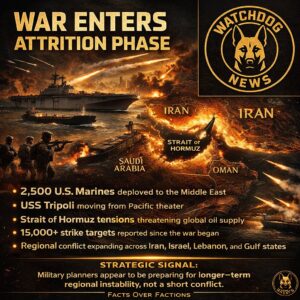
The United States has made a significant move, ordering 2,500 Marines and the amphibious assault ship USS Tripoli to shift from the Pacific towards the Middle East, as reported by the Associated Press. These forces are part of the 31st Marine Expeditionary Unit—a rapid-response team equipped for amphibious operations, embassy reinforcement, and civilian evacuation missions.
While U.S. officials have stressed that this deployment doesn’t necessarily signal an imminent ground invasion, the transition of forces from near Taiwan to the Middle East marks a striking shift in strategic positioning.
For analysts monitoring the situation closely, this could be one of the clearest signs that the conflict is shifting into a more intricate and prolonged phase, moving beyond mere exchanges of fire into something far more consequential.
The Military Picture
According to reporting from the Associated Press, the U.S. maintains a significant naval presence in the region. Earlier this week, the Navy had 12 ships operating in the Arabian Sea, including the aircraft carrier USS Abraham Lincoln and several destroyers.
If the USS Tripoli joins this group, it would become one of the largest ships in the area, second only to the carrier.
Marine Expeditionary Units are designed for flexibility, with missions that can include:
– Amphibious landings
– Embassy security operations
– Civilian evacuation missions
– Humanitarian response
– Rapid reinforcement of allied positions
Due to this versatility, Marine Expeditionary Units are often deployed in anticipation of instability that may extend beyond traditional battlefield lines.
This indicates that the Pentagon is preparing for a broader range of contingencies, though it does not suggest an imminent invasion.
Escalation Across the Region
The conflict is escalating, showing no signs of abating.
Iran continues to unleash a barrage of missile and drone strikes against Israel and strategic sites throughout Gulf nations. In response, U.S. and Israeli forces are conducting airstrikes aimed at crippling key military and industrial infrastructures within Iran.
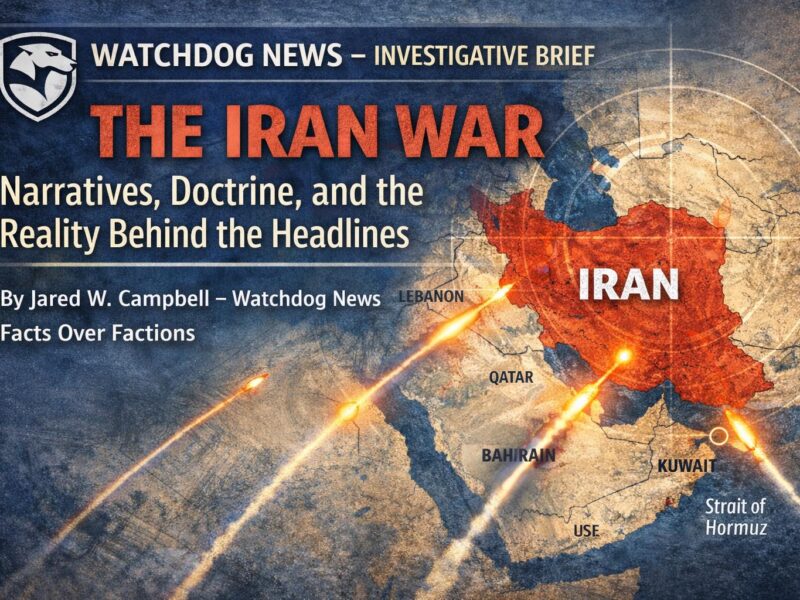
Adding to the tension is the Strait of Hormuz, a vital maritime route where approximately 20% of the world’s oil trade flows. This narrow waterway has become a flashpoint, raising alarms about shipping disruptions that are already sending shockwaves through global markets and energy supply chains.
Meanwhile, Lebanon faces a deepening humanitarian crisis. The United Nations estimates that around 850,000 people have been displaced, with hundreds having lost their lives as hostilities between Israel and Hezbollah escalate further.
In essence, the battlefield is expanding beyond borders—echoing the sobering reality that this conflict now engulfs the entire region.
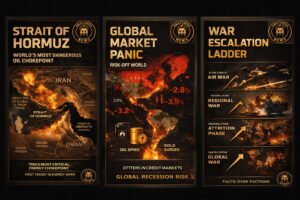
The movement of U.S. Marines and amphibious forces toward the Middle East may signal a deeper shift in the conflict with Iran.
Military analysts are watching for signs that the war could transition from rapid strikes to a prolonged war of attrition.
The Cost of the War So Far
The scale of military activity has grown rapidly.
U.S. Defense Secretary Pete Hegseth said that more than 15,000 targets have been struck in Iran since the beginning of the war.
At the same time, the United States has acknowledged at least 13 service members killed, including the loss of a KC-135 refueling aircraft that crashed during operations in Iraq.
War losses and operational accidents are not unusual in large-scale military campaigns, but they do reinforce the reality that this conflict is already producing measurable costs.
What the Deployment May Signal
When militaries begin deploying Marine Expeditionary Units, amphibious ships, and carrier groups to the same theater, analysts often interpret this as preparation for a conflict environment that requires a sustained presence rather than short bursts of combat.
That does not necessarily mean large ground battles.
Instead, it may indicate planning for scenarios such as:
- evacuation of foreign nationals
- protection of diplomatic facilities
- stabilization missions if regional governments face unrest
- maritime security operations
- Reinforcement of allied military infrastructure
In other words, the deployment reflects a preparation for uncertainty.
A War of Attrition?
Many observers are starting to question whether the conflict is entering a war-of-attrition phase. Wars of attrition are characterized less by dramatic breakthroughs and more by endurance.
They test which side can:
- sustain military operations
- absorb economic pressure
- maintain domestic political stability
- protect supply chains and logistics
- hold alliances together
The signs that concern analysts include:
- continued missile exchanges
- expanding proxy battles across borders
- disruptions to global shipping routes
- large-scale displacement of civilians
- growing military deployments by outside powers
None of these developments alone guarantees a prolonged conflict.
But together, they create the conditions in which wars often grind to a halt.
The Strategic Trade-Off
Another detail that may not be receiving enough attention is where these Marines came from.
The USS Tripoli and the 31st Marine Expeditionary Unit had been operating near Taiwan before the redeployment order.
Moving forces from the Pacific to the Middle East signals that the United States is prioritizing the Iran conflict enough to adjust its force posture in another major theater temporarily.
That does not necessarily dramatically weaken the U.S. presence in Asia.
But it does illustrate how crises in one region can ripple across the global strategic map.
The Watchdog Perspective
In modern war reporting, headlines often spotlight individual events: a missile strike, a bombing run, or a diplomatic statement. Yet, a true understanding of wars transcends these singular moments. It is through discerning patterns that one grasps the evolving nature of conflict.
The emerging pattern indicates a potential shift from short, intense exchanges to a broader regional contest that engages multiple actors, supply chains, and strategic positions. While this might sound daunting, it does not guarantee that escalation is unavoidable.
Diplomacy, deterrence, and war fatigue are powerful forces that can inspire a slow or even reverse the trajectory of conflict. The latest deployment decisions signal that military planners are preparing for a longer engagement than initially anticipated. In the realm of war, preparation often unveils deeper insights about expectations than official statements ever could.
Jared W. Campbell- Watchdog News
👁 Facts Over Factions

— Watchdog News
👁️ Facts Over Factions