

When energy supply disruptions occur in the Persian Gulf, the global economy rarely stays calm for long.
Global Economy Brief — Energy Shock, War Pressure, and a World Repricing Risk
By Jared W. Campbell — Watchdog News
👁️ Facts Over Factions
March 12, 2026

Watchdog News Original Logo
The Global Economy Just Entered a Stress Test
Over the last 18 hours, financial markets around the world have begun reacting to one central reality:
The Iran conflict is no longer just a regional military issue — it is now a global economic event.
From currencies and commodities to bond yields and housing markets, nearly every major financial indicator is showing signs of stress tied to the same underlying trigger:
• We see rising energy prices
• Still seeing supply disruptions through the Strait of Hormuz
• People are raising concerns about inflation fears returning
• Even, Central banks are reconsidering interest rate policy
Markets are rapidly repricing risk in real time.
The story unfolding in the data suggests that the economic consequences of war are beginning to ripple through the global system.
Energy Markets: The Shockwave
The energy sector is at the center of the current economic reaction.
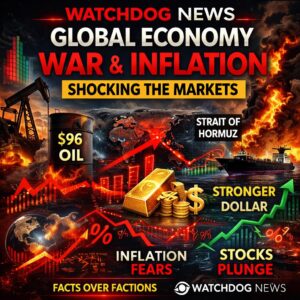
Crude oil prices surged again as markets processed the implications of a prolonged disruption to shipping routes in the Persian Gulf.
• WTI crude climbed toward $95 per barrel
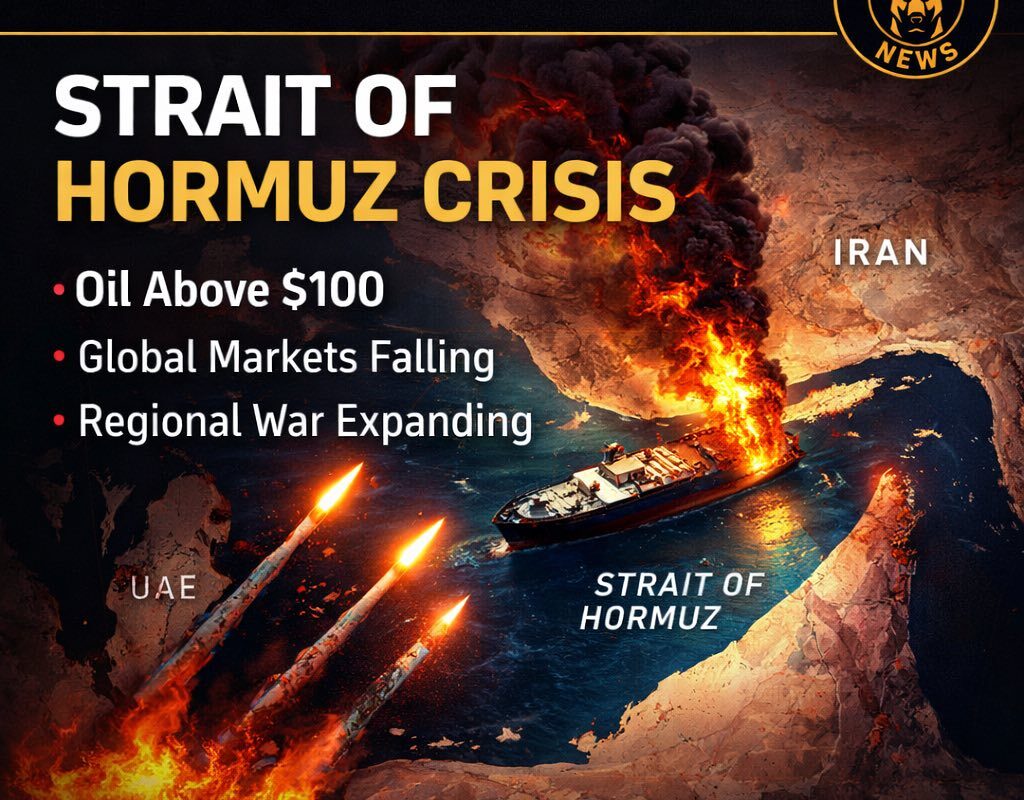
• Brent crude moved above $100
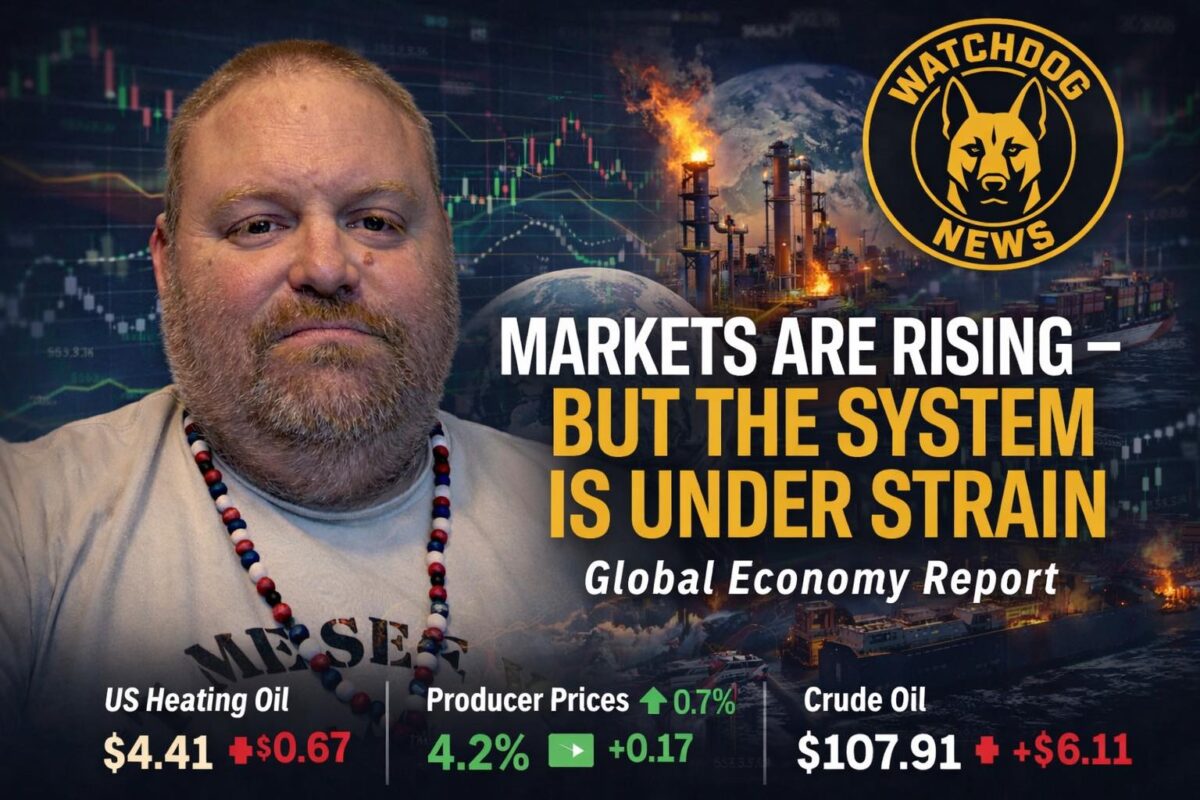
• Heating oil surged over 7% to nearly $3.96 per gallon
• Gasoline futures approached four-year highs near $2.90 per gallon
The key driver behind this surge is the effective shutdown of the Strait of Hormuz, one of the most critical chokepoints in global trade.
Approximately 20% of global oil trade normally flows through this narrow waterway.
Recent developments have intensified fears:
• Tankers struck by projectiles
• Shipping routes disrupted
• Iraq halting operations at oil terminals
• Gulf producers cutting output as storage capacity fills
The International Energy Agency responded with the largest strategic reserve release in history — 400 million barrels.
However, markets remain skeptical.
Even such a massive release may take weeks or months to reach the market, while supply disruptions are happening now.
Inflation Fears Return
Higher energy prices are quickly feeding into a familiar concern for global markets:
Inflation.
Oil is a foundational input cost for the global economy.
When oil rises:
• Transportation costs increase
• Manufacturing becomes more expensive
• Consumer goods prices rise
• Food supply chains become more costly
This explains why bond markets around the world are reacting strongly.
Global Bond Yields Surge
Government bond yields are rising across major economies as investors adjust their expectations for future inflation and interest rates.
Key moves include:
United States
• 10-year Treasury yield climbed toward 4.24%
Canada
• 10-year government bond yield surged toward 3.5%, the highest since July.
United Kingdom
• 10-year gilt yields rose above 4.6%, a five-month high.
Germany
• Bund yields climbed to 2.95%, the highest since October 2023.
France
• 10-year yield reached 3.6%.
Italy
• 10-year bond yields surpassed 3.7%, the highest since May 2025.
These movements signal one thing:
Markets are beginning to believe that central banks may need to keep interest rates higher for longer.
The Dollar Strengthens
In times of uncertainty, investors often move capital into what they perceive as safer assets.
One of those assets is the U.S. dollar.
The Dollar Index climbed above 99.6, its highest level since November 2024, and marked its fourth consecutive day of gains.
At the same time, several major currencies weakened:
• Swedish Krona fell by over 1%
• South Korean Won declined 0.9%
• Mexican Peso dropped 0.9%
• British PouPoundipped 0.4%
• Euro fell 0.39%
• Japanese Yen weakened toward 159 per dollar
The Turkish Lira also hit a record
rd low near 44 per dollar, prompting the Turkish central bank to intervene by selling billions in foreign currency.
Commodities React Across the Board
Energy isn’t the only market moving.
Several key commodities are reacting to the geopolitical shock.
Metals
• Aluminum rose above $3,500 per tonne, the highest in nearly four years.
• Supply disruptions from Qatar and Bahrain smelters are tightening supply.
Precious Metals
• Gold stabilized above $5,180 per ounce, supported by safe-haven demand.
• Silver traded above $86, balancing geopolitical risk against higher bond yields.
Industrial Metals
• Copper fell below $5.8 per pound, pressured by the stronger dollar.
Agricultural Markets
• Palm oil surged on rising demand and energy-linked biodiesel expectations.
• Coffee and sugar declined amid broader commodity volatility.
Natural Gas Markets
The energy shock is spreading into global gas markets as well.
European natural gas prices climbed toward €52 per megawatt hour, driven by concerns that LNG shipments from Qatar may remain disrupted.
QatarEnergy has reportedly suspended operations at the massive Ras Laffan LNG facility, which supplies roughly 20% of global LNG.
Meanwhile, U.S. natural gas prices rose toward $3.30 per MMBtu, though the U.S. market remains somewhat insulated thanks to strong domestic production.
Stock Markets React
Equity markets worldwide are responding with caution.
United States
U.S. stocks fell to their lowest levels since November.
Major indices dropped roughly 1% as investors began pricing in stagflation risks — a combination of slower growth and rising prices.
Financial stocks faced particular scrutiny after Morgan Stanley and Cliffwater capped withdrawals from private credit funds, raising concerns about potential loan defaults.
Europe
European markets declined broadly:
• DAX fell 0.5%
• STOXX 600 dropped 0.6%
• Airlines and consumer stocks were among the hardest hit.
Defense companies, however, surged.
• Leonardo rose 7.8%
• Rheinmetall gained 3.5%
Asia
Asian markets also reacted negatively:
• Japan’s Nikkei fell 1%
• Hong Kong’s Hang Seng dropped 0.7%
• India’s Sensex declined 1.1%
Higher oil prices pose a particular challenge for energy-importing nations like Japan and India.
Global Trade and Economic Data
Outside of energy markets, economic data continues to paint a mixed picture.
United States
• The U.S. trade deficit narrowed to $54.5 billion in January.
• Exports reached a record $302.1 billion.
• Jobless claims remained stable around 213,000.
Housing Sector
Housing data shows conflicting signals.
• Housing starts rose 7.2% to 1.487 million units.
• But building permits fell 5.4%, suggesting future slowdown risk.
Canada
Canada’s economy showed signs of stress:
• Trade deficit widened to C$3.6 billion.
• Wholesale sales fell 1%.
• Exports declined 4.7%.
Strong Emerging Market Pressures
Several emerging markets are feeling pressure from the energy shock.
India
• Inflation rose to an 11-month high of 3.21%.
• The rupee fell to a record low near 92 per dollar.
Brazil
Inflation cooled to 3.81% annually, though monthly CPI jumped 0.7%, the largest increase in a year.
South Africa
Manufacturing declined for the third consecutive month, though mining output increased thanks to strong demand for platinum and chromium.
The Watchdog Perspective
When markets move like this, the headlines often focus on individual events.
But the bigger story is the pattern emerging across the global economy.
In the past 18 hours, we have seen:
• Energy prices surge
• Global bond yields rise
• The dollar strengthened
• Stock markets retreat
• Inflation fears return
This combination creates a dangerous economic scenario known as stagflation — when economic growth slows while prices continue to rise.
Central banks now face a difficult choice.
If they raise interest rates to fight inflation, they risk slowing the economy.
If they cut rates to support growth, they risk fueling even higher inflation.
And all of this is happening while the global energy system faces one of its largest disruptions in decades.
Final Watchdog Observation
Wars rarely stay contained to the battlefield.
They ripple outward through shipping lanes, supply chains, currencies, and commodity markets.
The economic data from the past 18 hours suggests that the global economy is entering the early stages of a wartime economic adjustment.
Whether that shock becomes temporary turbulence or a deeper global slowdown will depend on one question:
How long the conflict — and the energy disruption it created — actually lasts.
Jared W. Campbell
👁️ Facts Over Factions