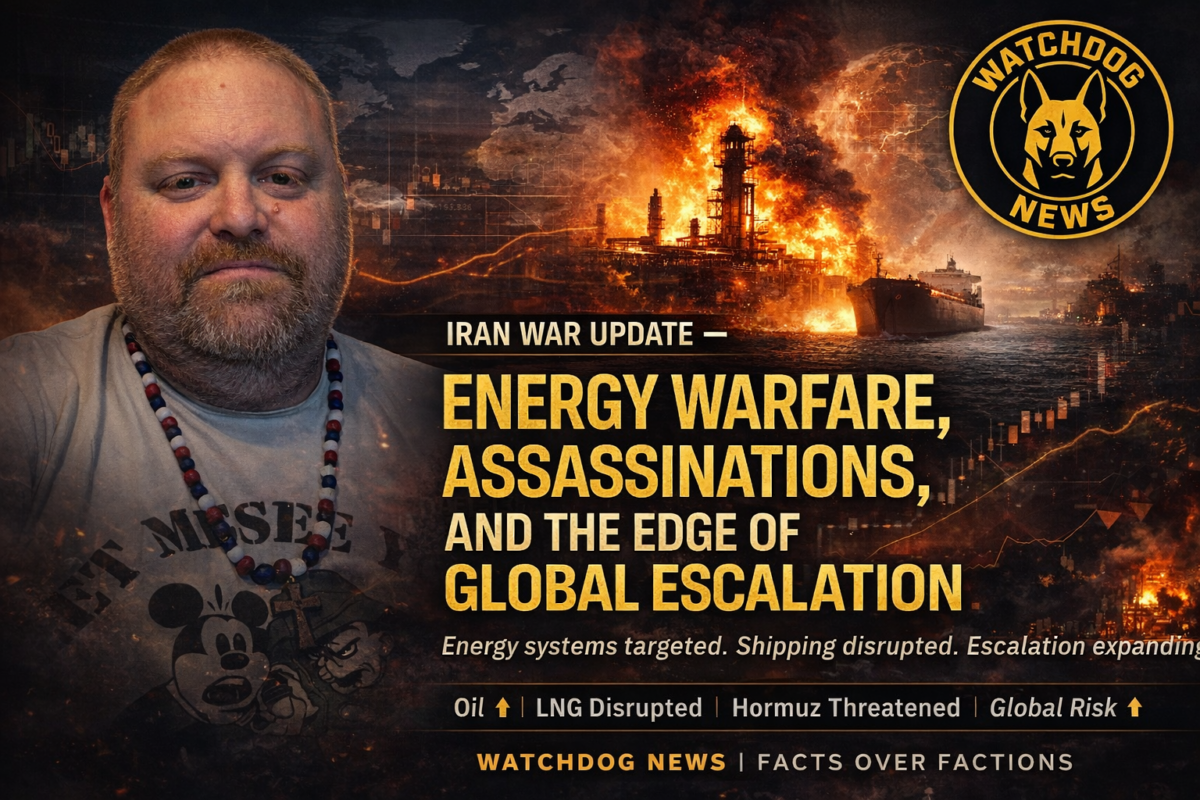


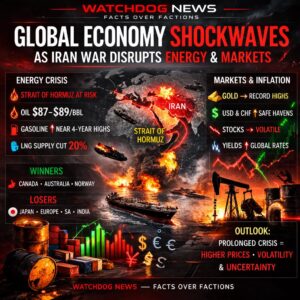
Few events move the global economy faster than disruptions to energy supply in the Persian Gulf.
Global Economic Shockwaves as Iran War Escalates

Watchdog News Original Logo
By Jared W. Campbell — Watchdog News
👁 Facts Over Factions
March 11, 2026
A World Economy on Edge
More broadly, over the last 22 hours, global financial markets have been reacting rapidly to the escalating conflict involving Iran, the United States, Israel, and Gulf states.
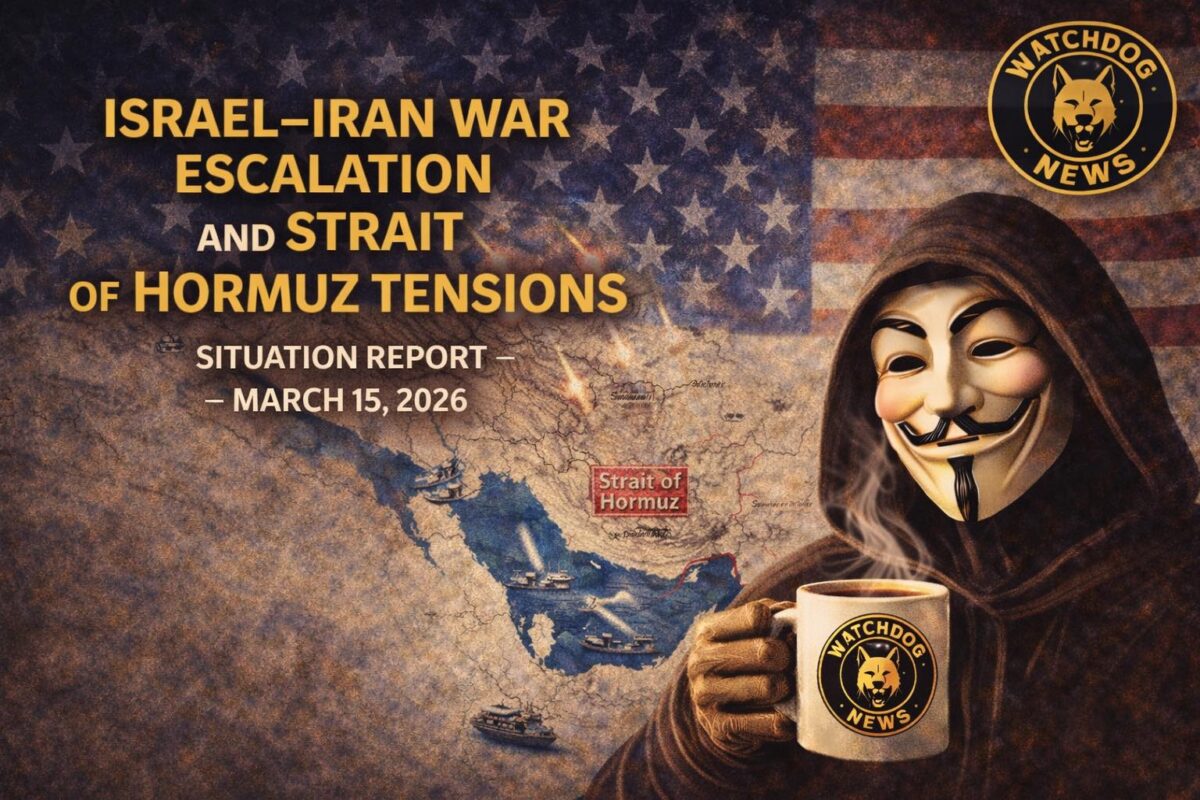
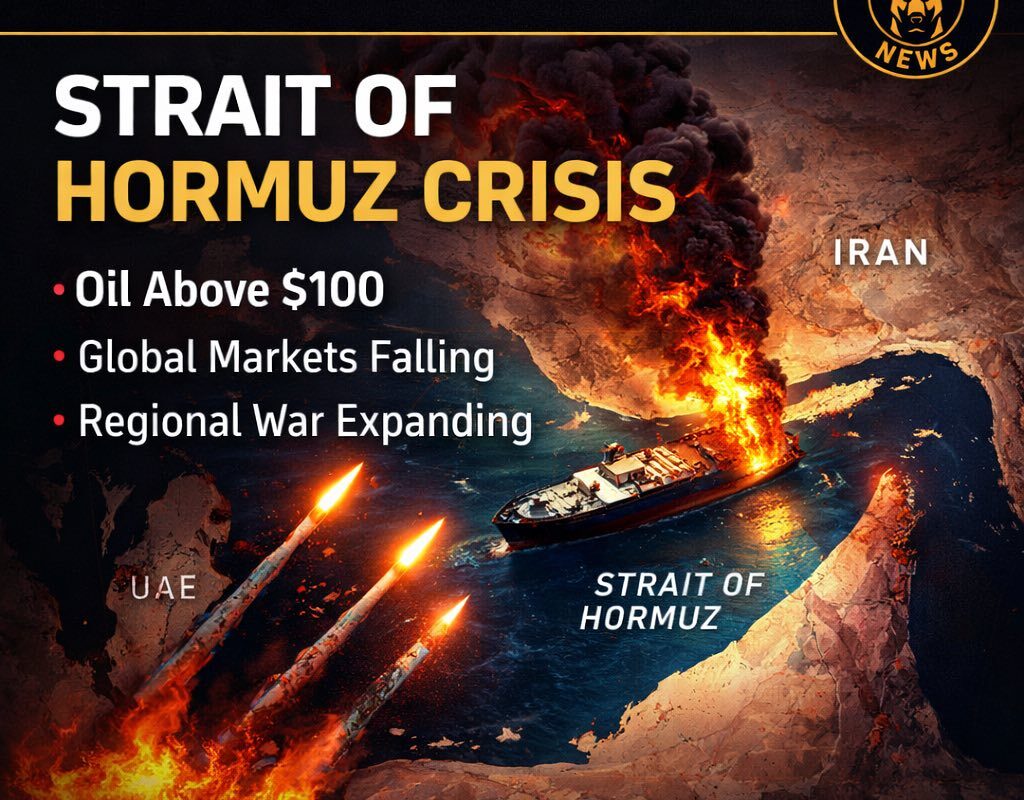
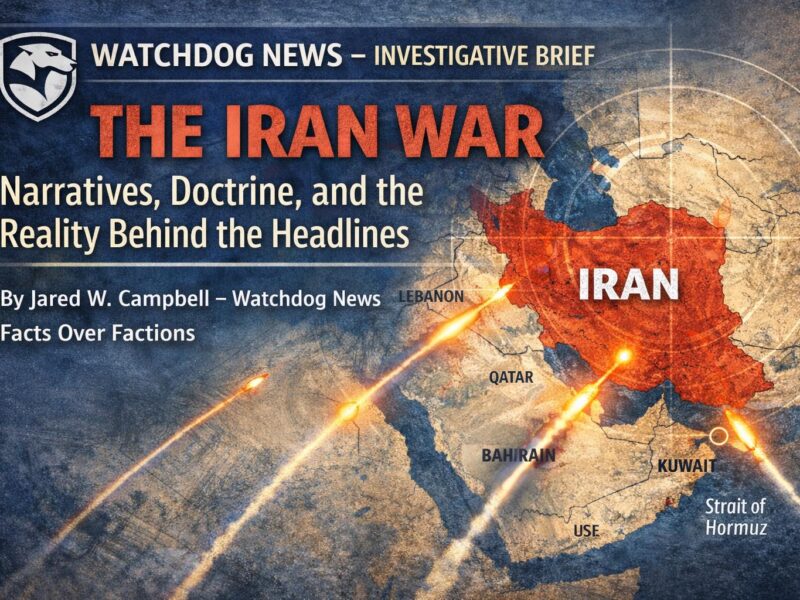
Energy disruptions in the Persian Gulf—particularly around the Strait of Hormuz, one of the world’s most critical oil shipping lanes—are now sending shockwaves through currencies, commodities, bonds, and stock markets worldwide.
While some leaders claim the war could end soon, others warn that military operations are intensifying and that the conflict may enter a prolonged phase.
Meanwhile, Iranian officials have vowed that attacks and blockades will continue until U.S. and Israeli strikes stop, raising concerns about long-term global economic instability.
Energy Markets: The Center of the Storm
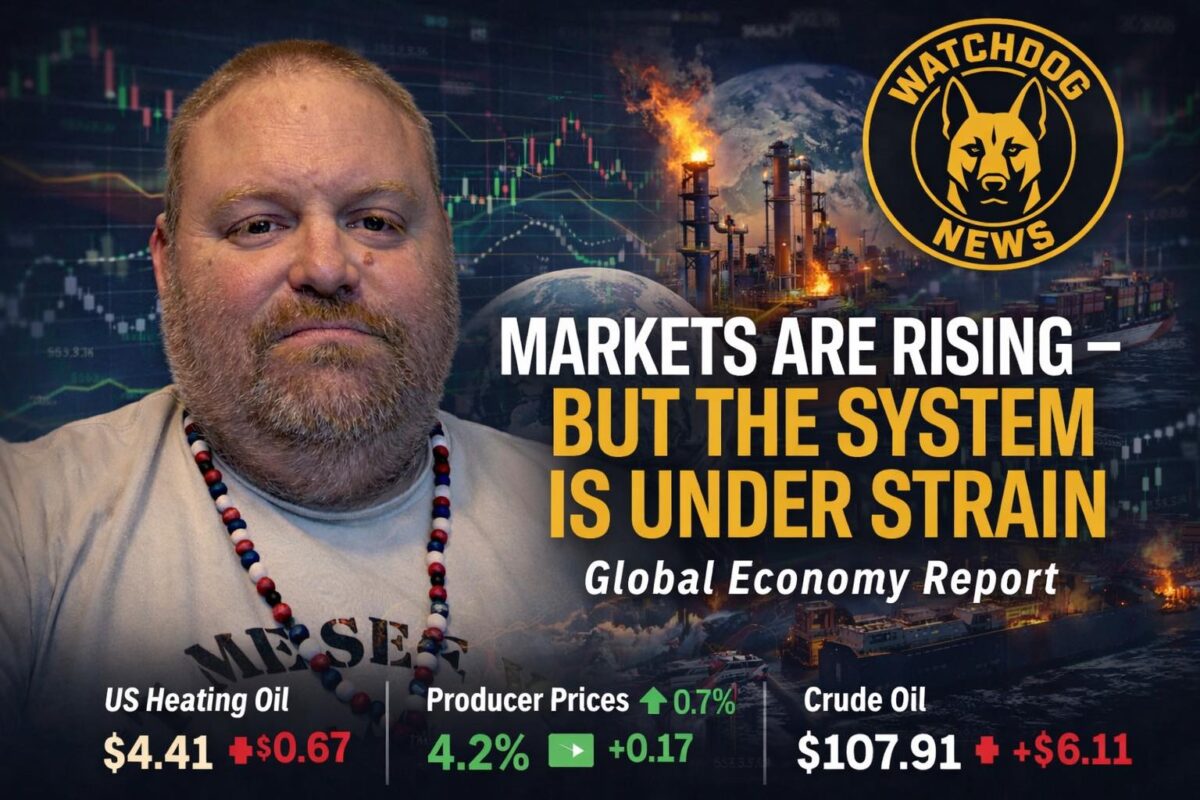
Energy markets are reacting most dramatically.
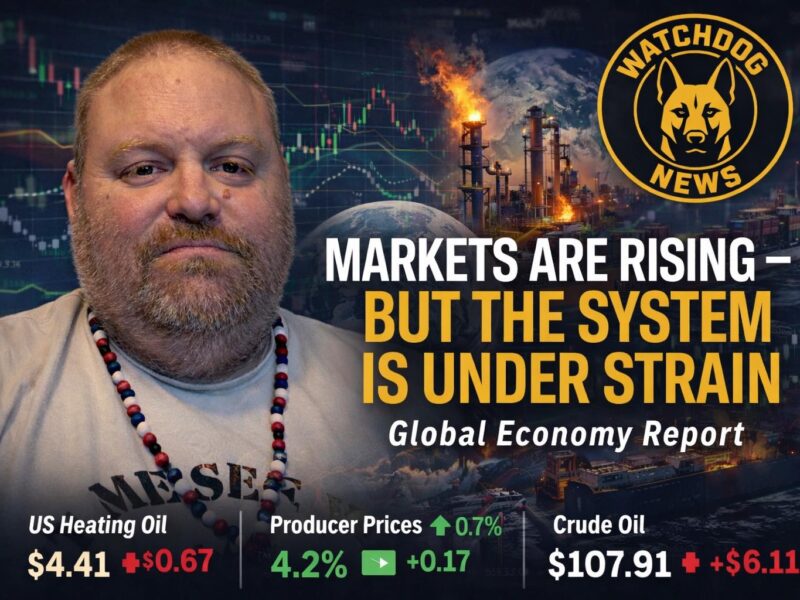
– WTI crude oil surged toward $87–$89 per barrel before pulling back slightly as traders weighed emergency actions by governments.
– Major Middle Eastern producers have cut output by more than 6 million barrels per day.
– Tankers are avoiding the Strait of Hormuz, effectively halting major exports from the region.
https://tradingeconomics.com/stream
Several developments are driving the volatility:
• drone strikes and naval threats occurring near key shipping routes
• refinery shutdowns affecting facilities in Saudi Arabia, Qatar, the UAE, and Bahrain
• the suspension of Qatar’s LNG operations, potentially removing roughly 20% of global LNG supply
To stabilize prices, the International Energy Agency (IEA) is considering the largest coordinated release of emergency oil reserves in history—around 400 million barrels.
Some countries, including Japan, have also indicated they may release national oil reserves.
However, analysts warn that strategic reserves can slow price spikes but cannot fully replace lost supply if the conflict continues.
https://tradingeconomics.com/stream
Fuel Prices Surge Worldwide
The energy disruption is already rippling into global fuel markets.
– Gasoline futures climbed near four-year highs around $2.95 per gallon.
– Heating oil surged above $3.6 per gallon amid fears of supply shortages.
– European natural gas prices jumped more than 60% this month, exceeding €50/MWh.
Europe faces particular risk because gas storage levels are only about 29% full, far below last year’s levels heading toward winter.
https://tradingeconomics.com/stream
Commodities React: Food and Metals Rise
Higher energy costs are also affecting global food and commodity markets.
Soybeans climbed above $12 per bushel, their highest level since May 2024, as markets anticipate higher fertilizer and transportation costs.
https://tradingeconomics.com/stream
Meanwhile:
– Gold remains near record levels around $5,180–$5,190 per ounce, reflecting safe-haven demand.
– Aluminum prices hit a four-year high above $3,420 per ton, partly due to disrupted shipments from Gulf producers.
– Copper prices rose toward $5.9 per pound, supported by strong Chinese demand and tightening global supply.
These trends highlight a familiar pattern during geopolitical crises: investors move money from risk assets into physical commodities.
https://tradingeconomics.com/stream
Currency Markets: Safe Havens Strengthen
The geopolitical uncertainty is also reshaping global currency markets.
Currencies benefiting from safe-haven demand include:
• the Swiss franc, trading near record highs
• the U.S. dollar, with the dollar index around 99
• Canada’s dollar, strengthened by higher oil prices
https://tradingeconomics.com/stream
Meanwhile, some currencies have weakened:
• the South African rand, falling toward 16.4 per USD amid inflation fears
• Japan’s yen, which remains under pressure due to the country’s dependence on Middle Eastern energy
• the euro, slipping to a three-month low near $1.16
Central banks in several countries are already signaling possible interventions or policy changes if volatility continues.
https://tradingeconomics.com/stream
Global Inflation Fears Return
Energy shocks are now raising fears of a renewed global inflation wave.
In the United States:
– Consumer inflation remains at 2.4% annually.
– Core inflation stands at 2.5%, near its lowest level since 2021.
However, economists warn that the full inflationary impact of the war in Iran has not yet appeared in the data because energy prices surged after the February reporting period.
As a result:
• The Federal Reserve is now expected to cut rates only once this year, instead of multiple cuts.
• Treasury yields have risen, with the U.S. 10-year yield near 4.2%.
• The European Central Bank is considering rate hikes, reversing earlier expectations of cuts.
ECB President Christine Lagarde said the bank would do “everything necessary to keep inflation under control.”
https://tradingeconomics.com/stream
Global Stock Markets: Volatility Returns
Stock markets worldwide have reacted with caution.
In the United States:
– The S&P 500 and Dow Jones traded mostly flat amid uncertainty.
– Tech stocks lifted the Nasdaq, helped by strong earnings from Oracle.
In Europe:
– The DAX and FTSE declined, reflecting inflation fears and energy volatility.
In Asia:
– Markets were mixed as investors balanced geopolitical fears with hopes that strategic oil releases might stabilize prices.
Canada’s TSX index fell around 0.6%, while India’s Sensex dropped 1.7% amid energy price concerns.
https://tradingeconomics.com/stream
Shipping and Global Trade Disruptions
The Baltic Dry Index, a key indicator of global shipping activity, has begun fluctuating as maritime risks increase.
Several major developments are raising concerns:
• projectile strikes reported near cargo ships
• commercial vessels now avoiding the Strait of Hormuz
• sharply rising insurance costs for shipping
Because roughly 20% of global oil shipments normally pass through this corridor, any prolonged disruption could reshape global trade routes.
Mixed Signals From Governments
Political messaging about the conflict remains highly contradictory.
U.S. President Donald Trump told Axios that the war could end “soon” because there is “practically nothing left to target.”
However, U.S. Defense Secretary Pete Hegseth warned that the war’s most intense strikes may still lie ahead.
Meanwhile, Iran’s Revolutionary Guard rejected claims of an imminent end, stating that the blockade and military pressure will continue until U.S. and Israeli attacks cease.
These conflicting signals are contributing to global market uncertainty.
Global Economic Winners and Losers
Even during crises, economic shifts create both winners and losers.
Countries benefiting from higher energy prices include the following:
• Canada, a major oil exporter
• Australia, a major resource exporter
• Norway and other LNG-producing nations
By contrast, the countries most vulnerable include:
• Japan, which remains heavily dependent on imported energy
• many European economies with low gas reserves
• developing economies that rely heavily on fuel imports
The Watchdog Perspective
The global economy is now entering a high-risk phase shaped by energy disruption, inflation fears, and geopolitical uncertainty.
Three realities stand out:
1️⃣ Energy supply is now the central battlefield of the conflict.
2️⃣ Strategic reserves can soften shocks—but not eliminate them if the war continues.
3️⃣ Financial markets are increasingly preparing for a prolonged confrontation rather than a quick resolution.
For now, investors, governments, and central banks are watching the same question:
Will the Strait of Hormuz reopen — or remain a choke point in a wider geopolitical struggle?
Until that answer becomes clearer, the global economy will remain on edge.
👁 Watchdog News
Facts Over Factions
https://tradingeconomics.com/stream