

Modern wars are often rooted not only in ideology but in deeper geopolitical fears about security, alliances, and influence.
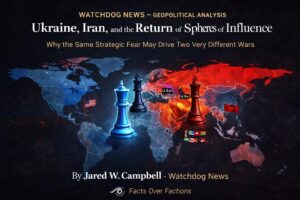
Ukraine, Iran, and the Return of Spheres of Influence
Why the Same Strategic Fear May Drive Two Very Different Wars
 By Jared W. Campbell — Watchdog News
Facts Over Factions
March 10, 2026
A Pattern Worth Watching
History rarely repeats itself exactly, but it often rhymes.
As the wars in Ukraine and the Middle East unfold, many analysts are beginning to notice a pattern that deserves a Watchdog eye. At first glance, these conflicts appear completely different. One is a massive ground war in Eastern Europe. The other is a regional confrontation involving missile strikes, proxy forces, and military bases across the Persian Gulf.
Yet beneath the surface lies a strategic similarity that cannot be ignored: both conflicts are deeply tied to what geopolitical scholars call the security dilemma—a cycle in which nations expand their military presence for defense, only to provoke fear and escalation from their rivals.
Understanding this pattern does not justify war. But it may help explain why these conflicts ignite in the first place.
Russia’s Argument: NATO Expansion
For years, Russian leadership argued that the expansion of NATO eastward represented a growing security threat.
Following the collapse of the Soviet Union, NATO expanded in 1999 to include several former Warsaw Pact countries, including Poland, Hungary, and the Czech Republic. Later waves of expansion brought additional Eastern European nations into the alliance.
From the Western perspective, these moves were framed as sovereign nations choosing their own alliances.
From Moscow’s perspective, however, NATO military infrastructure was moving steadily closer to Russia’s borders.
The issue became particularly sensitive when discussions emerged about Ukraine’s eventual membership in NATO. Russian officials repeatedly described this as a strategic “red line.”
In February 2022, Russia launched its invasion of Ukraine—an action widely condemned by Western governments as an unprovoked attack on a sovereign nation.
But within Russia’s narrative, the war was framed as a response to the expansion of Western military influence near its borders.
Accuracy Rating: ~6.5 / 10
The article presents a generally accurate historical chronology but offers a selective interpretation of the NATO expansion debate. While no legally binding treaty prohibited NATO enlargement, declassified records show Western officials discussed limiting expansion during 1990 negotiations with the Soviet Union. The piece reflects one side of an ongoing historical dispute.
Overall Accuracy Score: ~7 / 10 (≈70% accurate)
The video presents a generally accurate historical chronology and reflects mainstream Western academic interpretation of the NATO expansion debate. However, it frames the issue in a way that downplays archival evidence showing that Western officials did discuss limiting NATO expansion in 1990, a point of historical dispute.
In short:
-
Timeline of NATO expansion: accurate
-
Existence of verbal assurances: accurate
-
Claim that no formal treaty existed: accurate
-
Interpretation that Russia’s grievance is mostly a pretext: subjective / debated
Iran’s Strategic View of the Middle East
A similar security narrative appears in Iran’s long-standing view of the Middle East.
Iranian leaders frequently argue that the country is surrounded by American military presence.
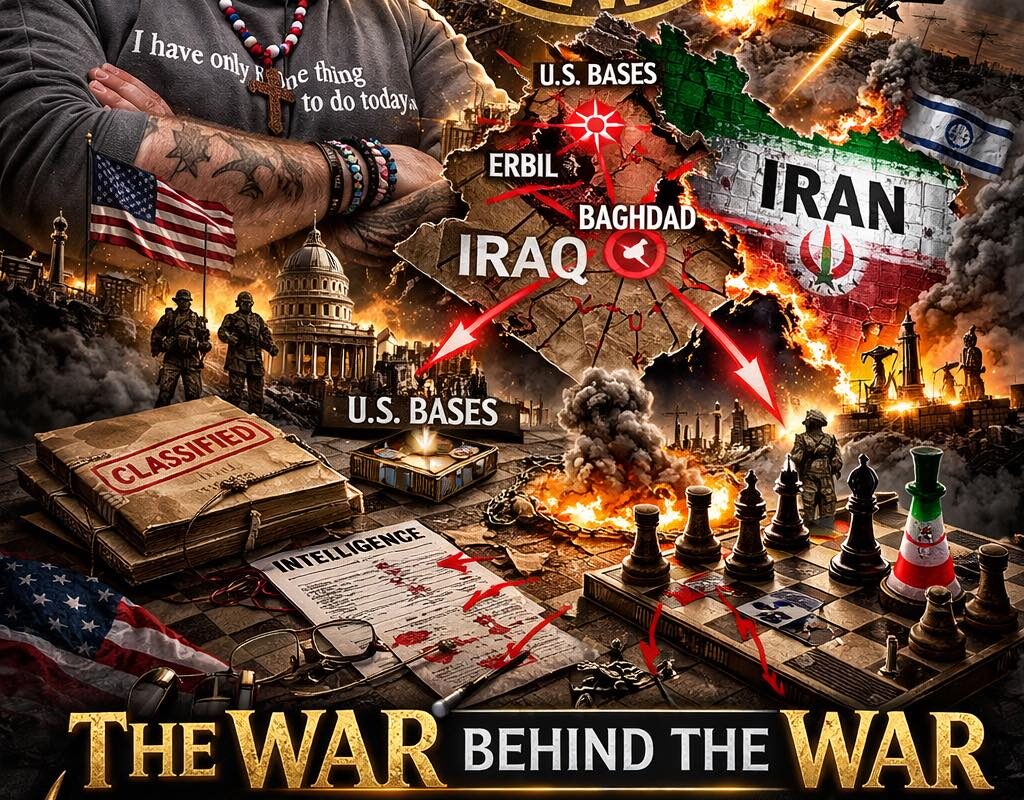
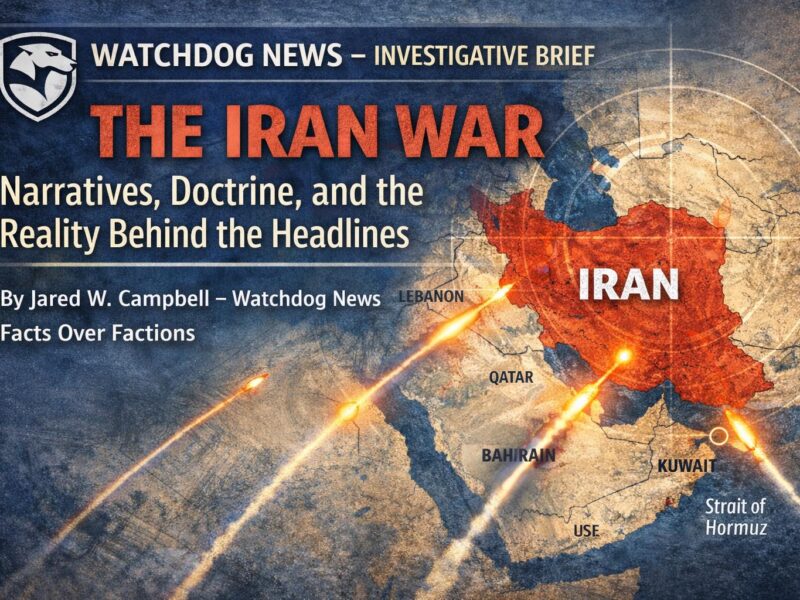
The United States maintains military facilities or forces across several Gulf states, including the following locations:
• In Bahrain, the U.S. Fifth Fleet is based.
• In Qatar, the United States operates Al Udeid Air Base.
• In Kuwait, American military forces remain stationed.
• In the United Arab Emirates, the U.S. maintains a military presence.
• In Iraq, U.S. forces continue to operate at several facilities.
In addition, Israel—one of Iran’s primary regional rivals—maintains strong military capabilities and close strategic ties with Washington.
From Iran’s perspective, this network of alliances and bases represents a form of strategic encirclement.
As a result, Iranian strategy has often focused on asymmetric responses, including the following measures:
• missile development
• expanded drone capabilities
• proxy forces operating in neighboring regions
• attacks on military infrastructure and energy routes
Consequently, Iranian sources often interpret recent strikes targeting bases and facilities in Gulf states as attempts to push back against this perceived encirclement.
Accuracy check: ~20–30% (mostly speculative analysis, not confirmed reporting). The video’s broad theory—that Iran may try to survive by imposing costs through endurance, disruption, and asymmetric warfare—has some support in current reporting. But most of its concrete claims about Bahrain, Saudi Arabia, UAE targets, Kurdish operations, and Russian/North Korean nuclear assistance are unverified or unsupported. Best treated as a scenario argument, not a factual record.
The Security Dilemma
Political scientists describe this cycle as the security dilemma.
The logic is simple:
- One country increases its military capabilities or expands its alliances for defensive purposes.
- Rival states interpret those actions as offensive threats.
- Those rivals respond with their own military measures.
Each side believes it is acting defensively, yet the result is escalating tension.
The security dilemma has shaped many historical conflicts—from Cold War nuclear competition to modern regional rivalries.
In both Ukraine and the Middle East, competing security perceptions appear to be playing a central role.
Important Differences
A Watchdog perspective also requires recognizing the significant differences between the two conflicts.
The Russia–Ukraine war is primarily a conventional territorial conflict, involving large-scale ground operations, armored warfare, and attempts to control territory.
The confrontation involving Iran, the United States, and Israel operates very differently. Rather than a traditional invasion, it has largely unfolded through:
• missile and drone strikes
• cyber operations
• the use of proxy forces
• attacks targeting military bases and infrastructure
These forms of warfare are less visible but still highly consequential.
The Return of Spheres of Influence
Both conflicts also point to a broader geopolitical shift that many analysts believe is underway: the return of great-power spheres of influence.
During the Cold War, global politics was often divided into spheres of influence in which major powers sought to maintain strategic dominance.
Today, similar dynamics are emerging again.
Russia seeks influence in Eastern Europe.
Iran seeks influence across parts of the Middle East.
China asserts influence in the South China Sea and around Taiwan.
Meanwhile, the United States continues to maintain alliances and military partnerships across multiple regions.
Where these spheres overlap, tensions often rise.
The “FIVE” Things Many People Are Missing
1. A Drop in Missiles Does Not Always Mean Weakness
When officials say Iran is firing fewer missiles, the public often interprets that as Iran running out of capability.
But in many wars, the opposite can also happen.
A country may shift phases.
Early-phase wars often begin with several patterns, including the following:
• heavy missile launches
• sudden shock attacks
• symbolic retaliation
Later phases of war often unfold very differently and may include the following patterns:
• lower-volume but higher-precision strikes
• targeted logistics attacks
• pressure on energy infrastructure and shipping routes
• expanded proxy operations
Iran’s military doctrine has historically emphasized long wars of endurance rather than short decisive battles.
Iran cannot match the United States or Israel in conventional air power. Instead, its strategy has historically focused on several asymmetric tools, including:
• missile capabilities
• drone operations
• proxy forces
• maritime disruption
• economic pressure
Therefore, fewer launches could signal several possibilities, including the following:
• conserving missile stockpiles
• dispersing launch systems
• shifting toward asymmetric warfare
• waiting for political pressure to build
In other words, the battlefield tempo may be shifting rather than collapsing.
2. The Real War Might Be Logistics
The public usually watches explosions.
Military planners watch supply chains.
One of the most important questions in this war is not:
Who can strike harder today?
It is:
Who can sustain the fight longer?
Modern wars consume massive resources, including the following critical systems and materials:
• interceptor missile systems
• precision-guided munitions
• reconnaissance and attack drones
• radar and detection systems
• replacement parts and maintenance components
• satellite communications bandwidth
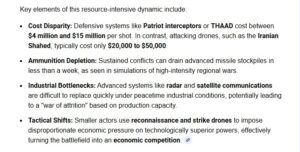
For example, defensive missiles like Patriot interceptors can cost $3–4 million per shot.
Some Iranian drones cost tens of thousands of dollars.
This creates what analysts call cost asymmetry.
If a cheap drone forces an expensive interceptor launch, the defender slowly burns through extremely costly resources.
Screenshot
This same pattern has appeared in several recent conflicts and situations, including:
• the war in Ukraine
• the conflict in Yemen
• the Red Sea shipping attacks
So the real question is not simply who has more firepower.
It’s those who can sustain their defense economically and industrially.
3. This Conflict Is Also Psychological Warfare
Another often-overlooked factor is strategic messaging.
Every side is trying to control three audiences:
- Their own population
- Their allies
- Their enemies
Statements such as the following often appear during conflicts:
• “The war is ending soon.”
• “Missile attacks are decreasing.”
• “Victory is near.”
In many cases, these statements are part of strategic messaging rather than purely battlefield reporting.
Governments often do this for several reasons, including:
• maintaining public morale
• calming financial markets
• preventing panic among allies
• signaling strength to adversaries
At the same time, Iran’s messaging often emphasizes resistance and endurance rather than rapid victory.
Both sides are shaping narratives while the real military calculations continue behind the scenes.
4. The Conflict Is Larger Than Iran vs. the U.S.
Wars like this often operate inside a larger geopolitical chessboard.
Several global powers are watching closely:
China
• studying U.S. military logistics
• monitoring energy routes
Russia
• observing Western weapons consumption
• evaluating sanctions endurance
European states
• worried about energy and shipping
Gulf states
• worried about regional escalation
In many ways, conflicts today become strategic laboratories.
Countries often learn several important lessons during conflicts, including the following:
• how modern weapons perform in real combat
• how supply chains hold up under pressure
• how political systems react during crises
This footage comes from an emergency UN Security Council meeting following the escalation between the United States, Israel, and Iran.
Multiple governments confirmed that Iranian missile and drone attacks struck several Gulf countries, including Bahrain, Qatar, the UAE, Kuwait, Jordan, and Saudi Arabia.
The debate also reveals how divided the international community is: Russia and China condemned the strikes on Iran, while Western nations defended them as necessary to prevent nuclear escalation.
As always in wartime diplomacy, these statements reflect national positions — not neutral reporting — but they provide a rare look at how global powers interpret the crisis in real time.
5. Modern Wars Often Move in Phases
In many cases, conflicts follow recognizable patterns.
Phase 1 — Shock
• rapid strikes
• sudden escalation
• dramatic headlines
Phase 2 — Stabilization
• strategic reassessment
• tactical shifts
• a slower operational tempo
Phase 3 — Endurance
• logistical strain
• political pressure
• economic stress
The conflict may be transitioning from the shock phase toward stabilization.
But it is far too early to say definitively.
The Hard Truth About Wartime Information
During wars, several information patterns tend to emerge, including the following:
• Governments often exaggerate their successes
• adversaries frequently amplify failures
• social media platforms spread rumors rapidly
• verified information often arrives slowly
Even professional analysts work with incomplete pictures.
That is why serious analysis focuses on patterns rather than isolated claims.
The Watchdog Perspective
The easy narrative says the war is almost over.
Another narrative says Iran is preparing for a much longer fight.
A Watchdog should be cautious about both conclusions.
What we may actually be witnessing is a shift in tempo rather than a collapse in capability.
The loudest explosions rarely decide wars today.
They are often decided by who can endure the longest — militarily, economically, and politically.
And that question is still very much unanswered.
A Watchdog Reflection on Modern War Reporting
Another problem worth addressing is the way many modern war stories are written.
Much of today’s reporting resembles spot reporting—small fragments of information focused on individual strikes, political statements, or viral footage.
Those stories often lack a broader context.
Instead, they rarely explore several deeper dimensions of the conflict, including:
• strategic doctrine
• relevant historical parallels
• competing geopolitical narratives
• long-term geopolitical implications
The result is an information environment filled with headlines but often lacking a deeper understanding.
A Watchdog must look beyond the daily battlefield updates and examine the larger patterns that shape conflicts over time.
Because wars are not just collections of explosions and press briefings.
They are the result of long-developing strategic fears, alliances, and power struggles that unfold over years.
And those deeper dynamics are exactly what a Watchdog must keep watching.
Watchdog News-👁️ Facts Over Factions

— Watchdog News
👁️ Facts Over Factions