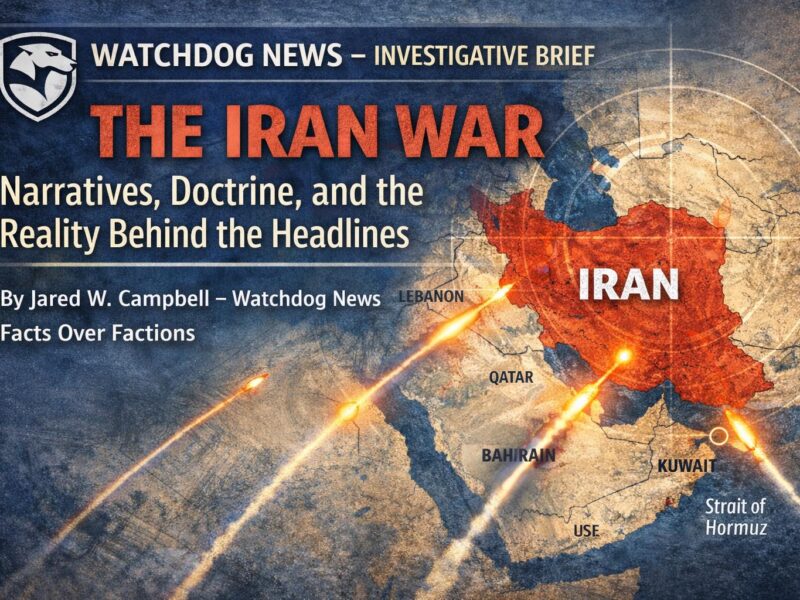


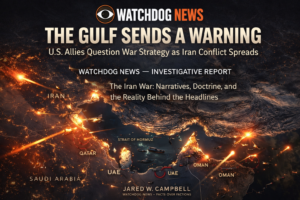
The Iran war is no longer just about Tehran.
Across the Persian Gulf, allies who once felt protected by the U.S. security umbrella are now questioning whether they were prepared for the consequences of this conflict.
Sometimes the most important signals in war come not from the battlefield — but from the allies standing nearby.
Facts Over Factions
The Gulf Is Sending a Message
America’s Iran War Is Not Just Hitting Tehran
By Jared W. Campbell — Watchdog News
Facts Over Factions
War has a unique way of stripping away the layers of rhetoric that often conceal the truth.
As a Christian and a combat veteran of the Iraq War, I have watched America move from one “necessary operation” to another seemingly endless conflict.
Through those experiences, I came to a stark realization. When war expands, the deepest fractures rarely appear where the bombs first detonate.
They appear later — in the trust that erodes in the aftermath.
This is where our focus must turn now. The latest fissures in this unfolding war extend beyond Iran’s borders; they resonate within the heart of the Persian Gulf.
Recent reports from the Associated Press reveal growing tension across the Gulf states.
Officials are seething with frustration and disappointment. They say they were blindsided by the sudden U.S.–Israeli strike on Iran. Many feel their warnings—that such a conflict could devastate the entire region—were ignored.
One official described a growing fear spreading through the Gulf. The concern is that Washington is prioritizing the defense of Israel and American forces while leaving its Gulf partners increasingly exposed.
Their interceptor stocks are rapidly dwindling, and the sense of vulnerability is becoming impossible to ignore.
In this complex landscape, it is important to watch more than the bombs falling. We must also watch the quiet fractures forming within alliances—cracks that could reshape the balance of power across the region.
https://apnews.com/article/iran-us-trump-gulf-states-drones-defense-69d5bc227e468f06e20e5ad069330c7d
The War Is Collapsing the Illusion of Security
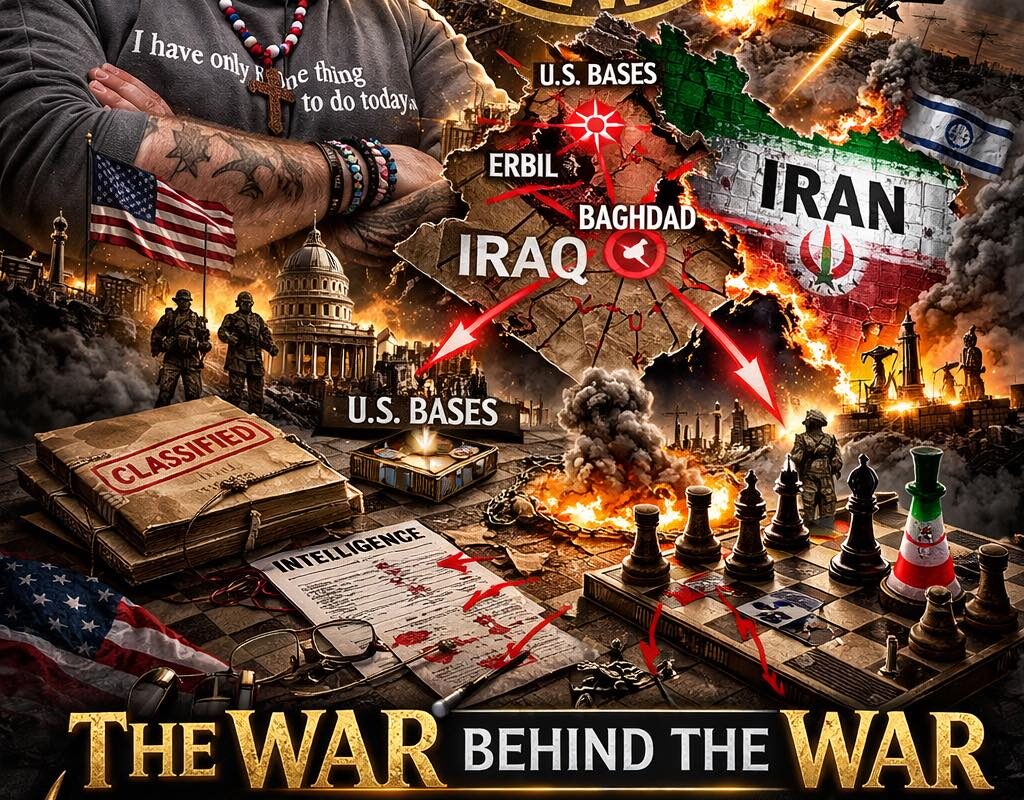
This isn’t just a minor concern; it’s a critical alert. If America’s Gulf allies start to feel like mere chess pieces on a board—viewed as expendable assets for launch operations, logistical hubs, energy corridors, or targets for drones—then the repercussions of this conflict extend far beyond the battlefield. These effects could linger long after the bombs cease to fall.
The war isn’t confined to distant lands; it’s directly reaching those who once felt insulated from its chaos.
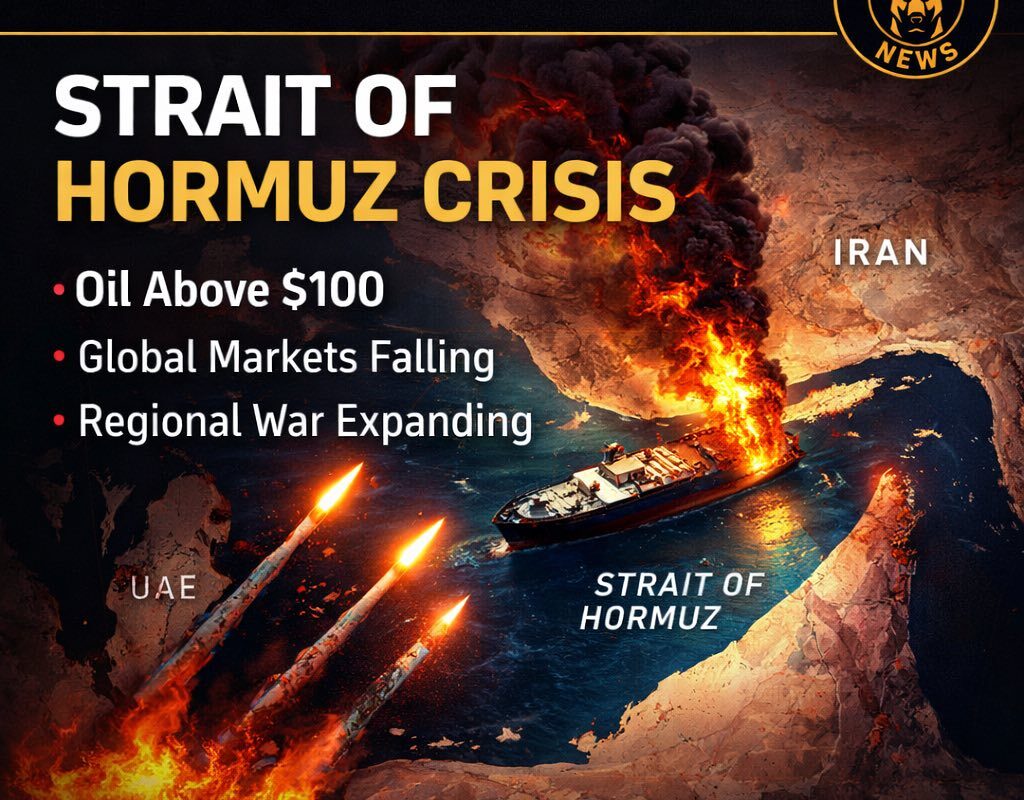
According to a recent Associated Press report, Iran has launched at least 380 missiles and more than 1,480 drones at five Arab Gulf nations since the conflict began.
The attacks have caused tragic losses, including the deaths of at least 13 people across the region.
In a stark reminder of the war’s reach, a separate Iranian drone strike in Kuwait killed six U.S. soldiers at a civilian port operations center.
Pentagon officials have conveyed to lawmakers their challenges in countering the relentless waves of Iranian drones, particularly the Shahed variety. There’s a growing concern that the U.S. may have been caught off guard by this scale of drone warfare, leading to questions about readiness in the face of such a formidable threat.
https://apnews.com/article/iran-us-trump-gulf-states-drones-defense-69d5bc227e468f06e20e5ad069330c7d
That’s not just a minor issue; it’s a significant warning. If America’s Gulf partners start viewing themselves as mere pawns—just launch pads, logistics hubs, energy routes, and magnets for drones—then the implications of this conflict are spilling far beyond the battlefield, and those effects could linger long after the bombs stop falling.
“This situation raises two critical points.”
First, it confirms a fear many in the region have held from the beginning. The Gulf was never going to be a passive spectator. From the outset, it was destined to become part of the retaliation narrative.
Second, it highlights a recurring problem in U.S. strategy. A troubling lack of preparation for the later phases of war often follows early confidence.
This context adds weight to Larry Johnson’s warning in the interview you shared. Regardless of how one views his broader conclusions, his central argument deserves attention. The war is not unfolding the way Washington and Tel Aviv expected.
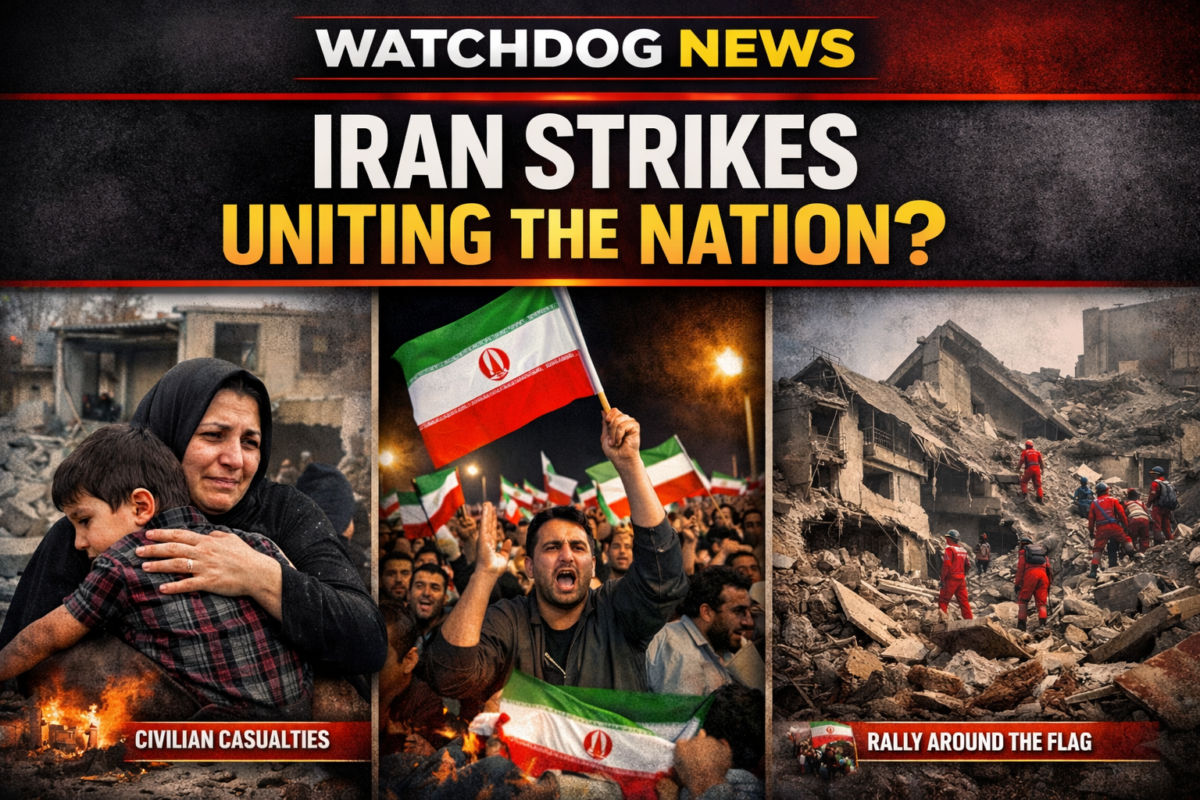
According to Johnson, U.S. and Israeli planners believed that rapid leadership strikes and heavy bombing would destabilize Iran politically. Instead, he argues, the attacks have produced the opposite effect. They have unified Iran and pushed the conflict toward a grinding war of attrition across the region.
Johnson’s claims still require scrutiny. Some of his specific assertions—such as timelines for weapon depletion or precise casualty numbers—are difficult to verify in real time.
Yet his broader structural argument appears to hold weight. Iran absorbed the first wave of attacks and shifted toward endurance. Meanwhile, America’s regional allies are absorbing the pressure of a crisis they feel unprepared to handle.
Accuracy Score: ~35% (Mixed Reliability)
This interview combines some real developments with speculation and unverified battlefield claims. Broader strategic points—such as regional escalation risks, Iranian strikes in the Gulf, and strain on air-defense systems—align with reporting. However, several specific claims (aircraft losses, base damage, casualty figures, and alleged false-flag operations) lack independent confirmation.
Use as an analysis/opinion rather than a primary factual source.
The Underreported Story: This War Is Also About Broken Assumptions
One often overlooked aspect of this situation is not simply Iran’s ability to retaliate. It is the growing realization among Gulf governments that Washington may have misjudged the threat or assumed the risks were manageable.
Bader Mousa Al-Saif of Chatham House captured that sentiment in comments to the Associated Press. He said the United States appears to have underestimated the vulnerabilities of its Gulf allies. He described the lack of a robust protection strategy as a form of American “short-sightedness.”
Former U.S. ambassador Michael Ratney, now with the Center for Strategic and International Studies, expressed the region’s anxiety even more directly. No matter what happens, he warned, “the countries of the Gulf will have to bear the brunt of whatever that is.”
These are not voices coming from Tehran. They are respected figures acknowledging a difficult reality. The Gulf states are carrying the burden of a war they neither started nor control.
Perceptions of inequality deepen the frustration. According to the Associated Press, some Gulf officials are openly comparing their defenses with Israel’s. Israeli air defenses appear far stronger, while Gulf protection remains limited.
In simple terms, many Arab partners believe the defensive shield is thicker over Israel than over them.
This is no longer only a military issue. It is a political one. When allies begin to question whether they are priorities, buffers, or pawns, the alliance’s foundations begin to shift.
https://apnews.com/article/iran-us-trump-gulf-states-drones-defense-69d5bc227e468f06e20e5ad069330c7d
Trump’s “Unconditional Surrender” Line Changes the Nature of the War
Meanwhile, as tensions rise, Gulf states are bracing for the fallout from Iranian retaliation. At the same time, President Trump is raising the stakes of the conflict. Instead of limiting the discussion to military operations, he has shifted the narrative toward sweeping political change in Iran.
According to a Reuters report, Trump stated there would be “no deal” with Iran unless it resulted in “unconditional surrender.” Furthermore, he promised that the United States and its allies would help rebuild Iran under what he described as “great and acceptable” new leadership.
At the same time, the White House says military operations could achieve their goals within four to six weeks. However, officials also suggest that U.S. intelligence is already examining possible leadership options for a post-war Iran. In other words, the rhetoric has moved beyond targeting missile sites or naval assets. Instead, it points toward a much larger political objective.
When victory is framed as surrender followed by acceptable leadership, the implication becomes clearer. Ultimately, it signals an ambition to transform the regime. Gulf capitals understand the stakes this creates. For them, there are no quick exits or narrow military paths to safety. Instead, the fear of prolonged instability is growing.
For months, regional leaders have warned Washington that a preemptive strike could shake the entire region. Now, Trump’s rhetoric about surrender has deepened those anxieties. As a result, the conflict risks spiraling far beyond its original scope. Without a clear political resolution, the war could expand into something far more difficult to control.
Why Iran’s Playbook Made the Gulf Vulnerable in the First Place
According to research from the RAND Corporation, Iran has historically relied on indirect involvement in regional conflicts. Instead of deploying large ground formations, Tehran often works “by, with, and through proxies” to advance its interests. In practice, this strategy relies on advisory missions, deterrence operations, interdiction, limited strikes, and support networks rather than large conventional deployments.
RAND_RRA444-2
RAND_RRA444-2
https://www.rand.org/pubs/research_reports/RRA444-2.html
That means anyone who expected Iran to respond like a conventionally cornered state was misreading the doctrine.
Iran’s model has long been about:
- dispersing retaliation,
- stretching the battlespace,
- leveraging partners and geography,
- and making adversaries’ rear areas feel less secure.
RAND also concluded that external threats to sovereignty often help Tehran legitimize its actions at home, send signals abroad, and galvanize domestic support. It notes that Iran tends to view many of its external operations through the prism of defense and regional vulnerability.
RAND_RRA444-2
https://www.rand.org/pubs/research_reports/RRA444-2.html
That does not make Tehran innocent.
It does help explain why the Gulf was always likely to become part of the pressure campaign.
And it helps explain why Gulf elites are now furious: they may have believed they were supporting a war of controlled coercion, but what they got instead was exposure.
The Russia Angle Makes the Conflict Even More Dangerous
There is also an intriguing Russian dimension to this conflict.
Recent reporting from the Associated Press suggests that Russia may be sharing intelligence with Iran. That information could allow Tehran to target U.S. military assets across the region, including warships and aircraft.
U.S. officials say the effort appears extensive. Russian support may already be helping Iran identify radar systems, command-and-control networks, and other critical U.S. military infrastructure.
If these claims prove accurate, the conflict is no longer just a U.S.–Israel–Iran confrontation. It becomes part of a broader geopolitical contest.
In that scenario, Moscow could be seeking to impose indirect costs on Washington, influence global oil markets, and force the United States to divert resources away from the war in Ukraine.
This growing complexity is raising alarm across the Gulf states. What began as a regional strike campaign now risks expanding into a layered strategic struggle involving Russia, Gulf monarchies, Israel, and the United States.
Energy routes, maritime ports, air defenses, and political legitimacy are all tied to the outcome. The stakes are rising, and the implications could be profound.
https://www.washingtonpost.com/national-security/2026/03/06/russia-iran-intelligence-us-targets/
Even the Hawks Sound Different from the White House
This story is significant because it uncovers a striking discrepancy between what the White House is saying and the views of seasoned figures, even those with a tough stance on Iran. Take Elliott Abrams, former envoy under Trump, who shared with AP that Gulf states have always been acutely aware of the threat from Iran. The Gulf states have long feared potential attacks. However, their deeper concern was whether Tehran would actually follow through, given how much it had at stake. As a result, he warned that if the assaults continue, Gulf nations may eventually take matters into their own hands and strike Iran directly.
That’s not exactly a comforting thought—it suggests an escalation rather than resolution.
Now, contrast that with the narrative coming from the White House, which claims that Iranian ballistic retaliation has plummeted by 90 percent, attributing this success to “Operation Epic Fury,” which they say is effectively dismantling Iran’s missile launch and production capabilities.
These are two very different stories. One paints a picture of a successful, forward-moving war effort, while the other warns of a potential plunge into a wider regional conflict among Gulf Arabs.
A Watchdog picks up on this tension right away. When you see official optimism rising alongside growing frustration from allies, it becomes clear that someone’s holding back the full truth.
The Unique Story Here: The Gulf Is No Longer Just a Staging Area
The narrative surrounding the Gulf has shifted dramatically—no longer just a backdrop of military bases, oil reserves, embassies, ports, and air defense systems. Today, the Gulf stands at the forefront of the ongoing conflict, shaping political dynamics in profound ways.
Gulf leaders are questioning whether the United States is truly listening to their concerns. Analysts are pondering whether Washington has fully grasped the gravity of the situation. On the ground, citizens witness the chaos—fires erupting, drone strikes occurring, and shortages becoming the norm. In the halls of power, governments are weighing the war’s ramifications: does it weaken Iran, destabilize it, or both?
Recent reports from Reuters indicate a notable shift in the region—the UAE is now considering actions against Iranian assets within its borders. This includes potential asset freezes and targeting shadow companies and shipping. It’s a clear sign that Gulf states are not merely spectators of this conflict; they are actively contemplating how to respond economically and financially as the situation unfolds.
The key question has evolved. It’s no longer about whether Iran can endure pressure or if the U.S. can maintain its military operations. The real, pressing issue is this:
Can the American-led regional security order withstand a war that leaves its allies feeling both vulnerable and unheard?
This is the deeper fracture at play. And as that chasm widens, it becomes clear that missiles aren’t the only weapons in motion—distrust is becoming a potent force as well.
Watchdog Conclusion
The Gulf’s concerns extend beyond missed warning time. Instead, they point to a deeper problem. In reality, when allies realize they are included in great-power plans but not truly prioritized, serious questions begin to emerge.
At the same time, the Watchdog understands that silence does not equal stability. Likewise, early strikes do not guarantee strategic success. Moreover, the Watchdog listens carefully to regional allies, even when Washington prefers a simpler narrative.
If, in fact, Bahrain, Kuwait, Qatar, Oman, Saudi Arabia, and the UAE begin to feel pulled into a conflict without proper briefing or protection, the implications become serious. In that case, the war is already reshaping the geopolitical landscape in ways no victory speech can hide.
Therefore, America should pay close attention to this message. History shows that endless wars do more than defeat enemies. They also strain alliances, cloud judgment, and leave resentment that lasts long after the battlefield falls silent.
👁️ WATCHDOG SIGNATURE
Jared W. Campbell
Watchdog News — Facts Over Factions