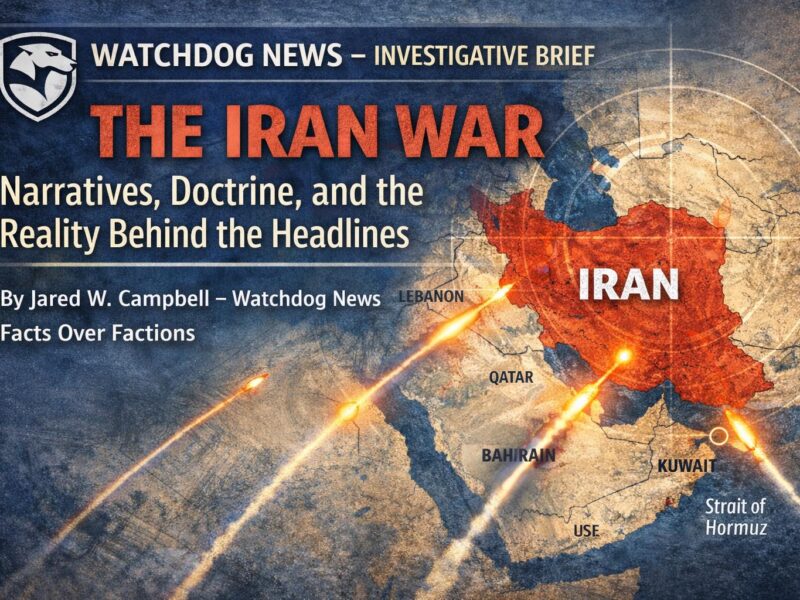



The Iran War: Narratives,
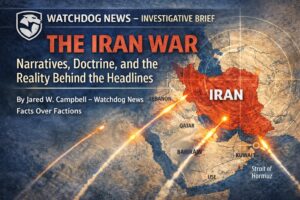
War rarely unfolds the way headlines claim.
Missiles can destroy infrastructure while retaliation continues.
Understanding the Iran conflict requires looking beyond narratives and examining doctrine, logistics, and endurance.
Facts Over Factions.
Doctrine, and the Reality Behind the Headlines
By Jared W. Campbell — Watchdog News
Facts Over Factions
Introduction — When War Begins, Truth Becomes the First Battlefield
The first casualty of war is not soldiers.
It is true.
When missiles start flying, governments move quickly to control the narrative. Press conferences announce- “decisive strikes.” Social media is spreading claims of a “strategic victory.” Analysts rush to declare one side collapsing while the other celebrates tactical success.
But war does not unfold through headlines. It unfolds through logistics, doctrine, and endurance.
The question the Watchdog must ask is simple:
What is happening — and what is being claimed?
If U.S. and Israeli forces are striking Iranian infrastructure across the country, why is Iran still launching missiles? If commanders are being killed and facilities destroyed, how does retaliation continue?
To answer that question, we must step away from the daily narrative cycle and examine something deeper:
Iran’s military doctrine.
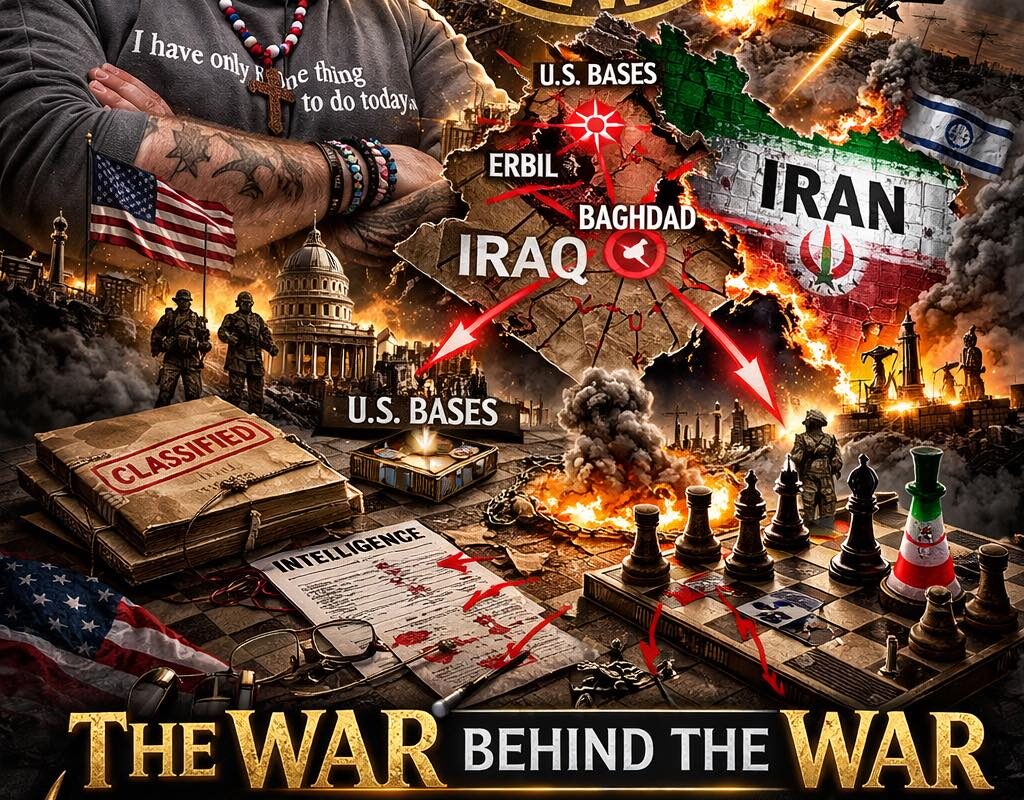
Part I — Iran Does Not Fight Wars the Way the West Expects, instead favoring indirect operations through proxies and militias to expand influence while avoiding large-scale troop exposure, which clarifies Iran’s strategic behavior.
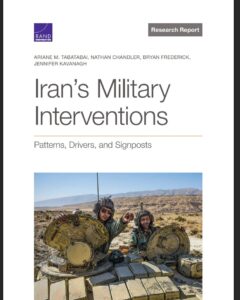
One of the most important conclusions in RAND’s long-term research on Iranian strategy is that Iran rarely fights wars through large conventional deployments.
Instead, Iran has historically preferred to operate indirectly, working through partners, militias, and proxy forces to expand its influence while demonstrating resilience and strategic patience, avoiding large-scale exposure of its own troops.
RAND_RRA444-2- https://www.rand.org/content/dam/rand/pubs/research_reports/RRA400/RRA444-2/RAND_RRA444-2.pdf
This strategy was developed after the 1979 Islamic Revolution and the brutal experience of the Iran-Iraq War.
RAND’s research notes that Iranian interventions since 1979 have largely been conducted through advisory roles, proxy forces, and limited military involvement rather than large combat deployments.
RAND_RRA444-2- https://www.rand.org/content/dam/rand/pubs/research_reports/RRA400/RRA444-2/RAND_RRA444-2.pdf
In practical terms, that means Iran’s war-fighting model looks very different from the conventional military campaigns Western audiences are accustomed to seeing.
Iran’s system is built for three things:
- survival under attack
• distributed retaliation
• long-term pressure rather than rapid victory
This is the essence of asymmetric warfare.
Part II — The Strategic Logic Behind Iran’s Military Behavior
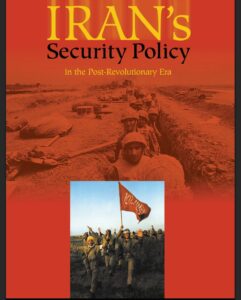
RAND’s broader study of Iran’s security policy describes Iranian decision-making as complex but coordinated.
Multiple institutions participate in national security decisions, including:
- the Supreme Leader
• the Islamic Revolutionary Guard Corps (IRGC)
• intelligence services
• the regular armed forces (Artesh)
While the system appears chaotic from the outside, RAND notes that major security operations rarely occur without approval from senior leadership and a degree of elite consensus.
RAND_MR1320- https://www.rand.org/content/dam/rand/pubs/monograph_reports/MR1320/RAND_MR1320.pdf
Understanding this structure matters.
It means Iranian military actions are rarely random. They are usually part of a broader strategic calculus balancing regime survival, regional influence, and deterrence.
Iranian leaders also operate under a persistent sense of vulnerability.
As RAND notes, Iran views itself as strategically isolated and surrounded by adversaries, particularly the United States and Israel.
RAND_RRA444-2- https://www.rand.org/content/dam/rand/pubs/research_reports/RRA400/RRA444-2/RAND_RRA444-2.pdf
This perception drives much of Iran’s military behavior.
From Tehran’s perspective, military operations abroad are often framed not as expansion, but as defensive actions meant to preserve regional balance and regime survival.
Part III — Why Missile Retaliation Continues Even After Strikes
This brings us back to the central Watchdog question:
If Iran is being heavily struck, how is it still firing missiles?
The answer lies in how Iran designed its military infrastructure.
Iran’s missile forces are deliberately dispersed, redundant, and partially underground, with mobile launch systems and distributed stockpiles that enable ongoing retaliatory operations despite significant losses, illustrating its resilience.
In other words, destruction of targets does not necessarily equal elimination of capability.
Modern military campaigns often degrade enemy systems gradually rather than destroying them immediately.
Iran’s doctrine anticipates this.
Rather than relying on a single centralized force, Iran maintains multiple layers of retaliation capability, including:
- ballistic missile units
• drone forces
• naval assets in the Persian Gulf
• allied militias across the region
The result is a military structure built to survive sustained pressure.
Part IV — The Proxy Network
Another key element of Iranian strategy is its network of regional partners.
Over the past four decades, Iran has cultivated relationships with a range of non-state actors and allied groups across the Middle East, creating a complex network that extends its influence and complicates regional security.
These include:
- Hezbollah in Lebanon
• Shia militias in Iraq
• Allied forces in Syria
• Houthi forces in Yemen
RAND’s analysis highlights that Iran’s use of local partners like Hezbollah, Shia militias, and Houthi forces enables it to project influence and maintain pressure across multiple fronts without direct Iranian troop involvement, emphasizing regional conflict complexity.
RAND_RRA444-2- https://www.rand.org/content/dam/rand/pubs/research_reports/RRA400/RRA444-2/RAND_RRA444-2.pdf
This approach allows Iran to maintain pressure across multiple fronts simultaneously.
For the United States and Israel, this means the conflict does not exist only within Iran’s borders.
It exists across the entire region.
Part V — The War of Narratives
While the military conflict unfolds on the battlefield, a parallel war unfolds in the information space.
Governments emphasize tactical successes to reassure domestic audiences and allies.
Adversaries highlight resilience to project strength and deterrence.
Both narratives serve strategic purposes.
This is why early claims during war must be approached with caution.
Numbers change. Damage assessments evolve. Initial reports are often incomplete or exaggerated.
The Watchdog’s responsibility is not to amplify either narrative.
It is to examine the evidence and recognize patterns.
Part VI — What Happens Next?
Several key variables will determine how this conflict evolves.
-
Missile Capacity
If Iran retains a significant missile arsenal, retaliation could continue for an extended period.
-
Regional Escalation
The involvement of Iranian-aligned groups in Lebanon, Iraq, or Yemen could broaden the conflict.
-
Energy Infrastructure
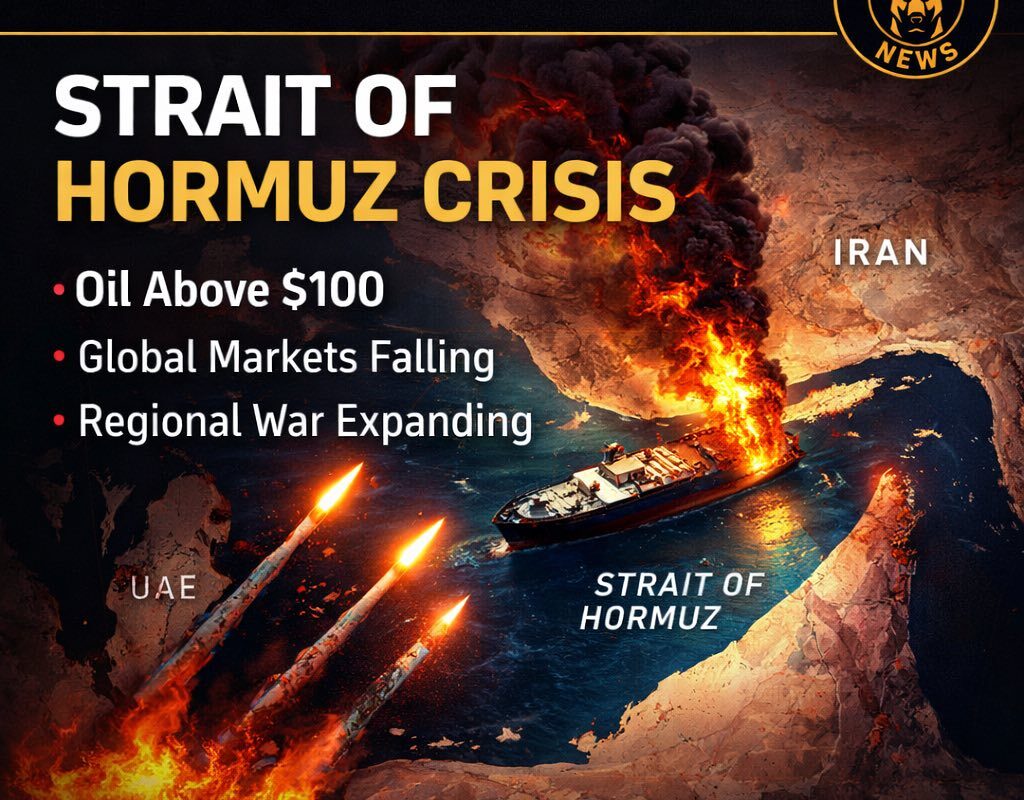
The Persian Gulf and Strait of Hormuz remain critical global energy chokepoints.
Any disruption there could rapidly internationalize the crisis.
-
Cyber Warfare
Iran has previously demonstrated cyber capabilities targeting infrastructure and government systems.
Cyber operations may become an increasingly important front in the conflict.
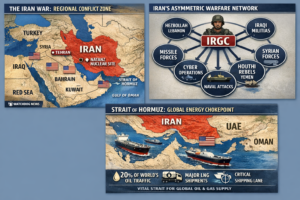
Iran War Analysis: Doctrine, Proxies, and Strategic Endurance
Watchdog Closing
History shows that wars rarely unfold the way leaders predict.
Tactical success can coexist with strategic uncertainty.
Infrastructure can be destroyed while retaliation continues.
And narratives can travel faster than facts.
The Watchdog’s task is not to declare victory or defeat.
It is to track patterns, test claims, and remain grounded in evidence.
Because in modern conflict, the loudest story is rarely the most accurate one.
And truth — even in war — still matters.
Jared W. Campbell- Watchdog News
Facts over Factions!