

Modern wars aren’t just fought with weapons — they’re fought with expectations.
Is Iran collapsing… or adapting exactly as its strategy intends?
👁️ Facts Over Factions.
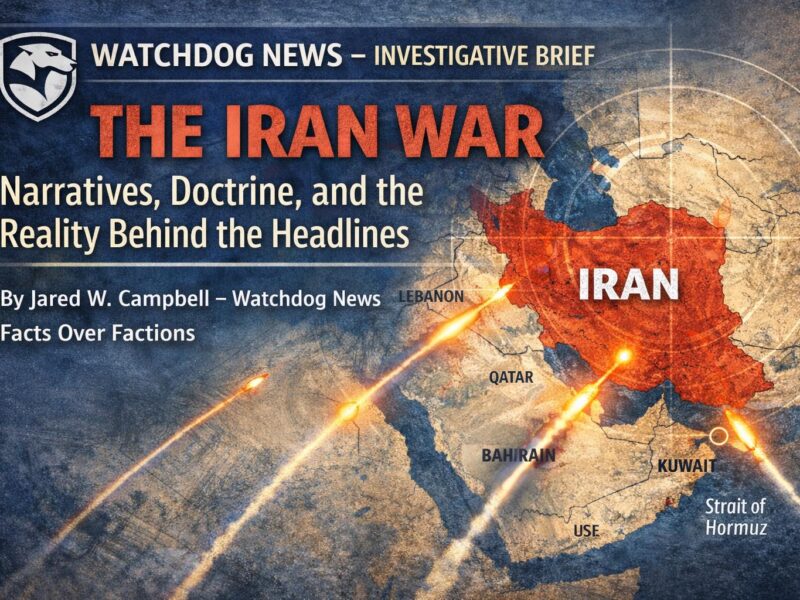
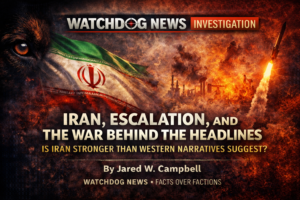
Iran, Escalation, and the War Behind the Headlines
Is Iran Stronger Than Western Narratives Suggest?
By Jared W. Campbell — Watchdog News
Facts Over Factions
The Watchdog Question
Every modern conflict begins with competing assessments of strength.
One side claims decisive success.
Another claims resilience.
International observers warn of escalation.
Right now, Western headlines emphasize heavy Iranian losses following reported U.S.–Israeli strikes — including claims that dozens of senior commanders were killed.
But global military analysts are asking a quieter question:
Does leadership loss equal strategic weakness?
History suggests the answer is rarely that simple.
What International Sources Are Actually Saying
Across European, Middle Eastern, and defense analysis reporting, a more complex picture emerges than the dominant Western narrative suggests.
1️⃣ Iran Was Hit — But Not Crippled
International defense analysts note Israel has successfully penetrated Iranian defenses in recent years, damaging air defense systems and striking high-value targets.
However, assessments reviewed by military observers show:
- Iran has repaired and repositioned air-defense systems, including Russian-supplied S-300 platforms.
- Missile launchers have been moved closer to nuclear facilities like Natanz and Fordow.
- Defensive infrastructure remains partially intact despite prior strikes.
Analysts reviewing satellite imagery concluded that Iran’s defenses were degraded but not eliminated.
Watchdog translation:
Tactical vulnerability does not equal strategic collapse.
2️⃣ Iran’s Strategy Is Built Around Survival — Not Victory
Unlike Western militaries designed for expeditionary warfare, Iran’s doctrine focuses on asymmetric endurance.
International security experts consistently describe Iran’s approach as:
- Avoid direct conventional war with the U.S.
- Absorb strikes.
- Retaliate indirectly through regional networks.
- Raise the cost of escalation over time.
Iran has repeatedly signaled retaliation designed to remain “calibrated” — strong enough to maintain deterrence but limited enough to avoid total war.
That tells analysts something critical:
Iran’s objective is not immediate battlefield dominance.
It is long-war survivability.
3️⃣ Leadership Losses Hurt — But Iran Is Built for Replacement
Reports claiming the deaths of senior commanders sound decisive — and tactically, they are.
But Iran’s military structure differs from Western command models.
The Islamic Revolutionary Guard Corps (IRGC):
- operates as a networked system, not a single leadership pyramid
- maintains parallel command chains
- trains successors specifically for wartime decapitation scenarios
This model evolved after decades of assassinations, sanctions, and covert conflict.
International intelligence analysis after previous killings — including Quds Force commander Qassem Soleimani — found that Iranian operations slowed temporarily but did not collapse.
Watchdog insight:
Iran plans for leadership loss as an expected condition of war.
Why Some Analysts Believe Iran Is Being Underestimated
Several non-U.S. analysts warn Western media may unintentionally mirror wartime messaging.
Common concerns include:
Narrative Incentives
Governments involved in military operations benefit politically from portraying strikes as decisive.
Public confidence rises when:
- enemies appear weakened,
- Escalation appears controlled,
- Victory appears near.
This does not mean reports are false.
It means framing matters.
The “Early War Illusion”
Military history repeatedly shows that early conflict reporting exaggerates success:
- Iraq War (2003): regime collapse appeared decisive; insurgency followed.
- Afghanistan: Taliban described as defeated; later resurged.
- Ukraine war early phases: both sides alternately declared collapse scenarios that never materialized.
Initial battlefield narratives often reflect information advantage, not long-term reality.
Iran’s Real Strength: Geography + Structure
International military assessments consistently highlight three enduring Iranian advantages:
1. Geography
Iran is extremely difficult to defeat conventionally:
- Mountainous terrain
- Deep underground facilities
- Large territory (nearly 4× Iraq’s size)
- Distributed military infrastructure
Air superiority alone does not guarantee control.
2. Missile Arsenal
Iran possesses one of the largest missile inventories in the Middle East.
These systems are designed not for precision dominance but for saturation — overwhelming defenses through volume.
3. Regional Network (“Axis of Resistance”)
Iran’s deterrence extends beyond its borders through allied groups:
- Hezbollah (Lebanon)
- Iraqi militias
- Syrian partners
- Yemeni Houthis
This allows Iran to respond without confrontation.
A war with Iran rarely stays confined to Iran.
Could This Become a Long War?
Many international analysts believe escalation risk lies precisely here.
If conflict expands, it likely becomes:
Not a fast war — but a layered one.
Possible characteristics:
- proxy attacks across multiple countries
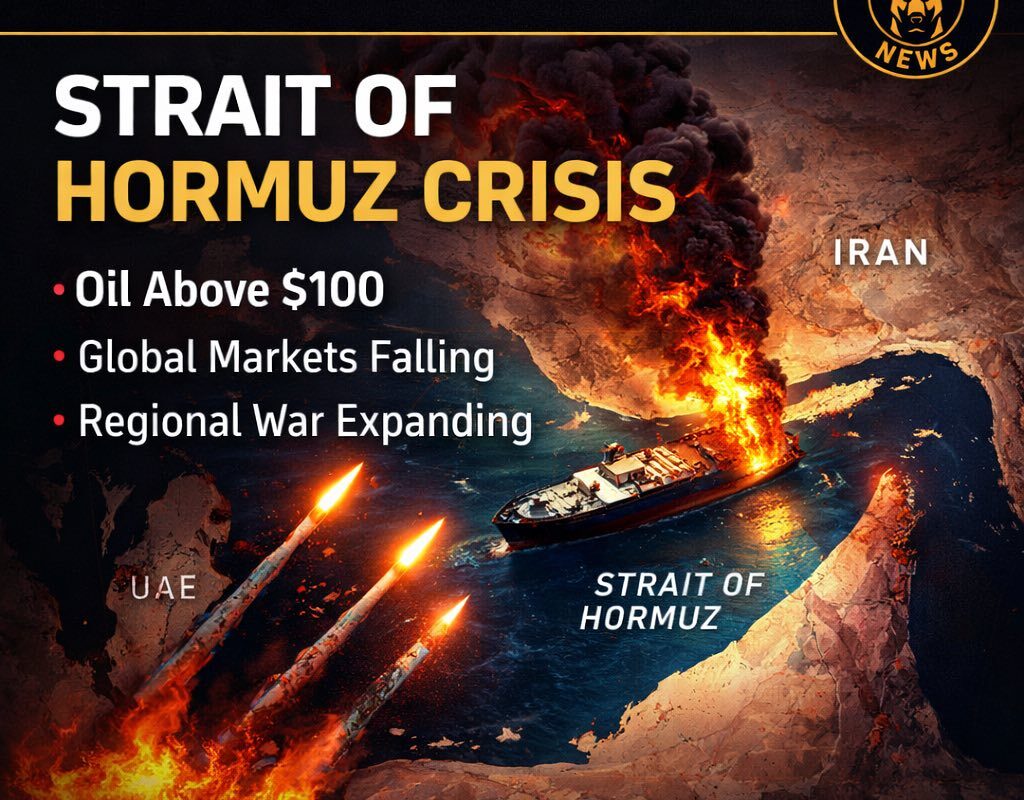
- Maritime disruption in the Persian Gulf
- cyber operations
- economic warfare through oil markets
- prolonged low-intensity retaliation
In other words:
Less World War III.
More endless regional instability.
The Reza Pahlavi Question — Could the Shah’s Son Return?
Reza Pahlavi’s recent statements calling for the regime’s collapse reflect the exile opposition’s long-standing position.
However, international political analysts remain skeptical of rapid reinstatement scenarios.
Key realities:
- Iran’s current system still controls security forces.
- Opposition inside Iran is fragmented.
- Monarchist support exists but is not universally dominant.
- Historically, external regime change has produced instability rather than an immediate transition.
Most analysts view Pahlavi’s messaging as political signaling rather than evidence of an imminent regime change.
Watchdog takeaway:
Regime collapse narratives often appear early in conflicts — long before structural power actually shifts.
The Watchdog Perspective
Iran may be weaker militarily than the United States or Israel, but stronger than simplified media portrayals suggest.
Both things can be true.
Iran cannot win a conventional war against the U.S.
But defeating Iran quickly is also extraordinarily difficult.
And wars become dangerous precisely when leaders believe the opponent is weaker than they actually are.
The Watchdog Conclusion
Modern conflict is fought twice:
First with weapons.
Then with expectations.
Narratives shape public belief long before outcomes are known.
Right now, three competing stories exist simultaneously:
- Iran is collapsing.
- Iran is resilient.
- Escalation risks are spiraling beyond control.
Only one of those can ultimately prove correct — but history warns us:
Wars rarely end as early headlines suggest.
And the greatest strategic mistake nations make is underestimating an adversary shaped by survival.
👁️ Jared W. Campbell
Watchdog News — Facts Over Factions