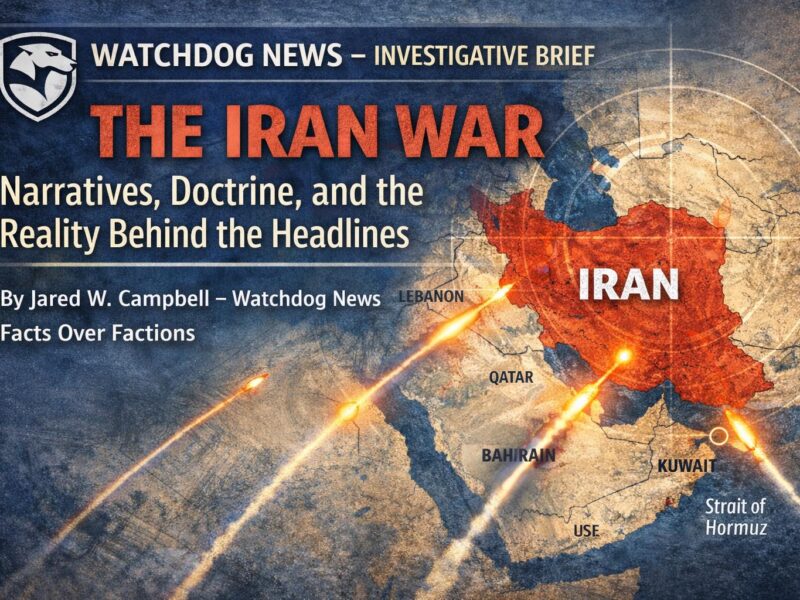


“Iran’s Nuclear Counterproposal — Diplomacy, Deterrence, and the Countdown to Decision”
By Jared W. Campbell — Watchdog News
Facts Over Factions | Different Perspectives Matter
1️⃣ What Is Actually Happening (Verified Developments)
Multiple international reports indicate that Iran is preparing a nuclear counterproposal as negotiations with the United States continue amid rising military tension in the Middle East.
According to reporting cited by outlets including The Guardian, Reuters, and diplomatic briefings:
-
Iran refuses to export its stockpile of highly enriched uranium.
-
Tehran is reportedly willing to reduce enrichment levels under international monitoring rather than eliminate enrichment.
-
Talks are ongoing through indirect diplomatic channels while the United States maintains a growing military posture in the region.
Iran currently possesses uranium enriched to roughly 60% purity, a level far above civilian energy needs and closer to weapons-grade material, according to international monitoring assessments.
The International Atomic Energy Agency (IAEA) has repeatedly warned that this level of enrichment represents a serious proliferation concern, even though it is not yet weapons-grade.
2️⃣ Iran’s Position (Tehran’s Perspective)
Iranian officials argue:
-
Uranium enrichment is a sovereign right under the Nuclear Nonproliferation Treaty (NPT).
-
Nuclear material will not leave Iranian territory.
-
Any agreement must include sanctions relief and recognition of peaceful nuclear development.
Iran’s proposal reportedly centers on:
✅ Lower enrichment levels
✅ Increased IAEA oversight
✅ Confidence-building measures rather than dismantlement
Iran also warns that military pressure during negotiations undermines diplomacy and could escalate conflict.
Tehran has formally stated it does not seek war, but would respond “decisively and proportionately” if attacked.
3️⃣ The U.S. Position (Washington’s Perspective)
The Trump administration’s stated objective remains clear:
👉 Iran must not obtain nuclear weapons — or the capability to rapidly build them.
U.S. officials have indicated:
-
Military options remain under consideration.
-
Naval and air deployments are intended to increase leverage.
-
A deal may still be possible, but timelines are narrowing.
Previous negotiations between the two countries have largely taken place indirectly through mediators such as Oman, reflecting deep mistrust on both sides.
Some U.S. policymakers argue that allowing enrichment at any level leaves Iran too close to breakout capability.
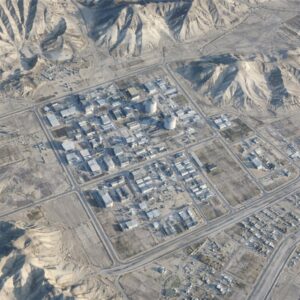
AI- Recreation of an Iranian Nuclear Facility – 👁️Watchdog News
4️⃣ The Strategic Reality (Independent Analysis)
From a strategic standpoint, both sides are negotiating under pressure:
Iran’s leverage:
-
Existing enriched uranium stockpile
-
Regional proxy influence
-
Ability to threaten shipping routes and U.S. bases
U.S. leverage:
-
Massive regional military buildup
-
Economic sanctions
-
Diplomatic isolation pressure
This creates what analysts often call coercive diplomacy — negotiation conducted under the shadow of force.
5️⃣ Why This Moment Matters (Historical Context)
This is not happening in a vacuum.
Key background factors include:
-
The U.S. withdrawal from the 2015 nuclear agreement (JCPOA).
-
Years of escalating sanctions and enrichment increases.
-
Failed prior negotiations and mutual accusations of bad faith.
-
Rising regional instability following earlier military strikes and proxy conflicts.
Iran’s enrichment escalation itself followed the collapse of earlier diplomatic agreements, creating today’s standoff cycle.
6️⃣ Different Perspectives — The Global Divide
🇺🇸 U.S. security view
Iran’s nearing weapons capability is unacceptable and requires hard deterrence.
The Iranian government views
Western powers are denying lawful technological development while using military threats to force submission.
🌍 European diplomatic view
Both escalation and maximal demands risk triggering a regional war that no side can fully control.
🧠 Nonproliferation experts
The real danger is miscalculation — where military pressure intended to prevent war accidentally triggers one.
7️⃣ Watchdog Questions That Still Lack Clear Answers
A Watchdog doesn’t pick sides — we ask what isn’t being explained:
-
Is military buildup preparation for war — or negotiation leverage?
-
What enrichment level would actually satisfy Washington?
-
If Iran reduces enrichment but keeps material, is the crisis solved or delayed?
-
Who controls escalation once retaliation begins?
-
What happens the day after a strike — politically and regionally?
These questions remain largely unanswered publicly.
8️⃣ The Watchdog Perspective
This moment resembles less a march toward inevitable war and more a high-stakes negotiation conducted through displays of power.
Both governments are signaling strength to domestic audiences while quietly leaving diplomatic doors open.
History shows something important:
Nuclear crises rarely end with a dramatic victory.
They usually end with an uncomfortable compromise.
The danger is not simply nuclear capability.
The danger is timing — when diplomacy, domestic politics, and military posture collide.
👁️ Watchdog Conclusion
What we are witnessing is not simply a nuclear dispute.
It is a contest over:
-
deterrence vs diplomacy
-
sovereignty vs security guarantees
-
pressure vs negotiation
Iran says it will not surrender enrichment.
The United States says enrichment capability itself is the problem.
Between those two positions lies the narrow space where peace — or conflict — will be decided.
And right now, the world is watching that space shrink.
Watchdog Standard:
Ask better questions.
Separate claims from verified facts.
Follow outcomes — not narratives.
👁️ Facts Over Factions — Watchdog News