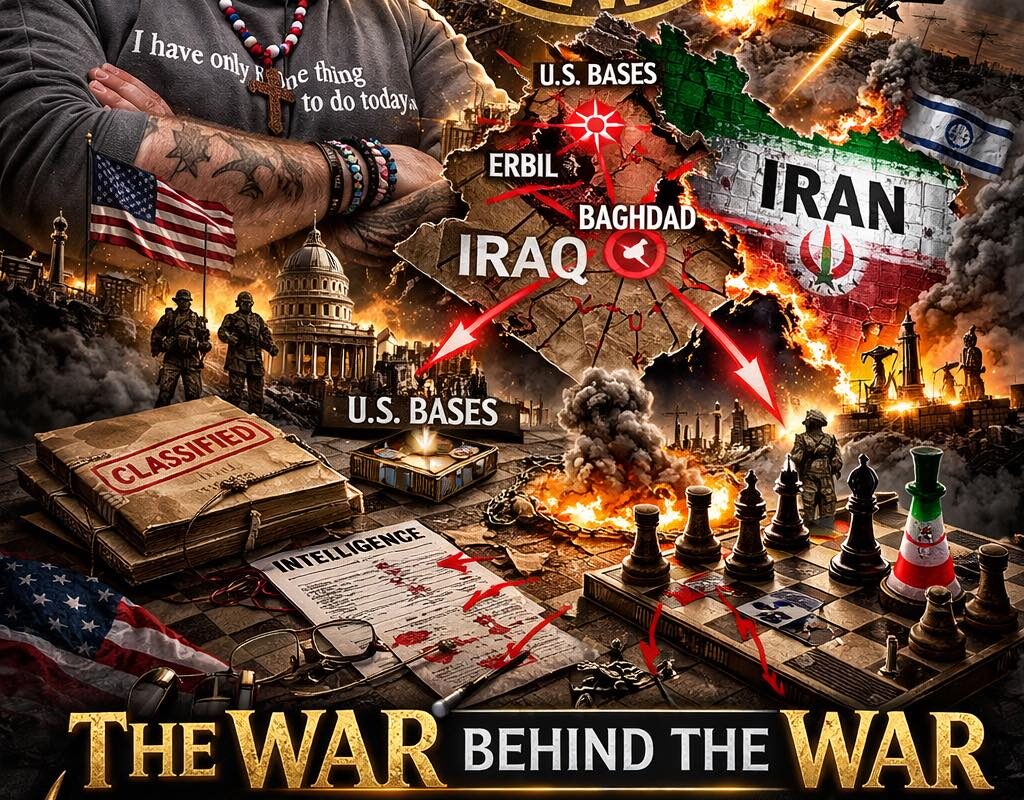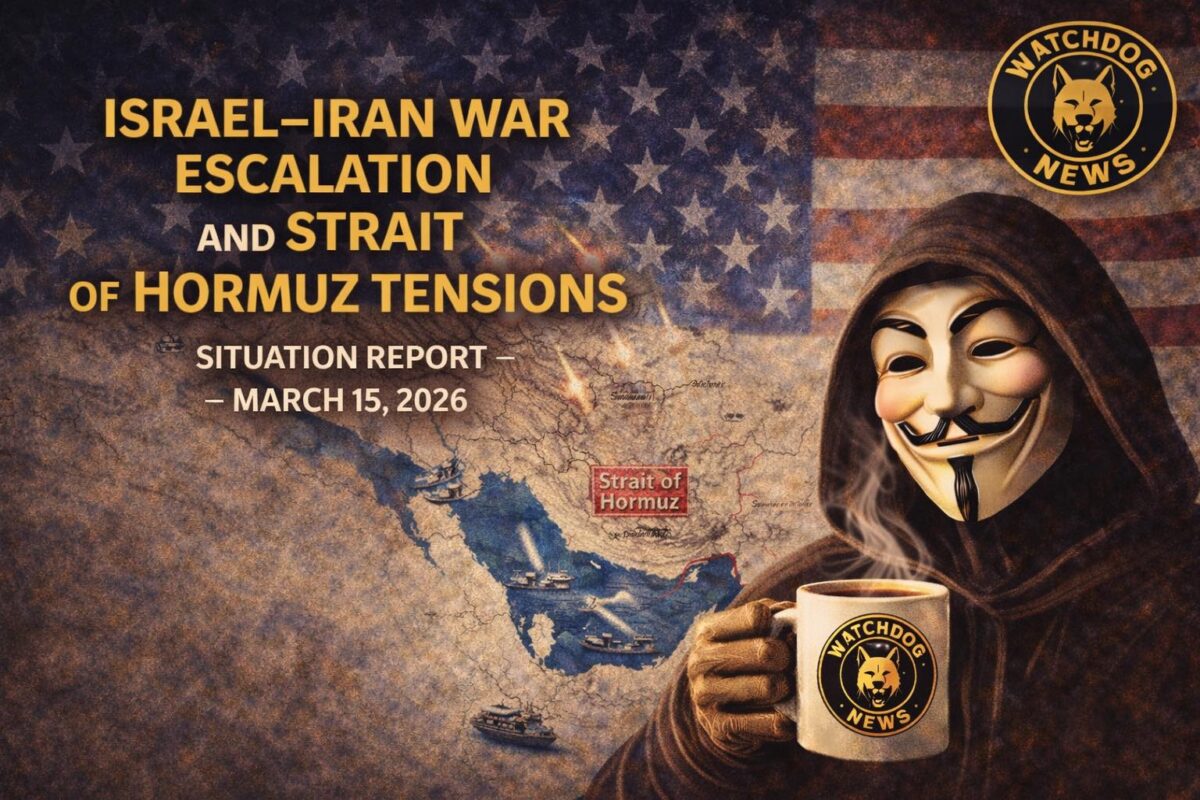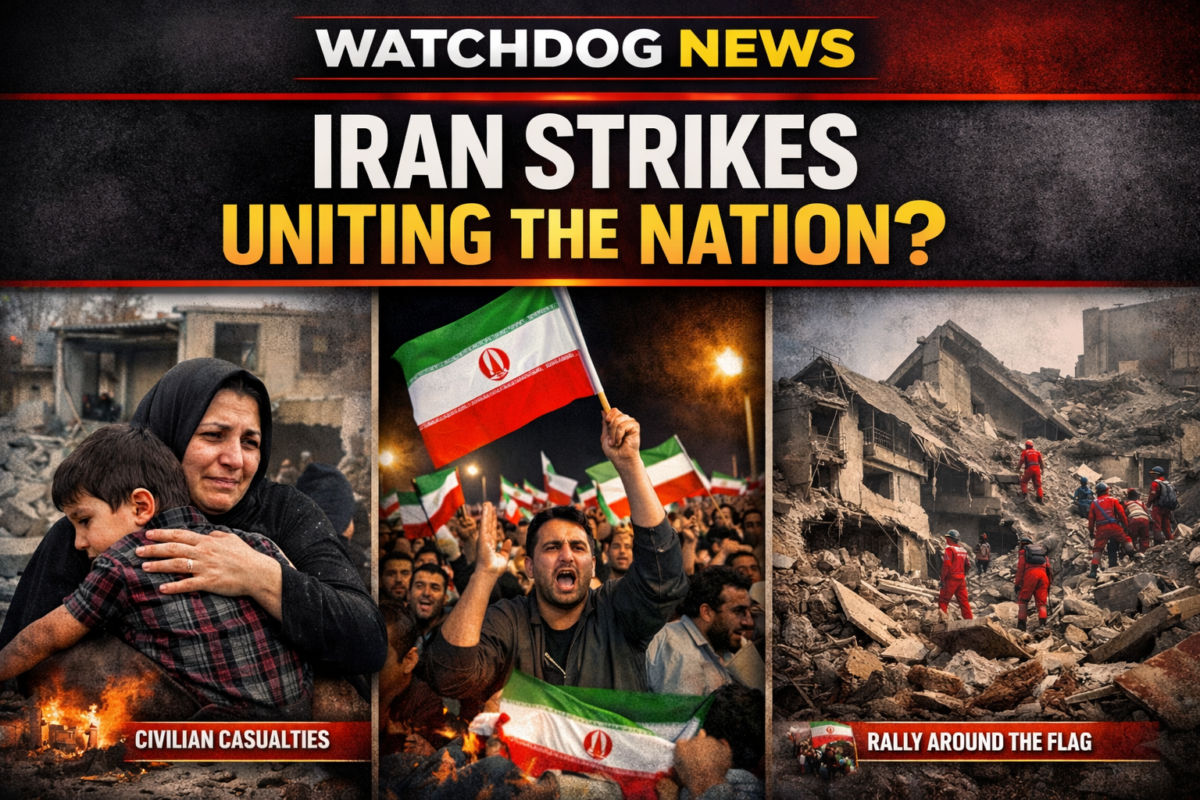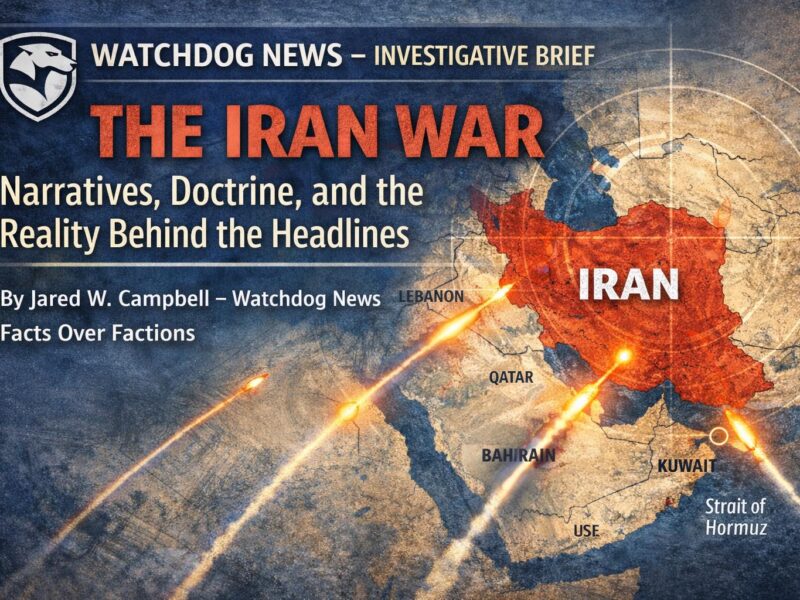


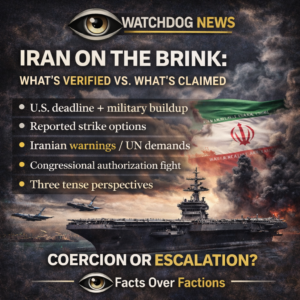
 “Iran at the Edge — Military Posture, Diplomatic Deadlines, and the Decisions That Could Reshape the Middle East”
By Jared W. Campbell — Iraq War Veteran
👁️ Facts Over Factions | The Watchdog Perspective
Introduction — When Military Movement Becomes a Message
In international politics, wars rarely begin with a single announcement.
They begin with positioning.
Ships move. Aircraft deploy. Diplomacy hardens. Deadlines appear.
And suddenly the world realizes decisions may already be closer than leaders publicly admit.
Recent reporting across multiple outlets describes the largest U.S. military buildup in the Middle East in more than two decades, alongside escalating rhetoric between Washington and Tehran. Some analysts warn that conflict could begin within days. Others insist diplomacy is still alive.
From a Watchdog perspective, the real question is not simply “Will there be a strike?”
It is:
What is actually happening — and what is narrative, pressure, or negotiation strategy?
1) What Is Verifiably Happening
Across reporting from CNN, Associated Press, and regional coverage, several facts align:
Military Deployment
-
The U.S. has deployed significant naval and air power into and around the Middle East.
-
The aircraft carriers USS Abraham Lincoln and USS Gerald R. Ford are moving into operational proximity.
-
Carrier strike groups include destroyers, cruisers, submarines, and hundreds of aircraft.
-
Additional fighter aircraft (F-35, F-22, F-16) and support planes have been positioned at regional bases.
These deployments are publicly observable through defense reporting and satellite tracking.
Key Watchdog point:
Military buildup itself is a signal — even before any strike order exists.
Diplomatic Timeline
President Trump has publicly stated:
-
A 10–15-day window to determine whether negotiations with Iran will succeed.
-
Failure to reach a “meaningful deal” could lead to unspecified consequences.
Indirect talks between U.S. and Iranian representatives have continued through intermediaries, including negotiations in Oman and Europe.
Iran’s Response
Iran has:
-
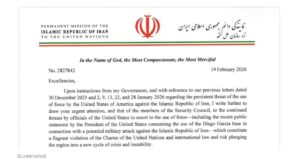
Warned through the United Nations that U.S. threats violate international law.
-
Declared it does not seek war but will respond “decisively and proportionately.”
-
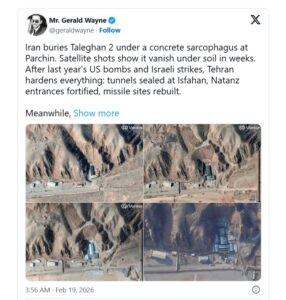
Conducted military exercises and reinforced sensitive facilities.
Satellite imagery reportedly shows defensive fortifications around nuclear and military infrastructure.
2) What Experts Say — Competing Interpretations
Perspective A: Deterrence Strategy
Some analysts argue the buildup is meant to:
-
Pressure Iran into concessions.
-
Strengthen negotiating leverage.
-
Avoid war by demonstrating credible force.
In this view, military escalation is diplomacy by other means.
Perspective B: Momentum Toward Conflict
Others warn that large deployments create operational momentum:
Once forces are positioned:
-
Political pressure rises to act.
-
Regional allies adjust expectations.
-
De-escalation becomes politically harder.
History shows wars sometimes occur not from intent, but from escalation cycles.
Perspective C: Domestic Political Timing
Critics argue that military pressure may also serve internal political purposes:
-
Demonstrating strength ahead of elections.
-
Shifting political narratives.
-
Reinforcing leadership credibility.
Supporters counter that confronting Iran’s nuclear program and regional proxy networks is a longstanding bipartisan concern.
3) The Nuclear Reality Check
A major complication comes from statements by IAEA Director General Rafael Grossi, who indicated:
-
Iranian nuclear material reportedly remains largely intact despite previous strikes.
-
From a non-proliferation standpoint, the urgency for an agreement remains high.
This creates a policy dilemma:
Strike again — risking regional war
or
Negotiate — risking continued nuclear advancement.
4) Constitutional and Political Debate Inside the U.S.
Not all disagreement is international.
Some members of Congress argue:
-
Military action requires congressional authorization.
-
The President cannot unilaterally enter sustained hostilities.
Others maintain that executive authority enables rapid responses to emerging threats.
This reflects a recurring American debate stretching back decades.
5) Why “Cold War” May Be the Wrong Frame
Many commentators describe rising tensions globally as a “new Cold War.”
But the current environment differs:
| Cold War Era | Today |
|---|---|
| Two dominant blocs | Multiple power centers |
| Ideology-driven | Interest-driven |
| Stable alliances | Flexible partnerships |
| Predictable escalation | Hybrid conflict & economic pressure |
Today’s conflict environment blends:
-
military deterrence
-
economic sanctions
-
cyber operations
-
narrative warfare
-
regional proxy conflicts
It is less a Cold War and more a multipolar competition era.
6) Watchdog Questions That Matter
Instead of choosing sides, Watchdog reporting asks:
-
Is military buildup meant for war — or negotiation leverage?
-
What specific objectives would justify a strike?
-
What happens after regime destabilization?
-
Who controls escalation once retaliation begins?
-
Is diplomacy being pursued publicly or quietly behind the scenes?
These questions remain largely unanswered.
Watchdog Conclusion
Right now, the world is not at war.
It is watching a decision window.
Military power is being positioned while diplomacy races against deadlines. Both sides claim they seek stability — while preparing for confrontation.
The danger is not only intentional conflict.
It is a miscalculation.
From a Watchdog perspective, the most honest assessment is this:
-
A strike is possible but not inevitable.
-
Military positioning may be coercive diplomacy rather than imminent war.
-
The outcome depends less on speeches and more on negotiations happening out of public view.
History shows wars rarely start when headlines say they will.
They start when leaders believe there are no remaining options.
👁️ Watchdog Standard:
Ask questions.
Separate posture from action.
Follow facts — not fear.
Facts Over Factions.
— Jared W. Campbell
Watchdog News