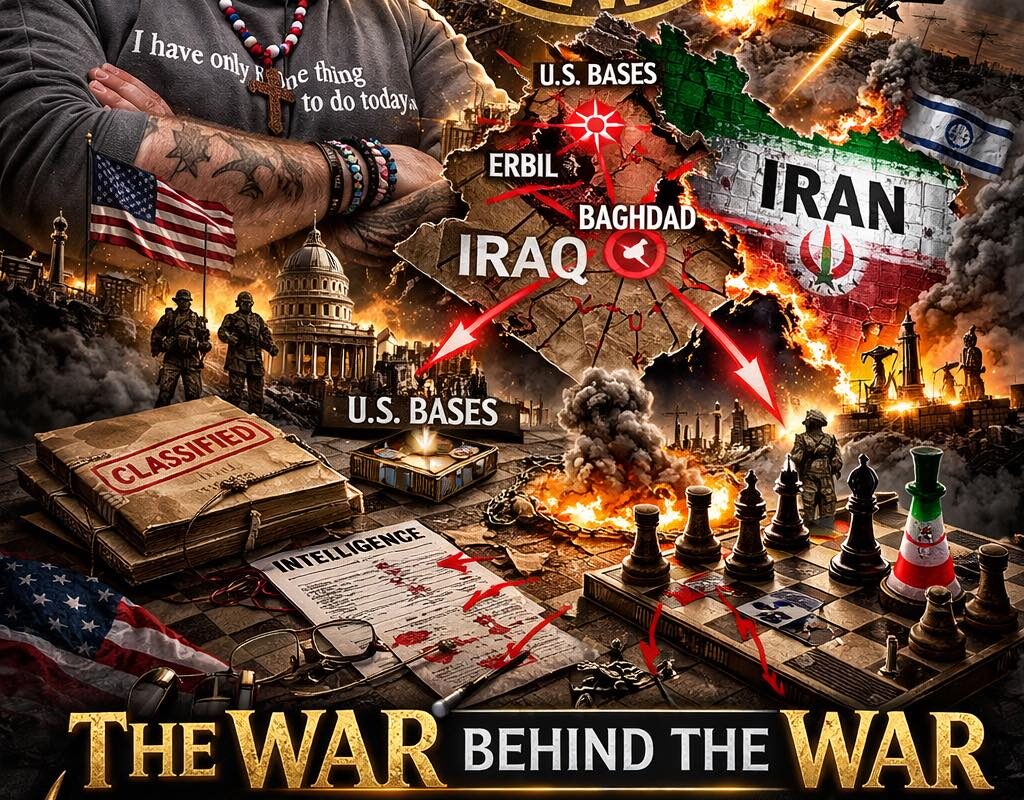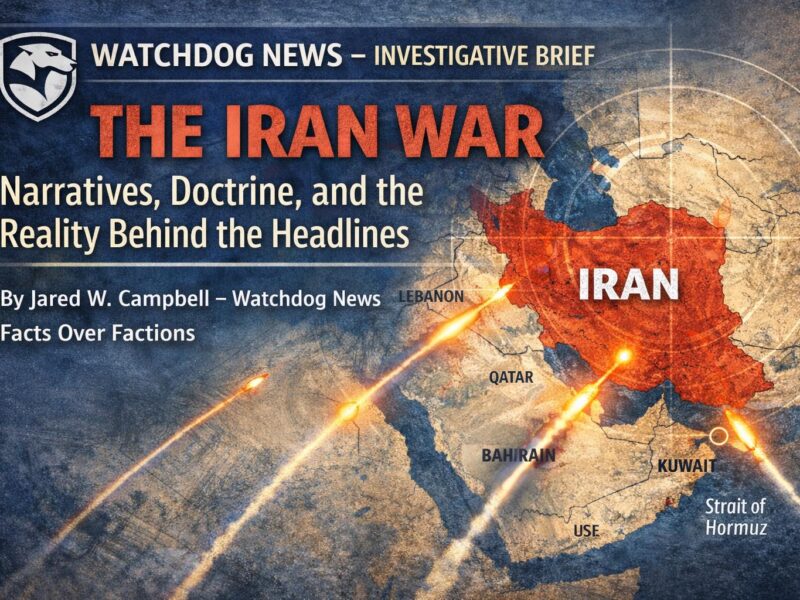


“War, Leverage, or Negotiation? — What the Iran Strike Reports Really Mean”
By Jared W. Campbell
Iraq War Veteran — Watchdog News
👁️ Facts Over Factions
“When the Drumbeat Starts”
In the military, one undeniable truth stands out: war seldom begins with a loud explosion. Instead, it gradually emerges through whispers, unfolding via careful strategic moves and quiet preparations. While headlines may note that forces are “ready if ordered,” beneath the surface, tension simmers.
Currently, we are witnessing these subtle cues reemerging in the Middle East. It is crucial for responsible journalism to sift through the noise, distinguishing between what is confirmed and what is merely speculation.
1️⃣What Is Verified (Source-Supported)
Several major news outlets report on heightened U.S. military readiness amid tensions with Iran.
Military Deployment
Verified reporting indicates the following:
– The United States has deployed significant naval and air assets to the Middle East.
– Carrier strike groups, destroyers, and support vessels are currently operating in the region.
– Advanced aircraft, including F-22, F-15, and surveillance platforms, have been repositioned.
Sources:
– CNN reporting on U.S. military readiness and regional deployments (Feb 2026)
– CBS News national security reporting, citing defense officials
– Associated Press (AP) regional military coverage
– FlightRadar24 tracking data referenced by defense reporting
– U.S. defense official statements quoted in international coverage
These deployments are observed and corroborated across multiple outlets.
Diplomatic Context
Negotiations between the U.S. and Iran are ongoing but strained.
- Indirect talks resumed in Muscat, Oman.
- Follow-up negotiations occurred near Geneva, Switzerland.
- U.S. officials state Iran has not accepted key American “red lines.“
“sources:
- Reuters diplomatic reporting
- White House press briefings quoted by AP and international media
- Multiple outlets reported statements from Vice President J.D. Vance and Press Secretary Caroline Leavitt
Public Statements by U.S. Leadership
President Trump has publicly warned Iran of severe consequences if negotiations fail and has referenced possible military action.
Sources:
- Associated Press coverage of presidential statements
- Reuters international security reporting
- White House press communications
2️⃣ What Is NOT Verified
Despite dramatic headlines, no confirmed evidence shows:
❌ A signed strike order
❌ Congressional authorization for war
❌ An announced operational timetable
❌ Official confirmation that strikes will occur
The consistent wording across reporting:
U.S. forces are prepared “if ordered.”
“his distinction is critical.
Sources confirming conditional language:
- CNN national security reporting
- CBS News defense briefings
- AP international desk summaries
3️⃣ Why Deploy Massive Force? (Expert Analysis)
Security analysts note large deployments often serve strategic signaling purposes.
Susan Ziante, an analyst at the Center for Strategic and International Studies (CSIS), warned that major force deployments can create momentum that is difficult to reverse.
Source:
- CSIS analyst commentary quoted in international reporting (Feb 2026)
This aligns with longstanding U.S. deterrence doctrine.
4️⃣ Iran’s perspective (Context from International Coverage)
Iranian officials frame U.S. actions as escalation tied to:
- U.S. withdrawal from the Joint Comprehensive Plan of Action (JCPOA) in 2018
- Continued sanctions pressure
- Military positioning near Iranian territory
Sources:
- Reuters Middle East reporting
- AP diplomatic coverage
- Background reporting on JCPOA withdrawal (2018)
5️⃣ Why “Cold War” May Be a Misleading Label
Strategic analysts increasingly describe totoday’snvironment as multipolar competition rather than a Cold War structure.
Differences include:
Cold War: Two ideological blocs, Stable alliances, and Predictable escalation.
Today: Multiple power centers, Fluid partnerships, and Hybrid conflict (economic, cyber, narrative)
Sources informing analysis:
- Munich Security Report 2026
- CSIS strategic assessments
- Reuters global security analysis
6️⃣ Watchdog Questions That Matter
Objective reporting requires asking:
- Are deployments deterrence or preparation?
- Are negotiations being strengthened through pressure?
- Does military signaling influence domestic politics as well as diplomacy?
- What escalation risks exist if a miscalculation occurs?
These are analytical questions — not claims.
👁️ Watchdog Conclusion — Power, Perception, and Pressure
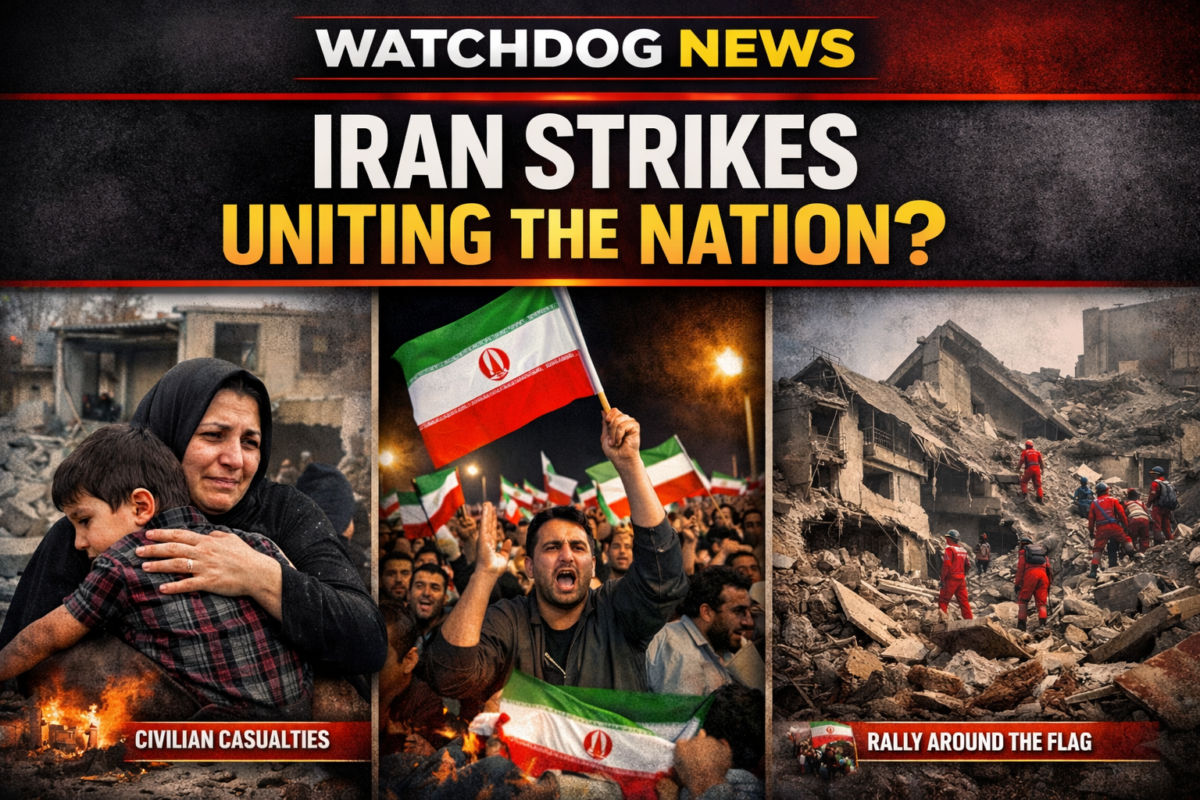
Current evidence does not indicate an imminent war. Instead, it reflects a typical phase of geopolitical pressure, which includes:
– Military positioning
– Diplomatic negotiation
– Strategic messaging
The United States is demonstrating its capabilities, while Iran is displaying its resilience. Negotiations are ongoing, even amid tension. This situation is not war; it is a matter of leverage.
History teaches us that leverage can either prevent conflict or, if mishandled, provoke it. The responsibility of observers is clear:
– Distinguish between movement and narrative
– Separate readiness from inevitability
The most critical moment is not the start of war but when everyone mistakenly believes it has already begun.
Watchdog Standard:
Ask harder questions.
Verify before amplifying.
Facts over factions.
👁️ — Jared W. Campbell
Watchdog News